

























This Was a Football Project, Not an Overnight Miracle
Morocco’s progress was sometimes presented as another romantic underdog story. That description underestimates the planning behind it.
The country began strengthening its football infrastructure under a royal directive issued in 2009. The programme expanded through academies, modern training facilities, professional coaching, youth identification and, more recently, the National Football Training Fund involving the Royal Moroccan Football Federation, OCP Group and private partners.
The widely circulated claim that Morocco invested “$65 million in the Mohammed VI Academy” requires qualification.
Reuters reported that the Mohammed VI Football Academy constructed in 2010 cost approximately $13 million. The higher figure frequently repeated online appears to be associated with Morocco’s wider Mohammed VI Football Complex and broader infrastructure ecosystem rather than the original academy alone.
The exact viral number is therefore less reliable than the underlying conclusion: Morocco invested consistently, institutionally and over many years.
The federation also built an effective route for footballers developed in European academies to represent their country of heritage. That was not the opportunistic collection of famous names. It was a deliberate integration model combining locally developed players, diaspora talent, federation scouting and a clear national identity.
Achraf Hakimi became the most recognisable symbol of this system, but Morocco’s strength came from the structure around its stars—not merely from the stars themselves.
That context was already discussed before the quarter-final in Morocco’s journey deserved recognition before kickoff. A victory over France would not have needed a conspiracy to explain it. Morocco had earned the right to believe they could win.
Saibari’s Absence Removed Morocco’s Most Reliable Threat
Morocco arrived against France without Ismael Saibari, who had suffered a hamstring injury against Canada.
His absence was substantial. Saibari had scored in all three of Morocco’s group matches and converted the decisive penalty against the Netherlands. He was not simply another attacking option; he had been Morocco’s most consistent tournament scorer and one of their most direct transition threats.

Without him, Morocco lacked some of the speed and decisiveness required to punish France after recovering possession.
Coach Mohamed Ouahbi had insisted before kickoff that reaching the quarter-final was not Morocco’s prize. His objective was to win the tournament. He also said his team intended to hurt France both centrally and through the wings.
That intention rarely materialised.
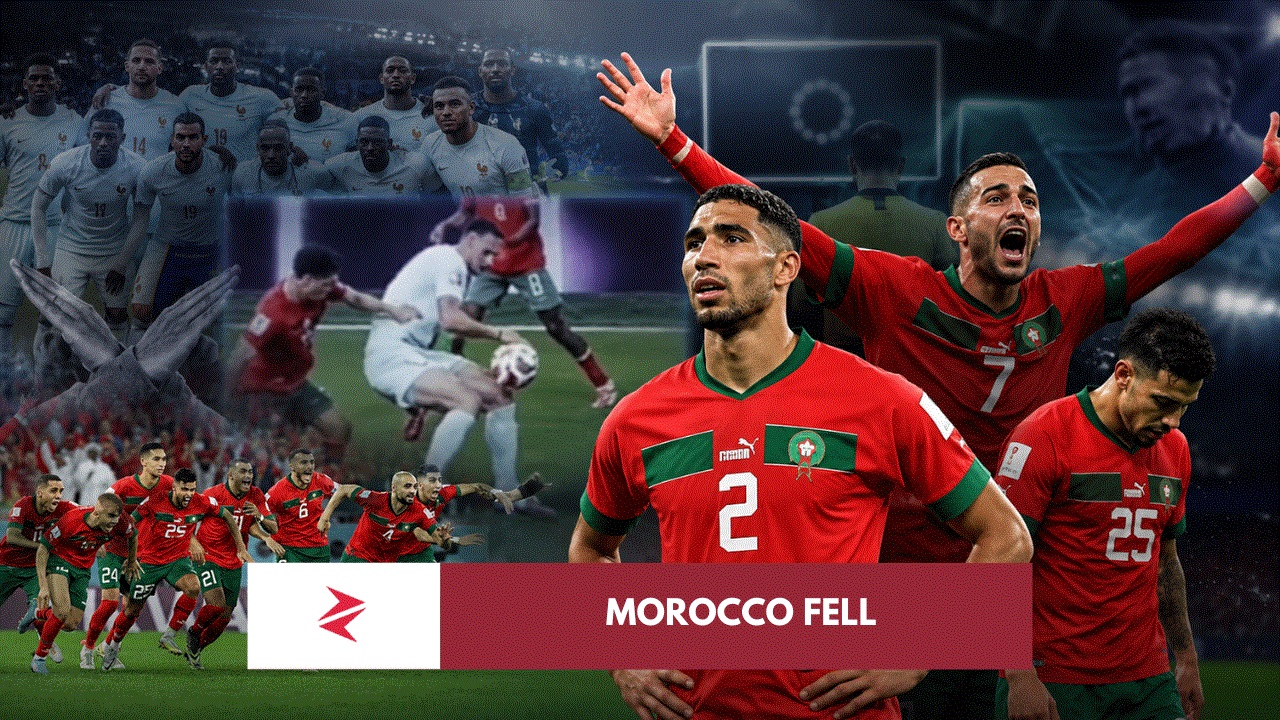
France controlled the opening half, pushed Morocco backwards and repeatedly reached threatening positions. Yassine Bounou’s penalty save against Mbappé preserved the goalless score, but it did not alter the territorial imbalance.
By full time, France had attempted 22 shots worth approximately 3.04 expected goals. Morocco produced only five attempts, one on target, with a combined xG of 0.14. France led the first-half shot count 13–1.
Morocco had survived the first half. They had not controlled it.