
































The Moment That Broke the Quarter-Final
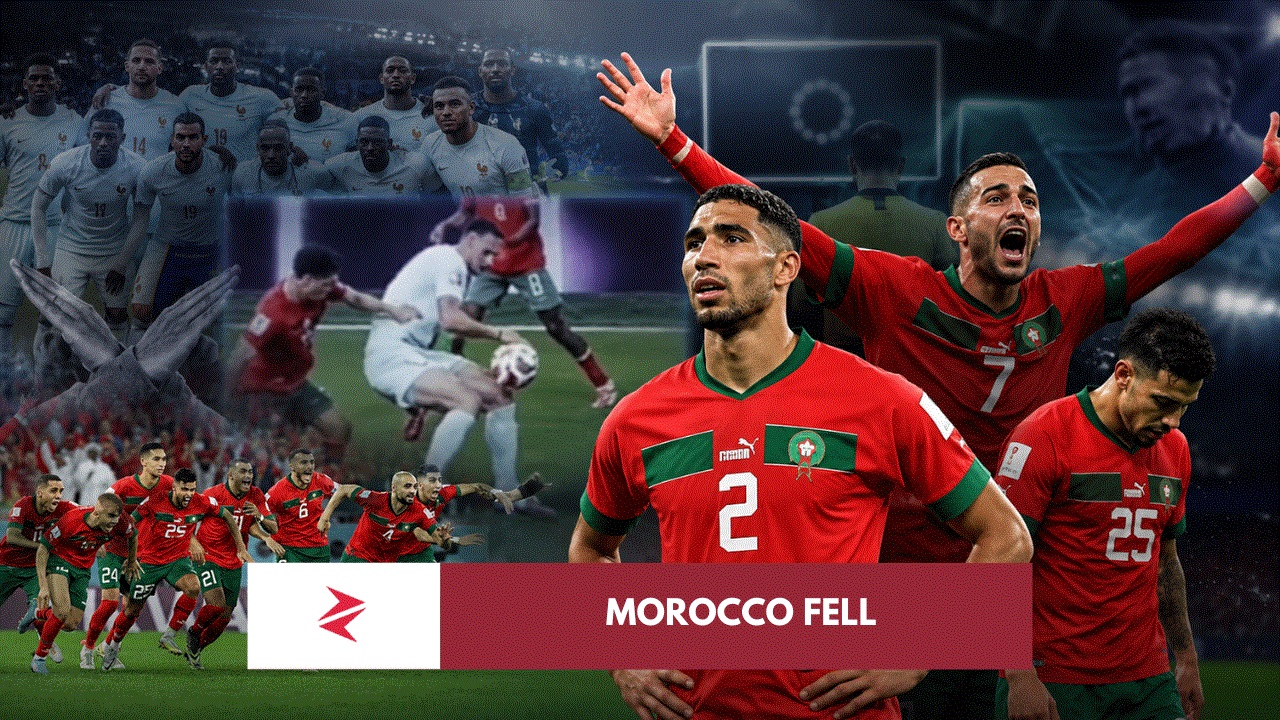
The supplied match still appears to show the ball making contact with, or passing extremely close to, a French player’s arm during the sequence preceding Mbappé’s goal. A single frame cannot establish the player’s movement, the arm’s full position, the speed of the ball or whether possession subsequently changed.
It does, however, explain why Moroccan players reacted.
Ouahbi said that some players stopped because they believed there had been a handball. He maintained that contact “definitely” occurred, although he also acknowledged uncertainty about whether the laws required it to be penalised.
That distinction matters.
Supporters described the action as a French player “playing basketball.” The still image makes the anger understandable. Football law, however, is not determined solely by whether the ball touched an arm.
Under the International Football Association Board’s Law 12, handball is generally penalised when a player deliberately touches the ball with the hand or arm, or when the arm position makes the body unnaturally bigger. An accidental handball by one attacker before a teammate scores is not automatically an offence.
One published refereeing analysis argued that the contact was incidental and that possession changed before Mbappé’s decisive action, separating the goal from the earlier phase. That interpretation would explain why the goal was permitted. It remains an analyst’s interpretation rather than a publicly released account of the officials’ conversation.
There is another important correction.
The absence of an on-field review does not mean the VAR ignored the incident. Under the official protocol, the VAR automatically checks every potential or actual goal. An on-field review is recommended only when the video officials believe the original decision may constitute a clear and obvious error or a serious missed incident.
The officials therefore almost certainly checked the sequence silently. What supporters did not receive was an adequate public explanation of what they saw, what phase was reviewed and why the contact did not meet the threshold for intervention.


That opacity is the legitimate complaint.
Morocco Stopped. Mbappé Did Not.
Whatever the final legal interpretation, Morocco committed a devastating competitive error: several players stopped before the referee stopped play.
The grievance may have been sincere. Stopping was still fatal.
Mbappé played through the uncertainty, collected the opportunity and scored. Six minutes later, Ousmane Dembélé advanced through the middle and made it 2–0. Morocco had spent almost an hour preserving the contest and then lost control of it within six minutes.
The phrase “play to the whistle” is repeated at every level of football because disputed decisions do not suspend an opponent’s obligation to attack.
Morocco paused for justice. France continued toward goal.
The opening decision undoubtedly affected the match state. It does not explain France’s 22 shots, Morocco’s limited attacking output, the missing Saibari, the first-half imbalance or the defensive failure before Dembélé’s second goal.
Ouahbi himself recognised that France had been the better team and had caused Morocco serious problems through the centre and on the flanks.
Claiming Morocco lost only because of the disputed handball would therefore be inaccurate. Claiming the incident was irrelevant because France played better would be equally dishonest.
The first goal can be both legally defensible and poorly explained. France can deserve the victory while Morocco remain entitled to question its pivotal moment.