




































Saibari’s Absence Removed Morocco’s Most Reliable Threat
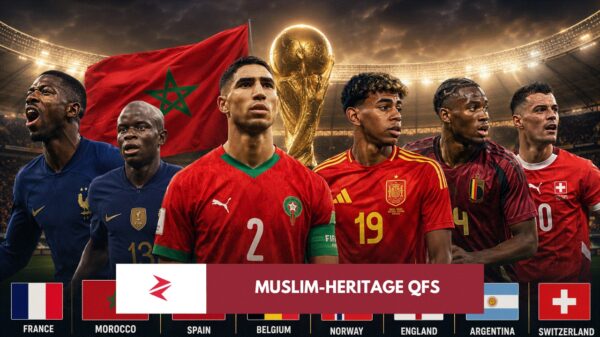
Morocco arrived against France without Ismael Saibari, who had suffered a hamstring injury against Canada.
His absence was substantial. Saibari had scored in all three of Morocco’s group matches and converted the decisive penalty against the Netherlands. He was not simply another attacking option; he had been Morocco’s most consistent tournament scorer and one of their most direct transition threats.
Without him, Morocco lacked some of the speed and decisiveness required to punish France after recovering possession.
Coach Mohamed Ouahbi had insisted before kickoff that reaching the quarter-final was not Morocco’s prize. His objective was to win the tournament. He also said his team intended to hurt France both centrally and through the wings.
That intention rarely materialised.
France controlled the opening half, pushed Morocco backwards and repeatedly reached threatening positions. Yassine Bounou’s penalty save against Mbappé preserved the goalless score, but it did not alter the territorial imbalance.
By full time, France had attempted 22 shots worth approximately 3.04 expected goals. Morocco produced only five attempts, one on target, with a combined xG of 0.14. France led the first-half shot count 13–1.
Morocco had survived the first half. They had not controlled it.
The Moment That Broke the Quarter-Final
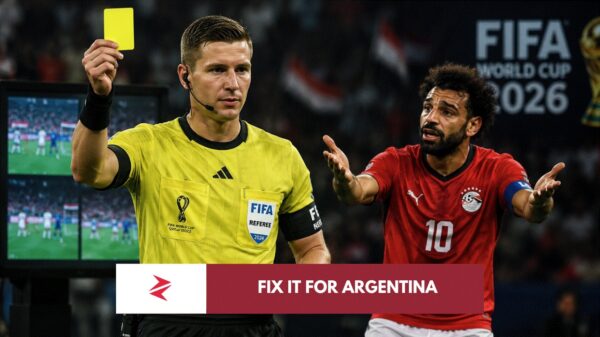
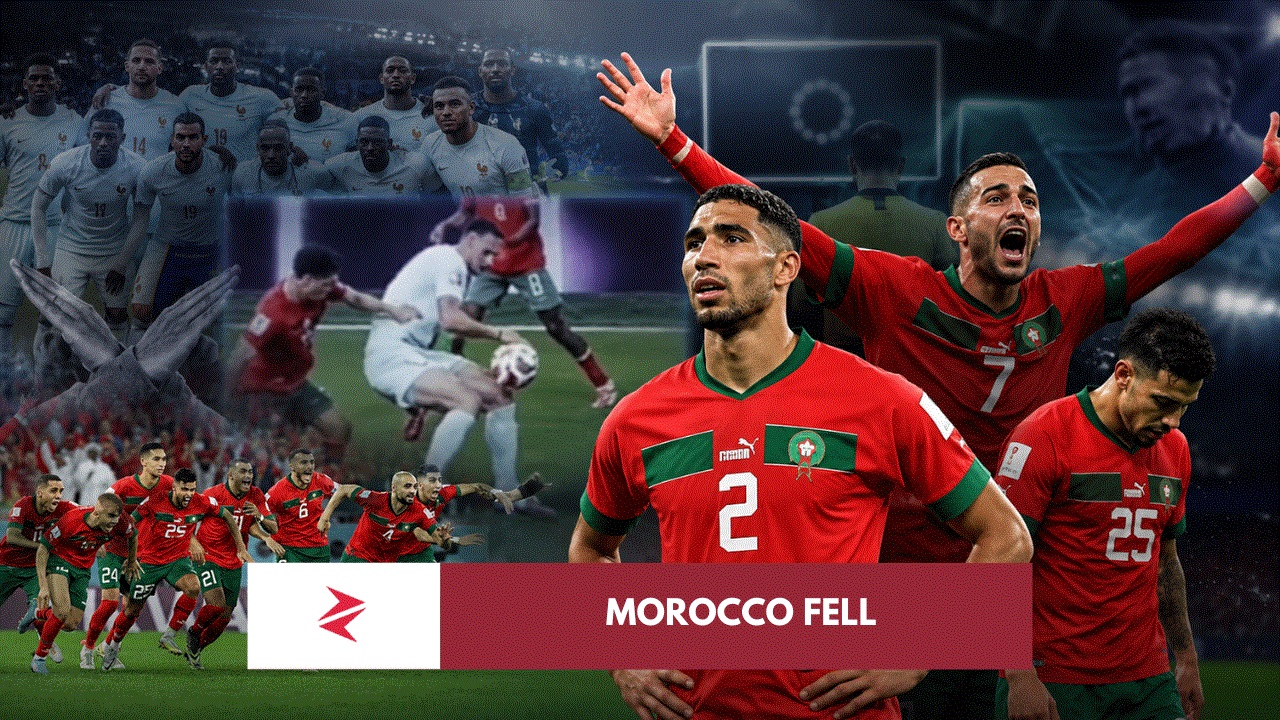
The supplied match still appears to show the ball making contact with, or passing extremely close to, a French player’s arm during the sequence preceding Mbappé’s goal. A single frame cannot establish the player’s movement, the arm’s full position, the speed of the ball or whether possession subsequently changed.
It does, however, explain why Moroccan players reacted.


Ouahbi said that some players stopped because they believed there had been a handball. He maintained that contact “definitely” occurred, although he also acknowledged uncertainty about whether the laws required it to be penalised.
That distinction matters.
Supporters described the action as a French player “playing basketball.” The still image makes the anger understandable. Football law, however, is not determined solely by whether the ball touched an arm.
Under the International Football Association Board’s Law 12, handball is generally penalised when a player deliberately touches the ball with the hand or arm, or when the arm position makes the body unnaturally bigger. An accidental handball by one attacker before a teammate scores is not automatically an offence.
One published refereeing analysis argued that the contact was incidental and that possession changed before Mbappé’s decisive action, separating the goal from the earlier phase. That interpretation would explain why the goal was permitted. It remains an analyst’s interpretation rather than a publicly released account of the officials’ conversation.
There is another important correction.
The absence of an on-field review does not mean the VAR ignored the incident. Under the official protocol, the VAR automatically checks every potential or actual goal. An on-field review is recommended only when the video officials believe the original decision may constitute a clear and obvious error or a serious missed incident.
The officials therefore almost certainly checked the sequence silently. What supporters did not receive was an adequate public explanation of what they saw, what phase was reviewed and why the contact did not meet the threshold for intervention.
That opacity is the legitimate complaint.
