





























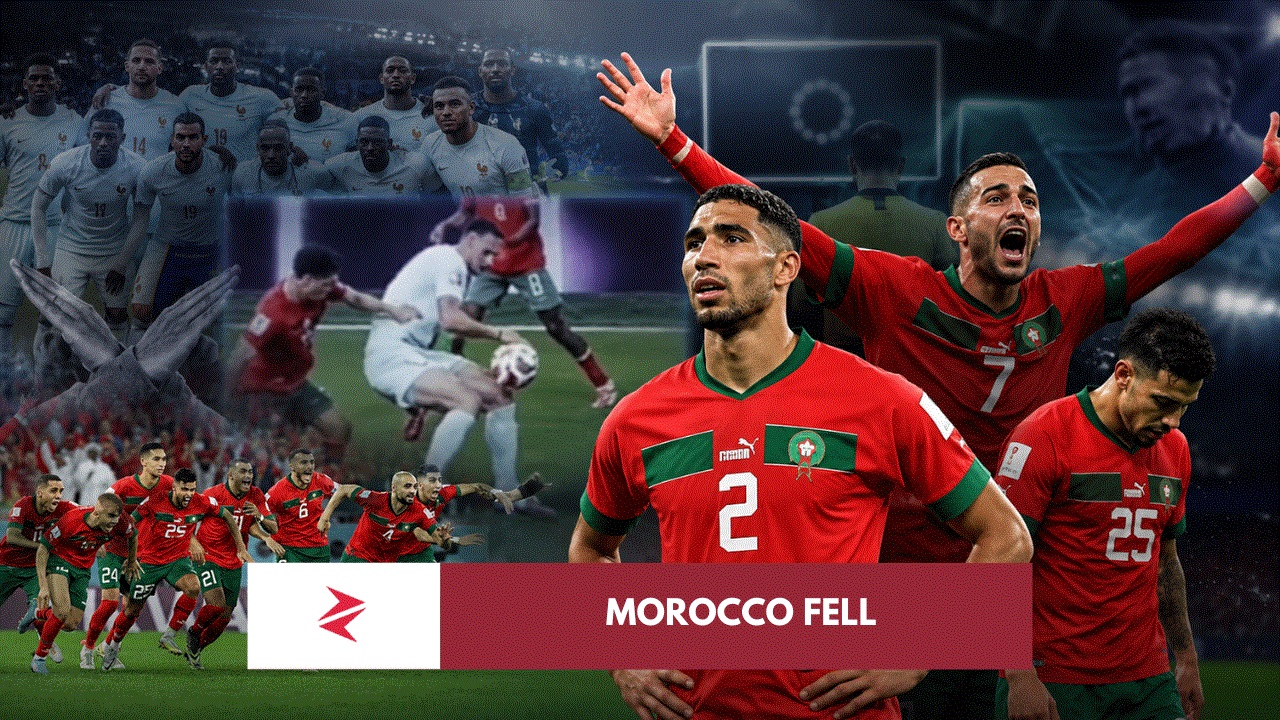
Morocco Stopped. Mbappé Did Not.
Whatever the final legal interpretation, Morocco committed a devastating competitive error: several players stopped before the referee stopped play.
The grievance may have been sincere. Stopping was still fatal.
Mbappé played through the uncertainty, collected the opportunity and scored. Six minutes later, Ousmane Dembélé advanced through the middle and made it 2–0. Morocco had spent almost an hour preserving the contest and then lost control of it within six minutes.
The phrase “play to the whistle” is repeated at every level of football because disputed decisions do not suspend an opponent’s obligation to attack.
Morocco paused for justice. France continued toward goal.
The opening decision undoubtedly affected the match state. It does not explain France’s 22 shots, Morocco’s limited attacking output, the missing Saibari, the first-half imbalance or the defensive failure before Dembélé’s second goal.
Ouahbi himself recognised that France had been the better team and had caused Morocco serious problems through the centre and on the flanks.
Claiming Morocco lost only because of the disputed handball would therefore be inaccurate. Claiming the incident was irrelevant because France played better would be equally dishonest.
The first goal can be both legally defensible and poorly explained. France can deserve the victory while Morocco remain entitled to question its pivotal moment.
What the Images Prove—and What They Do Not
The author-supplied images provide useful visual context.


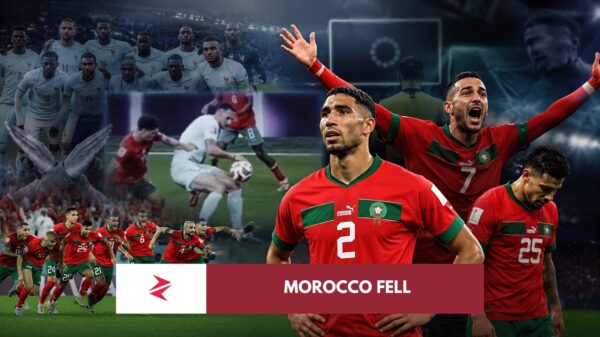
They show Morocco’s collective identity and celebrations. They show the French team before the match. They show the disputed contact from one angle. They also show Moroccan players and staff using crossed-arm gestures as a form of visual protest.
Those are observational data points. They are not, individually, proof of institutional manipulation.
The supplied X screenshot states that a video had been disabled following a report by the copyright owner. That establishes that a copyright complaint was made. It does not establish that FIFA ordered the clip removed, that the platform was suppressing criticism or that officials were attempting to conceal evidence.
Turning a copyright notification into proof of corruption would weaken the stronger argument: FIFA and tournament organisers should explain controversial decisions openly, consistently and promptly.
