




































| Indicator | Amount | What It Actually Means |
|---|---|---|
| SBP-held reserves | $17.2258 billion | Official central-bank reserve buffer |
| Commercial-bank reserves | $5.4497 billion | Foreign currency held within scheduled banks |
| Total liquid reserves | $22.6755 billion | Combined SBP and commercial-bank position |
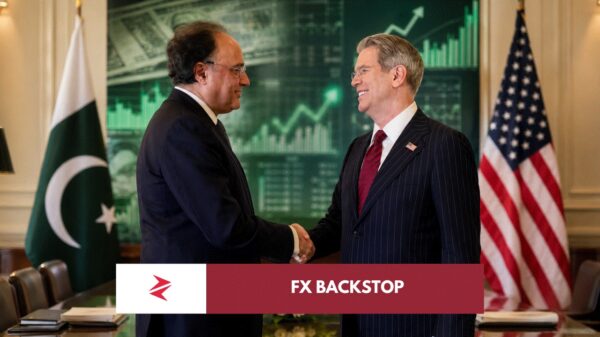
| Proposed U.S. backstop | $10 billion | A requested contingency facility, not an approved cash grant |
| Facility relative to SBP reserves | Approximately 58% | Large enough to materially strengthen official buffers |
| Facility relative to total reserves | Approximately 44% | Significant, but not proof that existing reserves are fictional |
| Current status | Requested, unapproved | Treasury’s public statement did not announce an agreement |
This is the factual centre of the controversy: Pakistan’s total liquid reserves are indeed about $22.68 billion, while the directly held SBP component is about $17.23 billion. A $10 billion facility would therefore be enormous, representing roughly 58 percent of existing official reserves and 44 percent of the broader liquid-reserve position. Those ratios explain why Islamabad would pursue the arrangement. They do not establish that Pakistan is already insolvent; they establish that a successful facility would dramatically enlarge its defensive capacity against oil-price, currency and refinancing shocks.
The Reuters copy reviewed for this analysis does not rest its central argument upon a claim that Pakistan’s total liquid reserves were only $18.5 billion. Its core claim concerns the reported request and its potential economic purpose. The online assertion that the SBP graphic automatically proves Reuters published “misinformation” therefore goes beyond what the available evidence supports. Reuters can legitimately be criticised for relying on unnamed sources, using language such as “cash-strapped,” or presenting Pakistan primarily through the familiar crisis template, but criticism must attack the framing actually used rather than inventing a numerical contradiction that does not settle the underlying question.
An Exchange Stabilization Facility Is Not the Same as Foreign Aid
The U.S. Treasury’s Exchange Stabilization Fund is an established financial instrument that can purchase or sell foreign currencies, hold foreign-exchange and Special Drawing Rights assets, and provide financing to foreign governments. Treasury states that ESF operations require the explicit authorisation of the Treasury secretary. The fund can also extend loans or credits through temporary swap arrangements negotiated with prospective borrowers.
That makes the proposed Pakistan arrangement fundamentally different from a suitcase of dollars being handed over as charity. Depending on its final structure, it could involve repayable credit, a currency swap, guarantees, reserve support or another form of temporary liquidity carrying maturity conditions, pricing obligations and policy expectations. The United States would not be doing Pakistan a sentimental favour; it would be making a calculated financial and geopolitical decision based on American interests, regional stability and confidence in Pakistan’s repayment and reform capacity.
Calling such an arrangement “peaceful begging” may earn applause from accounts that already despise Pakistan, but it exposes ignorance about how sovereign finance operates. Mexico has maintained an exchange-stabilisation arrangement with the U.S. Treasury, while the ESF has historically conducted financial operations involving several foreign governments. These mechanisms exist because currency crises can spread through trade, banking and strategic alliances.
The better Pakistani question is not whether requesting the facility is humiliating. The better question is whether the facility would be transparently structured, responsibly priced and used to finance a transition toward export earnings and productive investment rather than becoming another temporary wall built in front of the same leaking economic pipeline.
Why Pakistan May Want the Facility Despite Stable Reserves
Pakistan’s reserve recovery is real. The U.S. Treasury itself acknowledged the country’s progress in macroeconomic stabilisation and fiscal consolidation, while S&P upgraded Pakistan’s long-term sovereign rating from B- to B with a stable outlook, citing reform implementation and greater institutional stability. That is not the profile of a country presently collapsing into an uncontrolled default.
Yet reserve stability is not the same as structural economic independence. Pakistan still faces large gross financing requirements, limited access to inexpensive international capital and persistent difficulty attracting the scale of high-quality foreign investment needed to replace borrowed dollars with earned dollars. The IMF’s latest assessment continues to identify external financing and medium-term debt risks as serious constraints, even while judging public debt sustainable under its baseline.
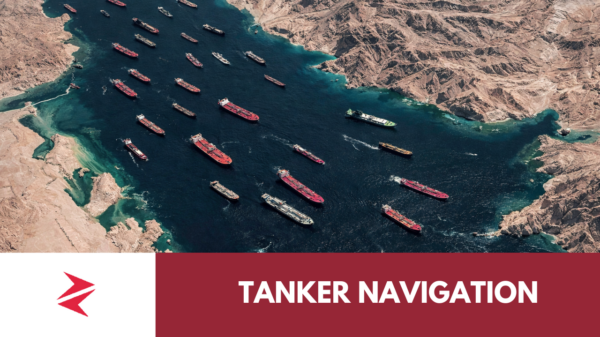
Pakistan is also geographically exposed to any disruption in the Persian Gulf and Strait of Hormuz. Higher oil prices affect import payments, electricity-generation costs, transport, inflation, manufacturing margins and the rupee. This is why the argument developed in Pakistan’s Petrol Price Shock remains relevant: imported-energy exposure converts a distant war into an immediate tax on Pakistani households and industries. The wider geopolitical structure described in Donald Trump, the New World Order and the Muslim World further explains why Islamabad cannot treat regional diplomacy and economic security as separate files.
A reserve backstop is therefore similar to insurance. Possessing insurance does not prove that one’s house is already burning. It means the owner has recognised that the financial consequences of a fire could exceed the liquid cash immediately available.


