








































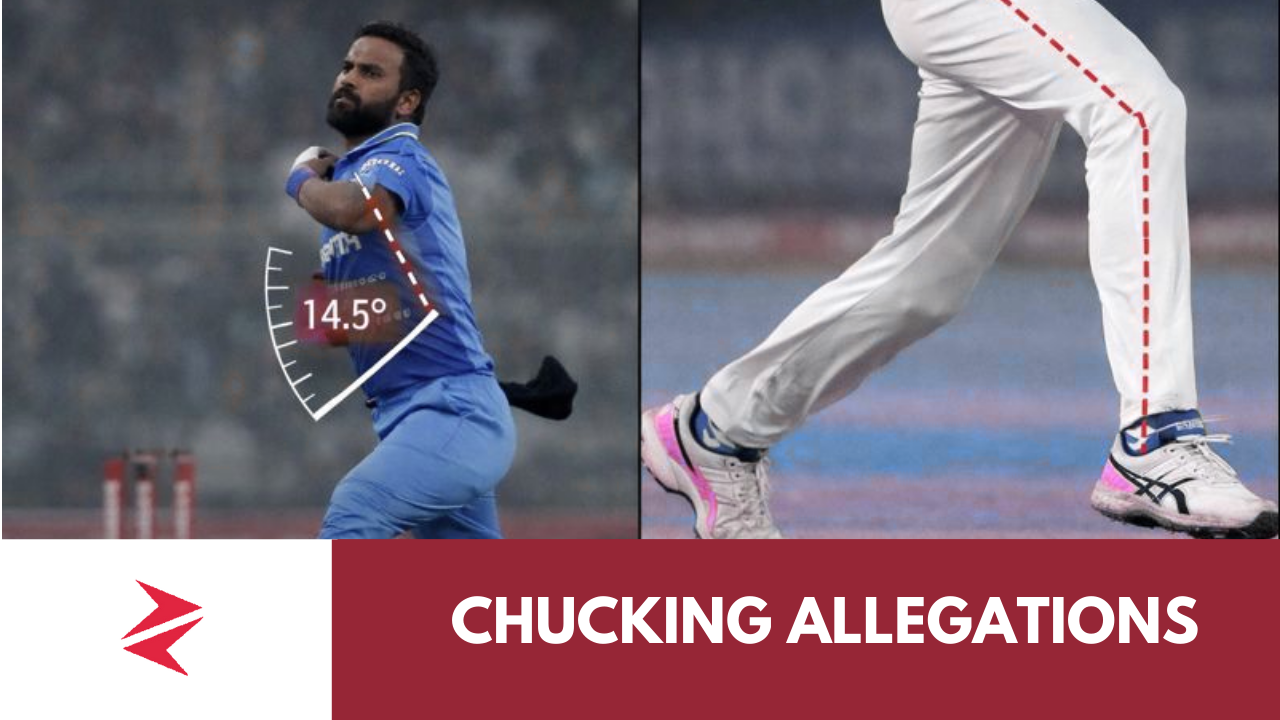
In cricket, a bowling action is not an aesthetic flourish. It is a biomechanical sequence governed by law, measured in degrees, and enforced—at least on paper—without prejudice. From grip to follow-through, every movement determines pace, drift, dip, deception, and legality. Yet history shows that legality alone has rarely protected bowlers from narrative warfare.

A standard bowling action unfolds in phases: grip, run-up, bound, delivery stride, release, and follow-through. Coaches refine these to maximize energy transfer while maintaining balance and repeatability. Fast bowlers rely on momentum and a braced front leg; spinners rely on wrist position, seam control, and subtle variations in release height. None of this is controversial. The controversy begins at the elbow.
