











































Shape, Appearance, Identity and Animation Are Different Problems
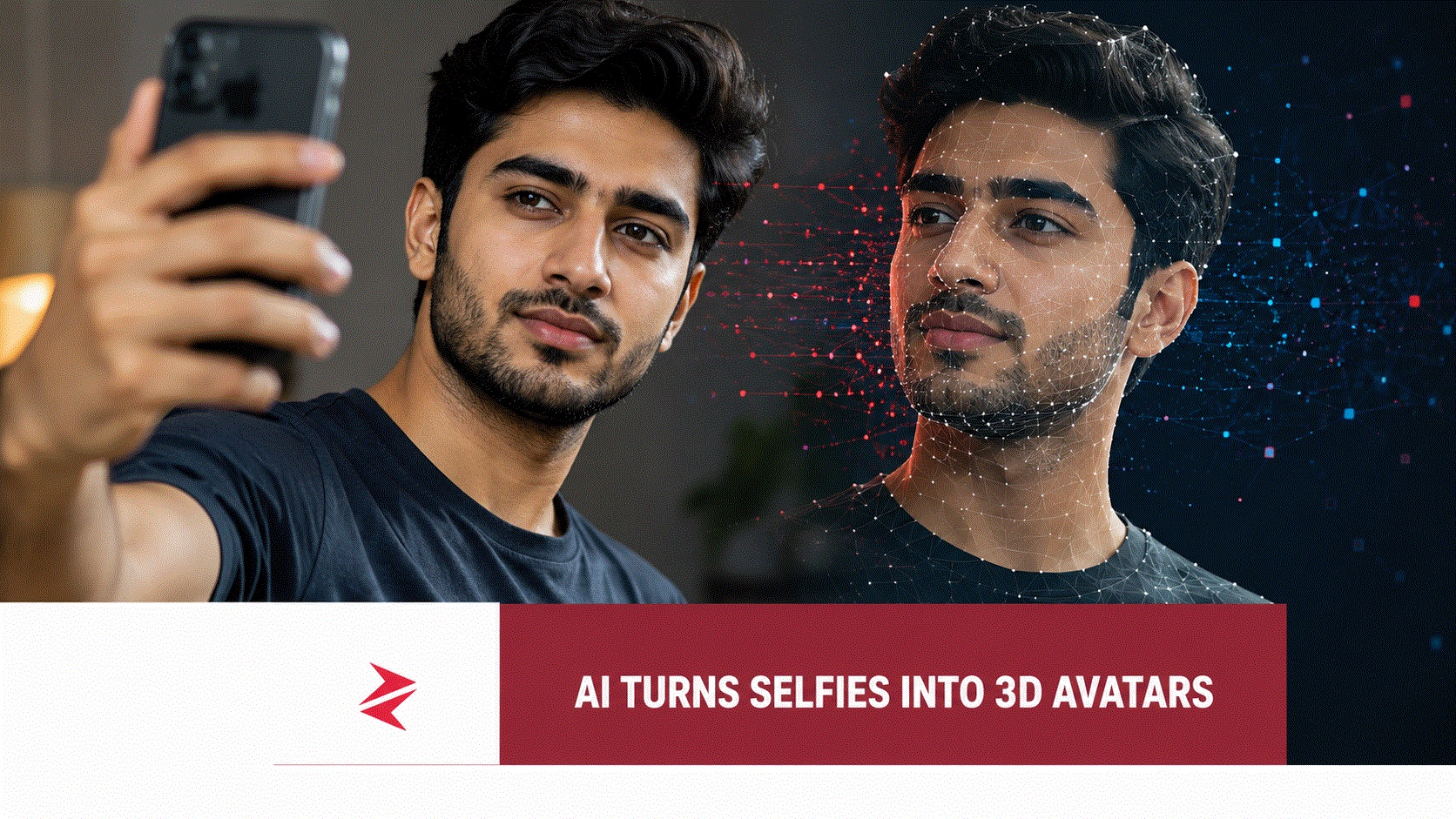
A visually impressive avatar must solve several connected problems that are too often collapsed into the vague label of “AI.”
Geometry determines the structure of the head. Texture provides its visible surface. Identity preservation decides whether the result remains recognisably you rather than becoming a generic attractive face. Rigging makes the model movable. Animation drives expressions, speech or body motion.
A system can perform well in one layer and fail badly in another. It may generate smooth geometry while erasing a distinctive nose. It may preserve facial resemblance from the front but become implausible from the side. It may look realistic as a still image but deform unnaturally when the mouth opens.
This is why the original makeAvatar.ai proposition was technically ambitious. It did not merely promise a decorative portrait. It proposed rigged and animated output that could be used elsewhere—a difference comparable to receiving a photograph of a car versus receiving a controllable 3D car model that can be placed inside a game.
Modern face-landmark models, neural rendering, generative reconstruction and richer 3D datasets have made the pipeline more capable. The FaceScape research dataset, for example, reported 16,940 textured 3D faces captured from 847 subjects across 20 expressions, illustrating the scale and variation required to teach systems how identity and expression interact.
What Is an API—and Why It Was Central to the Idea?
An application programming interface, or API, is a defined method through which one piece of software requests data or functionality from another. It is less like a human-facing website and more like a contractual counter between machines: submit an accepted request, receive a documented response.
Google’s developer documentation explains that an API enables communication between platforms through predetermined rules governing how data is exchanged. Its Google Meet API overview also distinguishes an API from a complete software development kit, or SDK.
For a 3D-avatar service, a simplified interaction might look like this:
- An application records or uploads a permitted selfie video.
- It sends the file, settings and authentication details to an avatar API.
- The remote system processes the face and constructs the avatar.
- The API reports progress or returns the completed model.
- The calling application imports that model into a game, virtual showroom or AR experience.
This matters because an API can convert specialised research into a building block that thousands of other developers use without reproducing the original machine-learning pipeline. Pakistan does not need every startup to build a foundation model. It needs more companies capable of packaging difficult engineering into exportable tools.
That lesson connects directly with the country’s wider AI infrastructure challenge, the uncomfortable questions surrounding the Sky47 AI-ready data-centre project and the international success of Pakistani-origin engineers such as Cursor co-founder Sualeh Asif. Talent exists. The missing machinery is the ecosystem that retains intellectual property, compute, financing and commercial ownership inside Pakistan.
What Happened to Groopic and makeAvatar.ai?
This is where an EEAT-compliant update must separate history from current availability.

The Product Hunt record for makeAvatar.ai remains online, preserving the product’s positioning and launch history. However, the old Groopic domain no longer represents the Pakistani computational-photography company; it currently resolves to unrelated gambling-oriented content. That domain must therefore not be treated as the startup’s active official website, product documentation or endorsement.
The makeAvatar.ai launch should be understood as an early Pakistani technology experiment whose public footprint has largely become archival. Readers should not upload personal images, purchase a service or share credentials merely because an old article or product directory preserves a historical link.
This does not erase the team’s contribution. It actually sharpens the lesson: Pakistan repeatedly produces strong prototypes and internationally relevant engineering, but weak institutional continuity allows domains, documentation and public memory to disappear. A product can die while the idea it anticipated becomes a global industry.
The Privacy Risk Hiding Behind a Convenient Avatar
A face is not an ordinary image. It may function as biometric data, reveal identity and be reused in ways that a password cannot. Before uploading a selfie or video, users and developers should determine who stores the source, whether it is retained, whether it is used for model training, how deletion works, where processing occurs and whether the generated avatar can be exported or commercially reused.
The question is not merely, “Can this service create my avatar?”
The serious question is, “What rights does the service acquire over my face?”
Developers should seek explicit consent, minimise retention, encrypt uploads, document deletion procedures and avoid silently repurposing facial material. Users should reject services that provide no credible ownership, privacy or deletion terms—particularly dormant products and domains whose ownership may have changed.
Why This Matters for Pakistan Now
Pakistan was not absent from the early avatar conversation. Pakistani builders were already experimenting with machine vision, neural networks and automated 3D creation while much of the local market still treated artificial intelligence as a science-fiction label.
But celebrating an old launch without learning from its disappearance would be another form of natural stupidity.
The commercial opportunity now reaches far beyond profile pictures. Pakistani studios can build avatar pipelines for games, digital fashion, virtual training, remote education, ecommerce fitting, animation, telepresence and culturally accurate Urdu-language characters. The local advantage will not come from cloning another foreign selfie app; it will come from representing faces, clothes, languages and environments that global datasets routinely flatten or misunderstand.
Pakistan must move from producing isolated demos to controlling durable products, APIs, datasets and intellectual property. Otherwise, Pakistani engineers will continue helping build the future abroad while the country celebrates screenshots of what it almost owned.
Frequently Asked Questions
Can AI create an exact 3D copy from one selfie?
No. A single image does not contain complete information about hidden surfaces or exact depth. The system estimates the most plausible geometry using visible evidence and patterns learned during training.










