













































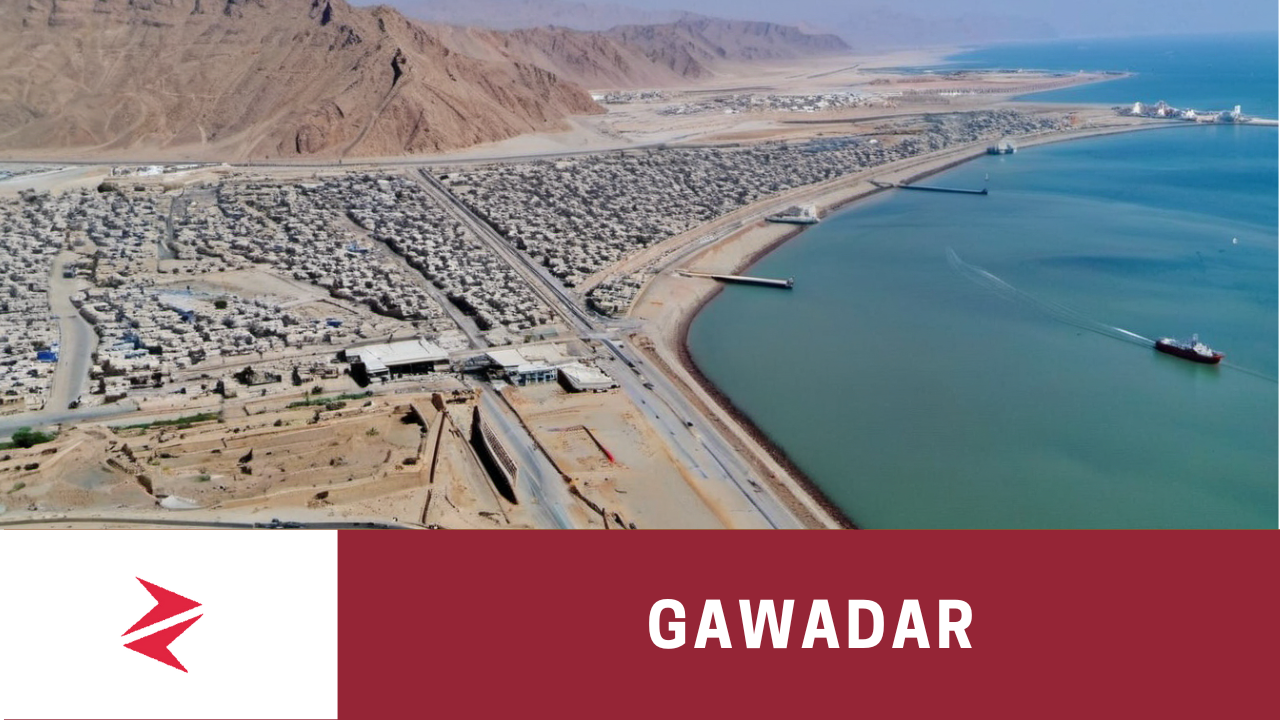
Gwadar opens up avenues for trade with landlocked Central Asian States and Afghanistan, promoting economic growth and regional integration. The establishment of shipping-related industries in Gwadar stimulates local economies, creates job opportunities, and nurtures an environment conducive to industrial growth and innovation. Gwadar’s progress catalyzes the development of Balochistan, generating employment, enhancing infrastructure, and uplifting livelihoods in the province.

By connecting all provinces, Gwadar bridges regional divides, fostering unity and collaboration while facilitating inclusive development across Pakistan. Gwadar’s role in the trans-shipment of containerized cargo optimizes logistics, ensuring the efficient movement of goods and positioning Pakistan as a key player in global trade networks.

Promoting trade and transport with the Gulf States, Gwadar enhances connectivity and strengthens economic ties, unlocking new avenues for cooperation and development.

With US influence dominating the Malacca Strait, China seeks alternative routes like Gwadar, reshaping dynamics in global maritime trade. Gwadar’s emergence provides China with an alternative route, reducing dependency on Malacca and reshaping global trade dynamics, affecting port economics in Sri Lanka, Malacca (Singapore), and India.

The strategic significance of Gwadar challenges Singapore’s position in the Malacca Strait, signaling a transformative shift in maritime trade routes and port economics across the region.
Fast and cost-effective trade facilitated by projects like Gwadar is crucial for stabilizing Afghanistan’s economy, fostering growth, and promoting regional stability. Central Asian countries recognize that stability in Afghanistan is essential for unlocking the full potential of regional trade routes and enhancing economic integration.

The stability of Afghanistan is not only vital for its development but also for ensuring seamless trade flows and economic prosperity across the Central Asian region.
Western countries & Russia:
Improved trade routes through Gwadar offer Western countries and Russia a pathway to reduce reliance on Russian and Iranian influences in Asian trade dynamics. The ascendance of Gwadar as a trade hub signals a shift towards economic independence for Central Asian countries, a prospect that Russia may view cautiously due to its historical influence in the region.

Russia’s diplomatic maneuvers indicate strategic interest in securing access to warm waters, aligning with its historical ambitions and geopolitical imperatives in the region. Gwadar’s development positions Oman, as a neighboring nation, at the forefront of benefiting from increased trade with China and the Central Asian Republics. Oman’s active engagement in the project underscores its commitment to regional prosperity and cooperation.
Proactive involvement in the Gwadar project reflects Oman’s strategic vision to leverage geographical proximity for economic gains. As trade routes expand, Oman emerges as a pivotal player in fostering connectivity and trade dynamics in the region.

By promoting trade and connectivity, Gwadar provides a platform for Pakistan to strengthen relations with neighboring countries, fostering goodwill, trust, and collaboration for shared prosperity and stability in the region. Gwadar’s strategic location and growing trade potential pave the way for increased commerce and investment opportunities, driving economic growth and prosperity for Pakistan and its regional partners.














