

































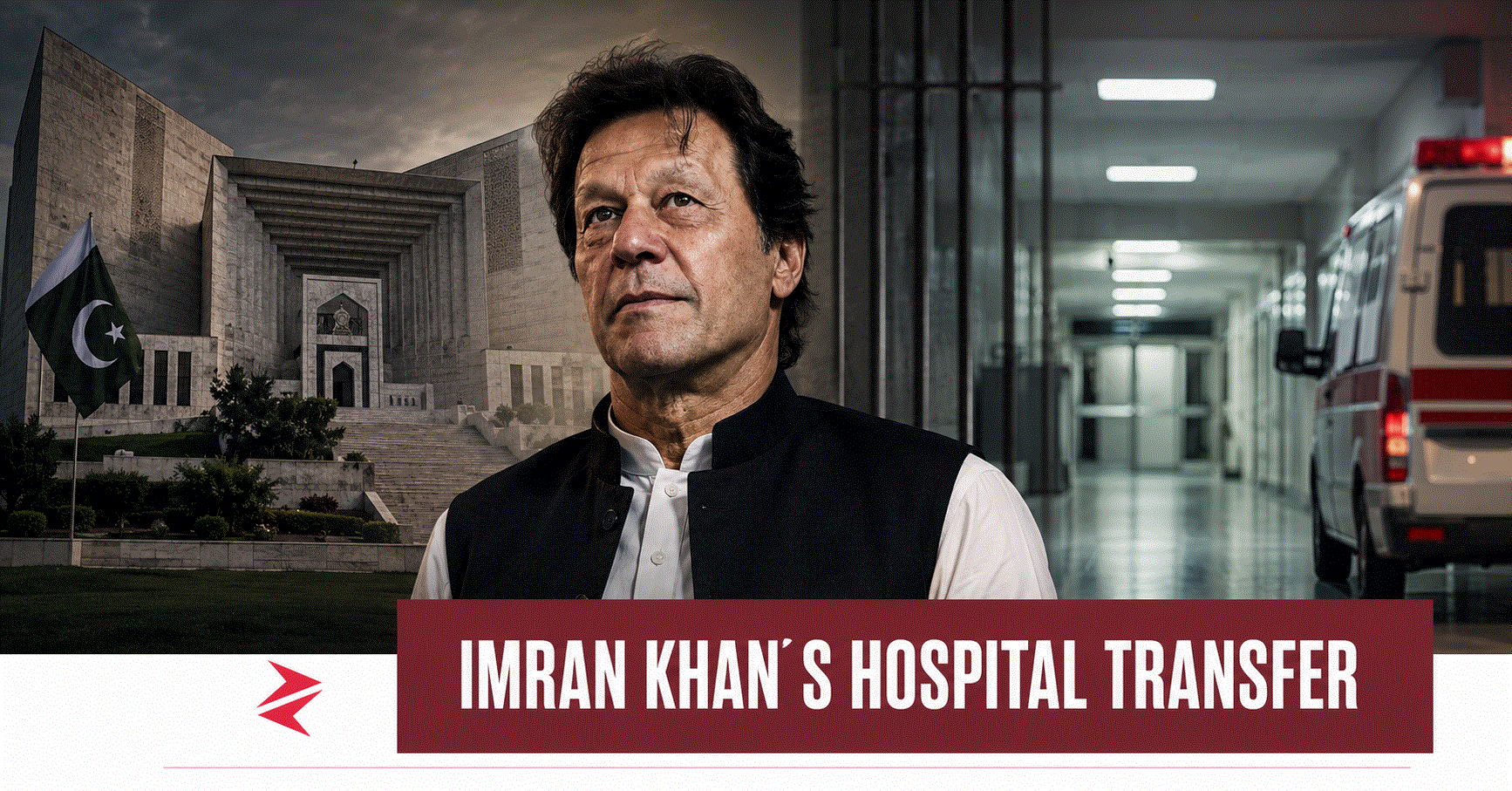
What the Medical Record Indicates—and What It Cannot Prove
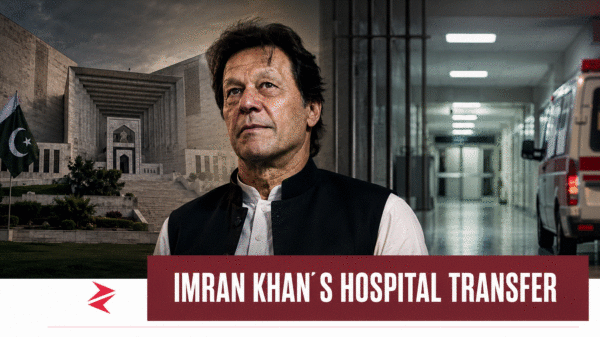
The medical material circulating in connection with the case raises legitimate questions. Pages dated August 1 and August 10 record complaints including fluctuating blood pressure, headaches, palpitations, anxiety and restlessness. One examination records blood pressure of 140/100 mmHg, notes no significant ECG changes and recommends stress reduction, greater family contact, blood-pressure management and consideration of CT coronary angiography. The listed regimen appears to include valsartan, amlodipine, escitalopram and a small dose of bromazepam, alongside cholesterol-lowering therapy.
Those details justify independent medical assessment. They do not independently prove poisoning, attempted murder, irreversible organ damage or deliberate medical abuse. Medication names are not a conspiracy chart; they are evidence that clinicians were managing particular symptoms and risks. Equally, a government summary claiming improvement cannot substitute for examination by specialists who have direct access to the patient and his complete history.
Khan’s eye condition has a longer documented background. In February 2026, his lawyer told the Supreme Court that Khan had lost approximately 85 percent of the vision in his right eye following central retinal vein occlusion, although officials later claimed substantial improvement after treatment. Reuters attributed the 85 percent figure specifically to lawyer Salman Safdar, while a later Adiala Jail report claimed that the affected eye had almost regained normal vision. These conflicting accounts are precisely why an independent board, full records and clinically justified testing matter.
| Medical point | Responsible interpretation |
|---|---|
| CRVO in the right eye | A serious retinal vascular condition requiring ophthalmological supervision |
| Reported 85% vision loss | A claim attributed to Khan’s lawyer, not an independently published final specialist finding |
| Claimed recovery | A jail-authority position that Khan’s personal doctor said required direct verification |
| Blood pressure of 140/100 | Hypertension requiring assessment and monitoring, particularly alongside headaches or visual symptoms |
| Palpitations and anxiety | Symptoms requiring clinical investigation; they do not alone establish cardiac damage |
| CT coronary angiography recommendation | Evidence that clinicians considered further cardiovascular assessment appropriate |
| Antidepressant or benzodiazepine use | Evidence of treatment for anxiety, sleep or related symptoms—not proof of coercion or poisoning |
| Poisoning claim | Unsupported without toxicology, clinical evidence and an authenticated medical conclusion |
If Khan has been subjected to conditions meeting the legal definition of prolonged solitary confinement—more than 22 hours daily without meaningful human contact for over 15 consecutive days—that would raise a separate human-rights question. The United Nations’ Nelson Mandela Rules prohibit indefinite and prolonged solitary confinement. Whether Khan’s precise conditions satisfy that definition must be established through records and independent inspection, rather than slogans alone.
Nawaz Sharif Has Already Won the Moral Argument
Here is the contradiction PTI’s online machinery does not want to confront. In 2019, when Nawaz Sharif was seriously ill in custody, low platelet counts, hospitalisation and medical bail were turned into political comedy. Imran Khan himself publicly questioned the appearance of Sharif climbing aircraft stairs and cast doubt on medical reports listing multiple illnesses. Dawn documented Khan questioning those reports, while Reuters recorded that courts granted Sharif temporary medical bail.
Mocking Nawaz Sharif’s illness was wrong then. Mocking Imran Khan’s illness would be wrong now. Demanding medical dignity for Khan while continuing to circulate “fake platelets” jokes about Sharif is not human-rights advocacy; it is partisan entitlement disguised as principle.
In that specific moral sense, Nawaz Sharif and every political opponent whose illness, detention or family grief was ridiculed during Imran Khan’s rise have won an argument that required no press conference. The same political culture that treated sickness as theatre when an opponent was suffering now demands that every reported symptom of its own leader be accepted without scrutiny. Pakistan cannot build equal law from such selective compassion.
This does not mean Khan should suffer because others suffered. It means the country must finally reject the cycle. Readers examining the longer political record surrounding Imran Khan will recognise that selective accountability has repeatedly produced short-term political winners while weakening institutions. The same institutional danger appears in Pakistan’s broader system-collapse debate and in the argument that justice must remain evidence-led rather than theatrical.