







































-
Daily or weekly disconnections
-
Night-time slowdowns
-
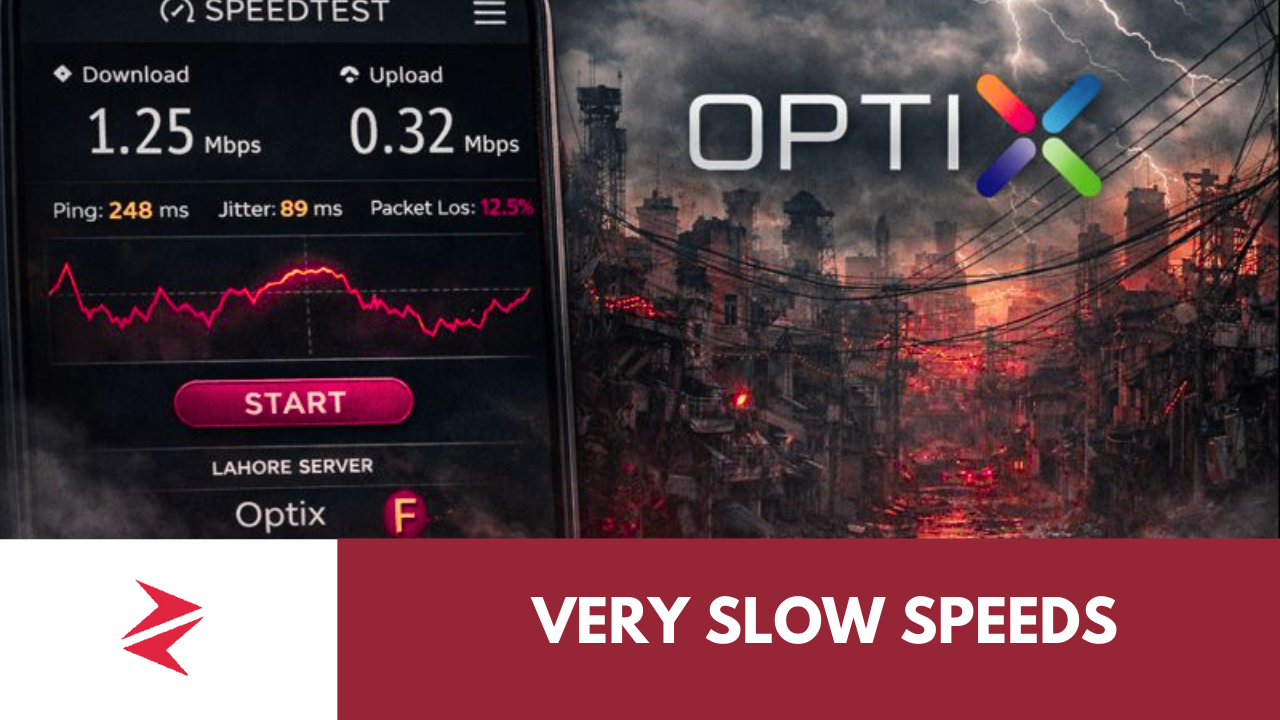
High ping and jitter (especially noticeable for gaming and video calls)
-
Area-wide outages lasting hours
Others remain stable for years.
This creates a lottery-style customer experience, which is unacceptable for professionals and businesses that depend on uptime.
3. Router Quality Quietly Undermines Performance
Optix’s stock Wi-Fi routers are widely criticized for:
-
Poor range
-
Unstable ping
-
Speed drops under load
A recurring pattern is that users who replace the default router with a higher-quality personal device report immediate performance improvement. This suggests that a meaningful portion of Optix dissatisfaction originates at the last-mile device level, not the fiber itself.
4. Monopoly Pressure in Gated Communities
In many DHA, Askari, and private societies, Optix is the only permitted provider.
This changes everything:
-
Customers cannot switch
-
Incentives to improve weaken
-
Frustration escalates faster
History shows that monopolies don’t fail because of bad technology.
They fail because accountability erodes.
5. Migration, Pricing, and Transparency Complaints
Users also report:
-
Confusion around speed upgrades
-
Delays after trial offers
-
Charges for migrations despite existing infrastructure
-
IPTV or app access issues due to missing credentials
Even solvable issues become major pain points when communication breaks down.
How Optix Stacks Up Nationally (2025–2026 Context)
Independent benchmarks and large-scale user feedback consistently place providers like PTCL Flash Fiber, Nayatel, StormFiber, and Transworld ahead in: