



























For Pakistan, that distinction is consequential. Every loosely assembled arrest list can become another apparent confirmation of a vast Pakistani operation, even when the underlying reports concern different conduct and different evidentiary questions. Readers should insist on the connections being demonstrated, rather than supplied by the repeated appearance of “Pakistan” in a headline.
The image can manufacture certainty too
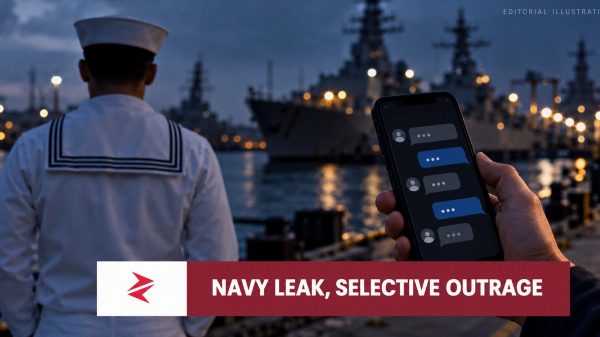
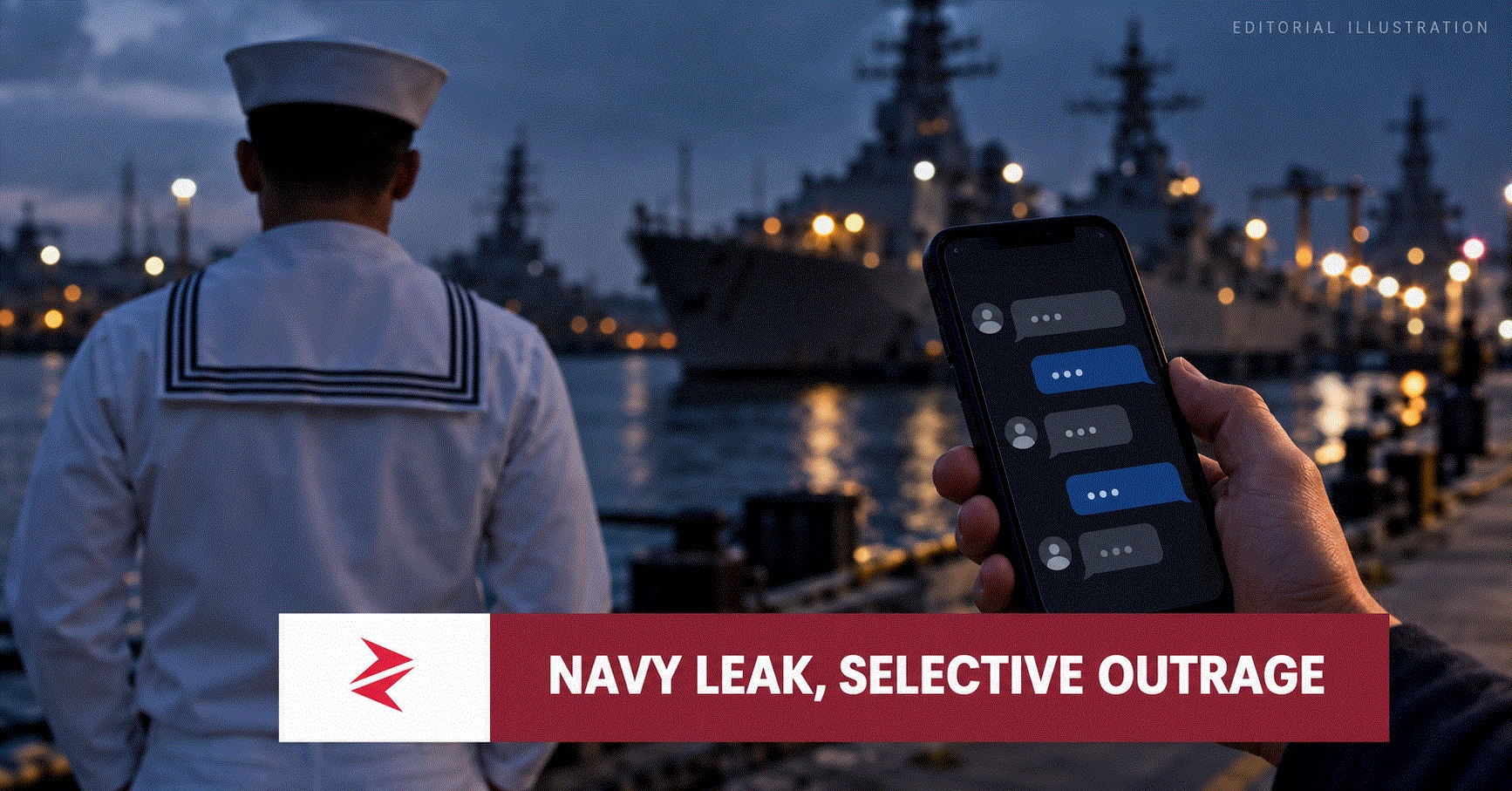
The Times of India article carries the disclosure, “AI Image Used For Representational Purpose Only.” Its illustration is therefore not a photograph of Mukherjee, the alleged handler or the arrest. That qualification deserves to travel with the image whenever it is recirculated, because a uniform, a warship and an authoritative news logo can make an illustrative scene feel like documentary evidence. The Times of India
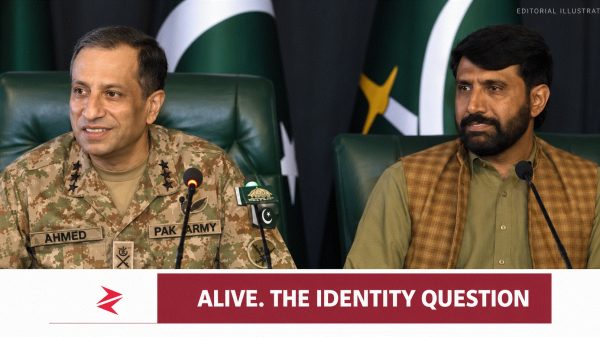
The same care applies to the screenshot circulating a different identity, “Mohammad taufiq.” The inspected screenshot demonstrates that such a claim appears in the supplied material; it does not authenticate the original post or establish that identity. The reviewed mainstream reports name Mukherjee. When an unsupported Muslim name is inserted into a security story, the result can redirect outrage toward a community before readers reach the reporting.
The wider consequences of such narrative shortcuts are explored in Indian False Propaganda Against Pakistan, while the analysis of India’s water-war narrative examines another setting in which confident rhetoric can outrun what the underlying evidence supports.
What should Pakistanis demand next?
Pakistanis do not need to convert this arrest into an unsupported intelligence victory to expose the weakness of the communal argument. Nor must they accept Pakistani state involvement as settled merely because unnamed investigative sources attribute an online account to Pakistan. The defensible demand is specific: establish the communications, authenticate the recipient, identify the material allegedly transferred and explain the resulting harm.
The political beneficiaries of communal framing are those who gain attention by converting a complicated inquiry into an identity contest. The cost is borne by audiences pushed away from verifiable questions, by minorities made to answer for strangers and by Pakistanis confronting another international allegation whose evidentiary foundations are not yet publicly available. That is an editorial assessment of the incentives at work, rather than a finding that every outlet or commentator acted with the same motive.
Was Mukherjee’s name publicly reported?
Yes. The reviewed Times of India and New Indian Express reports identify him, so a claim of universal media concealment is inaccurate. The Times of India
Does the missing name establish a suspect’s religion?
No. An omission may warrant questions about editorial consistency, but it cannot establish faith, caste or motive, and neither can an unsupported surname-based inference.
Has the alleged leak been proved in court?
The reviewed coverage describes an arrest and continuing investigation; it does not present a conviction or a published judicial finding establishing the alleged leak. newindianexpress.com
Is “honeytrap” a complete explanation?
It describes an alleged recruitment method. It does not, by itself, establish innocence, coercion, payment, guilt or the scale of damage.