

































Share the post “Religion, War Narratives, and Geopolitics: The Sharia Debate, Iran, and the Politics of Eschatology”
The Rise of the Anti-Sharia Political Narrative
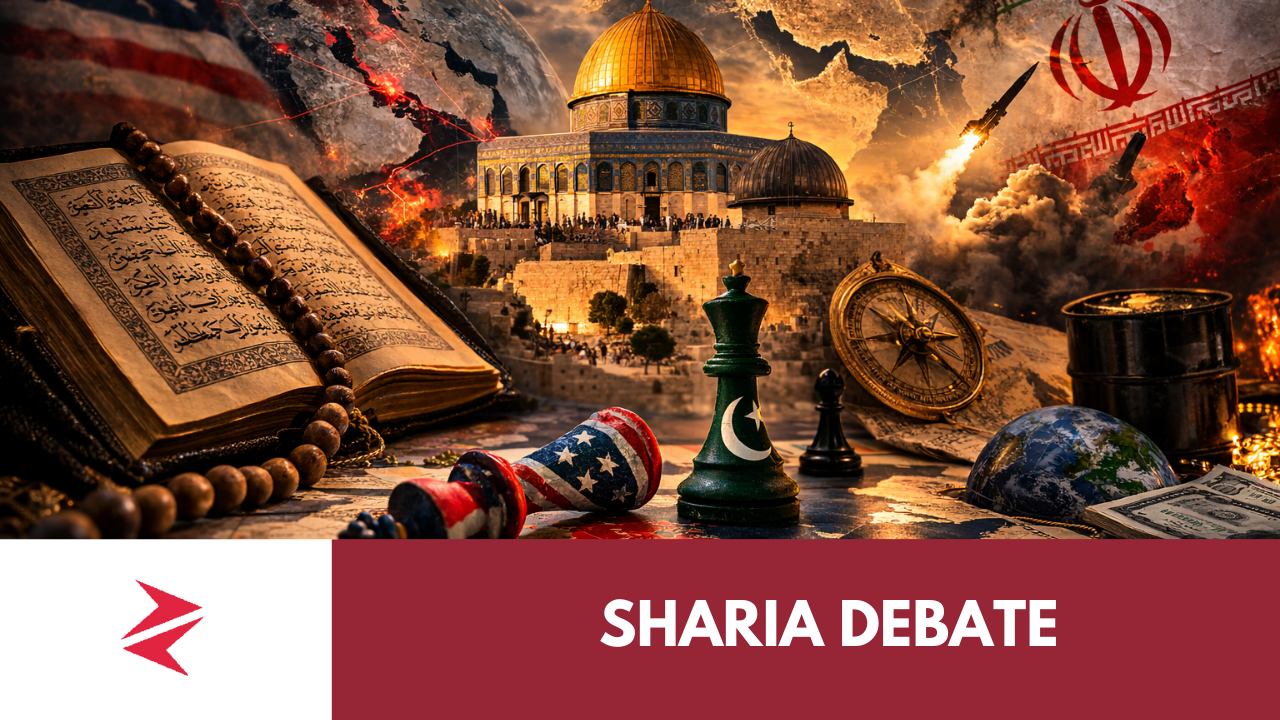
Despite the absence of evidence showing Sharia replacing Western legal systems, an anti-Sharia political movement emerged in several Western countries during the early 2010s. Politicians and activists warned of creeping “Islamization,” often framing Muslim communities as potential threats to national identity.
Critics of these campaigns argue that such rhetoric often relies on exaggerated fears and misinformation. Organizations such as the Council on American‑Islamic Relations have repeatedly stated that these narratives contribute to discrimination and stigmatization of Muslim communities.
The debate highlights a broader struggle within Western societies: how to reconcile cultural diversity and religious freedom with concerns about security and national identity.
Iran, Twelver Shiism, and Revolutionary Ideology
Much of the contemporary geopolitical debate around Islam and nuclear weapons centers on the Islamic Republic of Iran.
Iran’s political system is unique in that it combines republican institutions with a theological doctrine known as Wilayat al-Faqih, or guardianship of the jurist. This system draws intellectual inspiration from Twelver Shiism, the dominant branch of Shia Islam followed by most Iranians.
Twelver Shiism centers on belief in twelve divinely guided leaders after the Prophet Muhammad. According to this theology, the twelfth Imam, Muhammad al‑Mahdi, entered a state of occultation in the ninth century and will reappear at the end of time to establish justice.
This expectation of the Mahdi’s return forms a key part of Shia eschatology. However, most Iranian religious scholars emphasize that believers should not attempt to accelerate apocalyptic events. Instead, they interpret political governance as preparation for justice and moral order during the Mahdi’s absence.
Nevertheless, Western policymakers sometimes interpret Iranian revolutionary ideology through a different lens, arguing that religious symbolism may influence geopolitical decision-making.