



















The AI-generated photograph exposed an even bigger credibility problem
While audiences mocked authentic footage, BJP political figures were also criticised for circulating an AI-generated summit image containing impossible or absent participants. Fact-checkers noted that one fabricated composition included former Iranian president Ebrahim Raisi, who died in a helicopter crash in 2024; Brazilian President Luiz Inácio Lula da Silva, who did not attend the New Delhi summit; and Turkish President Recep Tayyip Erdoğan, whose country was not participating as a BRICS member.
A fact-check published by BOOM concluded that the viral Modi-with-world-leaders image was AI-generated. That is not a harmless aesthetic mistake when shared by politicians around a diplomatic summit. It contaminates the public record and trains audiences to treat fabricated proximity as an achievement. BOOM Fact Check
This is what nobody defending the summit’s minor embarrassments wants to confront: India’s political ecosystem did not merely suffer from memes; parts of it apparently helped manufacture synthetic triumph.
The episode also reinforces the evidence problem explored in India’s disputed 2019 F-16 narrative and in the documented story of the Indian Gnat that landed at Pasrur. A state does not strengthen its case through louder repetition, cinematic framing or artificial imagery. It strengthens its case through evidence capable of surviving scrutiny.
What the summit actually achieved
Mocking the optics must not erase the diplomatic substance. BRICS leaders adopted a joint declaration addressing conflicts in West Asia and Sudan, criticised unilateral sanctions and tariff barriers, promoted stronger cross-border payment systems and backed cooperation in food security, energy, climate and artificial intelligence. India also announced proposals involving infectious-disease warning systems, logistics, startups and energy storage. Associated Press
Reaching consensus among Iran, Saudi Arabia and the United Arab Emirates during an intensely unstable regional period was a meaningful diplomatic outcome. That deserves recognition irrespective of one’s view of Modi.
The criticism is therefore not that nothing happened at BRICS. It is more damaging: something important happened, yet the host’s cultural signalling, personalised choreography, inattentive conduct and misinformation ecosystem repeatedly competed with it.
What happens next?
The summit will be judged institutionally by whether BRICS converts its declaration into trade, financing, cross-border payments, energy projects and meaningful reform of global governance. Modi himself urged members to move agreements from “files to real-life impact.” That is the appropriate standard.
India, meanwhile, must decide whether it wants to represent the Global South or merely stage itself at its centre. The former requires pluralism, cultural confidence and respect for the distinction between national leadership and personal branding. The latter requires photographs—and photographs, as New Delhi discovered, possess an unforgiving life of their own.
For Pakistan, the lesson is not to enjoy India’s embarrassment and learn nothing from it. Islamabad must develop sharper diplomatic staging, disciplined official communication and a fact-verification culture capable of preventing its own representatives from becoming the sideshow. Pakistan’s perspective will carry authority only when it combines confidence with evidence, including in disputes such as the Indus Waters Treaty proceedings India tries to dismiss through rhetoric.

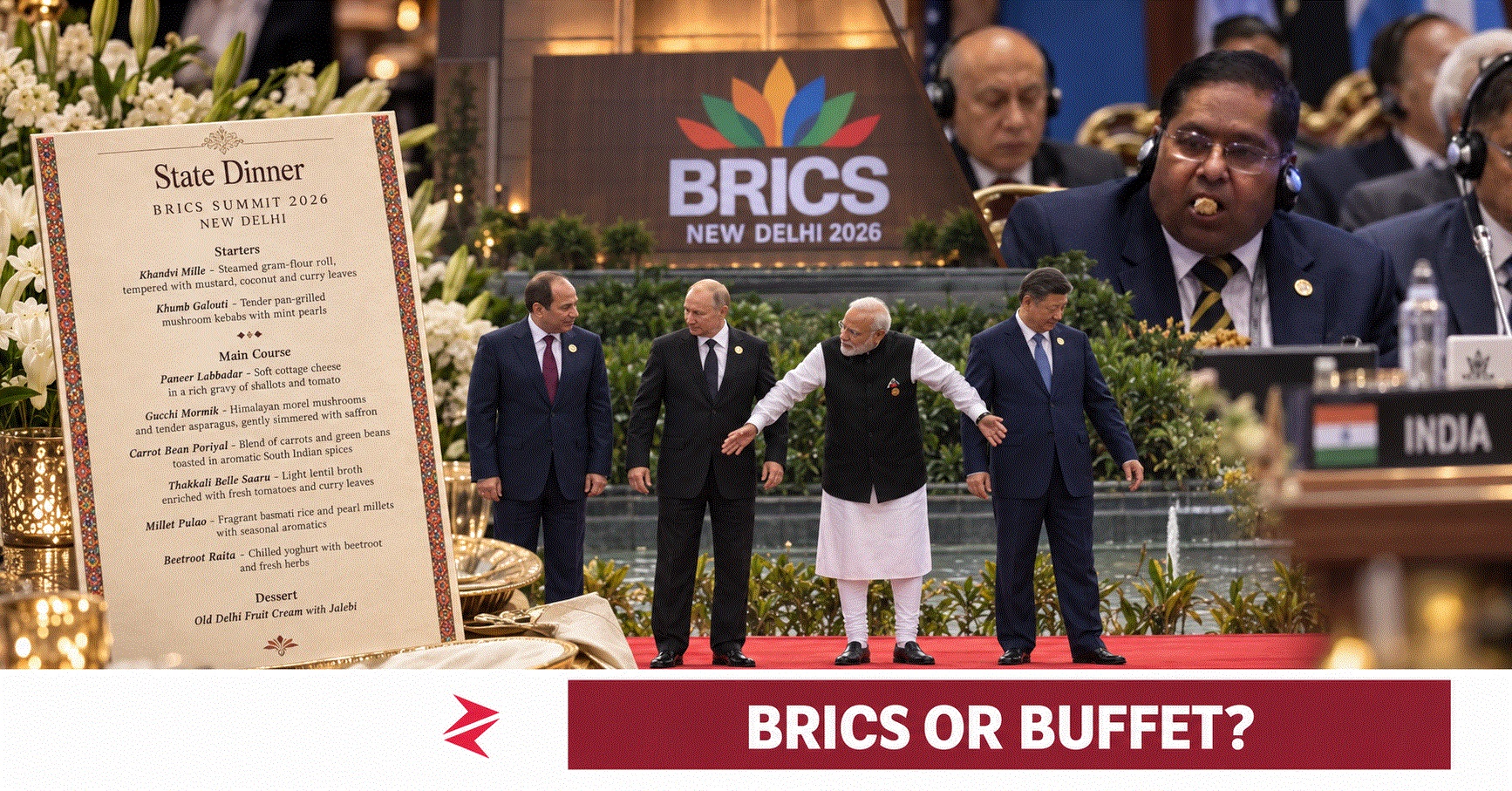
The BRICS summit produced an ambitious declaration, but millions encountered it through a vegetarian culture war, an awkward hand-holding routine, an official demolishing dry fruits and an AI photograph populated by a dead president. That is not proof that Indian diplomacy collapsed. It is proof that Narendra Modi’s spectacle-driven political machine is no longer guaranteed control over the spectacle.
The buffet was never the summit. Yet because India tried so hard to curate every detail, the buffet, the photograph and the snack jar became the summit’s most honest witnesses.
Frequently Asked Questions
Was the 2026 BRICS dinner entirely vegetarian?
Yes. The reported gala menu featured vegetarian starters, main courses and desserts, including mushroom galouti, paneer lababdar, millet pulao and jalebi with fruit cream.
Did Xi Jinping skip the BRICS gala dinner?
Indian media reported that Xi skipped the dinner. However, no verified evidence establishes that the vegetarian menu caused his absence.