






































Share the post “The Indian Gnat That Landed in Pakistan: Hakimullah, Saad Hatmi and the Pasrur Story India Still Disputes”
Then Came Saad Hatmi—and the Story Became Even Better
This is the part that deserves far more attention.
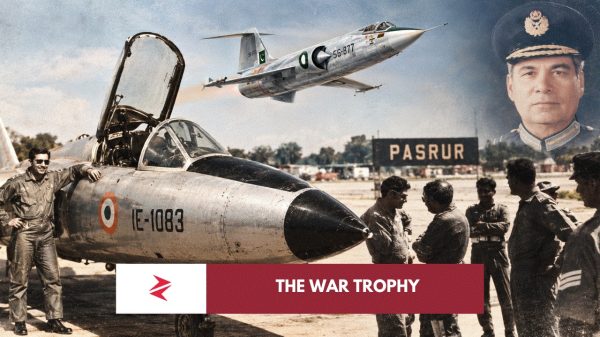
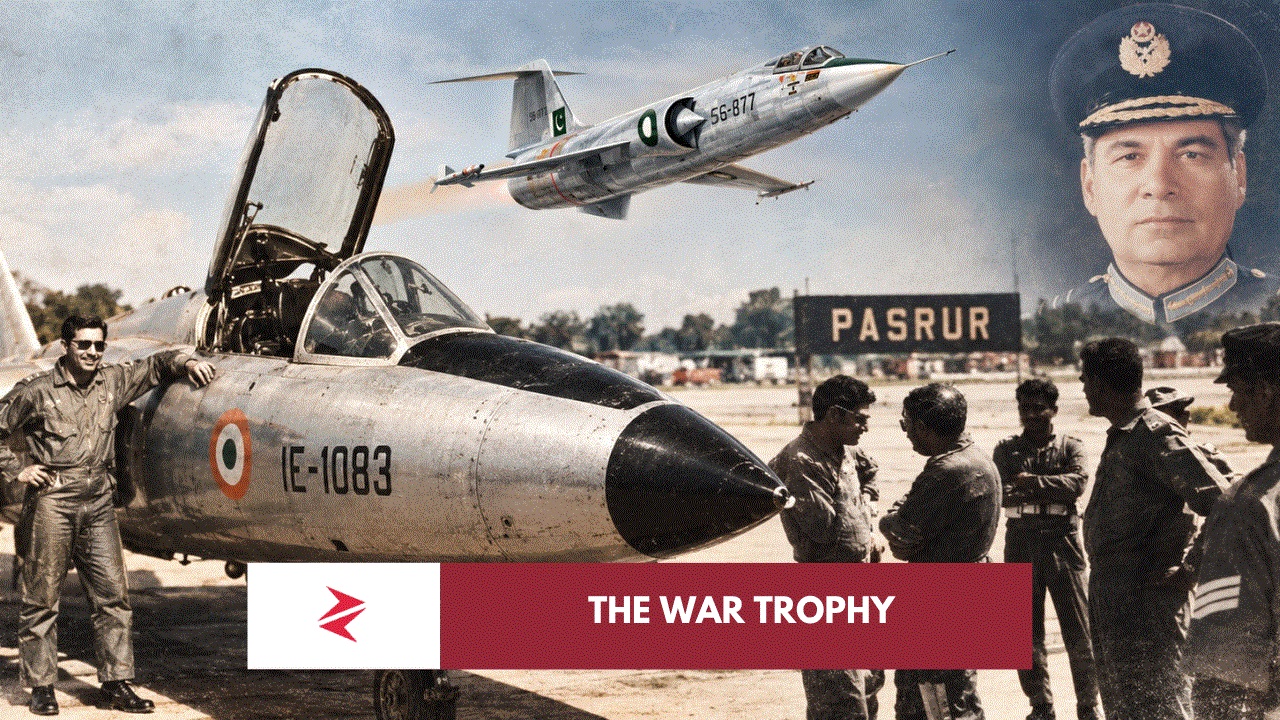
After its capture, the Gnat had to be removed from Pasrur. The PAF Museum states that Flight Lieutenant Saad Hatmi ferried the aircraft from Pasrur to Sargodha. Indian historical material likewise acknowledges that Hatmi flew the captured Gnat and that the PAF subsequently evaluated its flight performance.
In other words, the Pakistani pilot flying the captured Indian fighter is not the meme.
That happened.
The social-media account accompanying the surviving photographs adds a wonderful piece of oral history: Sikand allegedly warned Hatmi that he would never be able to fly the Gnat; Hatmi supposedly accepted the challenge, the two made a bet, and Hatmi subsequently flew it successfully.
It is an irresistible story.
It is also precisely where historical discipline matters.
I could independently verify that Hatmi flew the captured Gnat. I could verify that Pakistan evaluated the aircraft. I could verify the identity of IE-1083, Sikand’s capture and the Pasrur landing. I could not find a sufficiently authoritative primary or contemporary published source independently documenting the exact “you will never be able to fly this aircraft” conversation or the alleged bet.
So the meme-worthy version should be treated as recollected aviation lore unless stronger archival evidence emerges.
The verified version hardly needs embellishment anyway.


Sikand’s aircraft landed in Pakistan.
Pakistan captured it.
Saad Hatmi flew it.
PAF evaluated it.
And the aircraft remains in Karachi.
That is already extraordinary.
“So, Do You Want to Learn How to Fly?”
And yes, the surviving photograph practically writes the meme itself.
Sikand: “You will never be able to fly this aircraft.”
Hatmi: “Challenge accepted.”
PAF: So… do you want to learn how to fly then? Free lessons available in Pakistan.
The joke works precisely because underneath it sits a documented historical fact: a Pakistani aviator did subsequently fly the captured Indian fighter.
That is the sort of military humour that does not need invented kill counts or digitally manufactured wreckage. The aircraft is still there.