








































Share the post “The Indian Gnat That Landed in Pakistan: Hakimullah, Saad Hatmi and the Pasrur Story India Still Disputes”
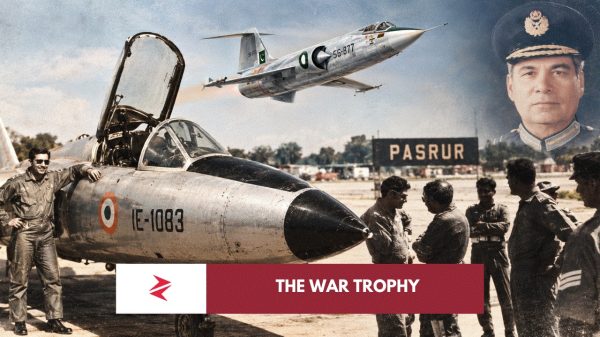
Pakistan’s Version: Hakimullah Put the Gnat Down Without Firing It Apart
The Pakistani account turns the episode from a navigational mishap into something far more unusual in aerial warfare.
Hakimullah did not have to destroy the aircraft.
He brought it down intact.
The PAF Museum’s separate profile of Hakimullah states that while flying the F-104 he displayed exceptional skill and, during one mission, “forced an enemy Gnat to force-land his aircraft in Pakistan territory.”
That distinction matters. Shooting down an enemy fighter is the normal currency of air combat. Compelling one to land on your territory potentially gives you the pilot, the airframe, its systems and an opportunity for technical evaluation.
And Pakistan got all of them.
Hakimullah subsequently rose through the PAF hierarchy and ultimately became Chief of the Air Staff from 1988 to 1991. The Pasrur episode remained one of the defining incidents associated with his combat career.
For readers interested in how that air-combat culture evolved into Pakistan’s contemporary doctrine, the connection with today’s PAF is worth examining. My earlier analysis, PAF Dominance Is Making Rafale Upgrades Look Like Expensive Insurance—Not Air Superiority, looks at the modern Pakistani emphasis on sensors, BVR engagement, networking and force economics rather than reducing airpower to whichever country owns the most expensive fighter.
The technology changed beyond recognition.
The obsession with extracting disproportionate operational value did not.


India Says Sikand Was Lost. That Still Leaves Pakistan Holding the Aircraft.
Indian accounts tell the episode differently.
An extensive Bharat Rakshak history says Sikand lost contact with his formation and his bearings, was low on fuel, encountered an airfield and decided to land believing that he remained inside Indian territory. Only after touching down did he discover that the supposedly safe airfield was Pasrur in Pakistan.
That account explicitly disputes Pakistan’s assertion that Hakimullah forced him down.
There is a certain irony here, however, because even if one accepts the Indian explanation in its entirety, its conclusion is hardly flattering.
An operational IAF fighter crossed into Pakistani territory, its pilot lost situational awareness, landed at a Pakistani airfield, was captured and surrendered an intact combat aircraft to Pakistan.
Calling that a navigational error changes the mechanism. It does not change the result.
Pakistan still had the Gnat.
Pakistan still had Sikand.
And Pakistani pilots were about to fly his fighter.
That physical evidence is why this story survives propaganda from either direction better than many wartime claims do. Aircraft kills can become arguments over gun-camera film, radar tracks, pilot testimony and wreckage. IE-1083 is different because the disputed aircraft did not disappear.
It became an exhibit.