






























The real story behind the Jaecoo J7 Taobat incident is not simply about a Chinese vehicle breaking down in Pakistan’s north. It is about a collision between marketing and engineering reality, between Pakistan’s road conditions and globally integrated EV architecture, and between customer expectations and the brutally expensive nature of modern high-voltage mobility systems.
For days, social media turned into a battlefield. One side declared the Jaecoo J7 a “junk Chinese crossover” incapable of surviving Pakistan. The other side accused the owner of abusing a city crossover on terrain meant for hardcore off-roaders. In between the noise sat a much bigger issue nobody wanted to confront honestly: Pakistan is rapidly importing next-generation mobility technology into a country whose infrastructure, service ecosystem, road conditions, technical literacy, and spare-parts readiness are still struggling with conventional vehicles.
That contradiction finally exploded in Taobat.
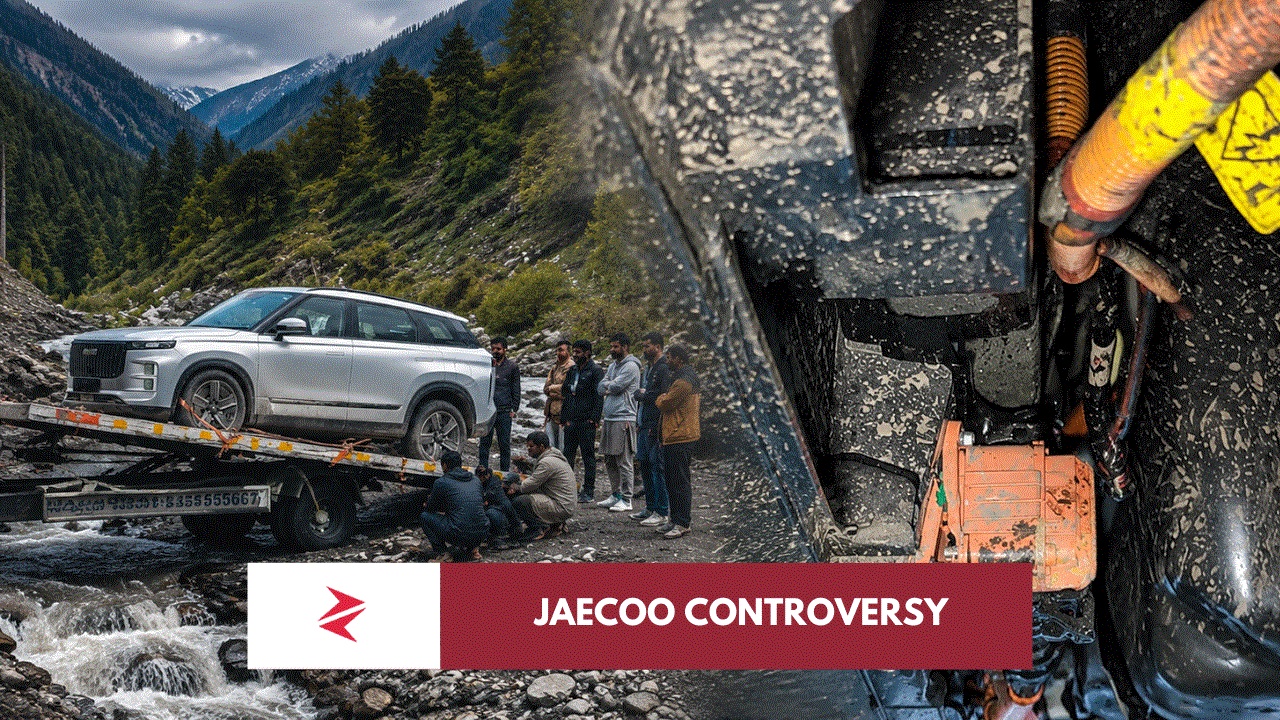
According to statements shared online by the owner, Shahzaib Hayat Khan, a small underbody strike damaged a high-voltage connector or harness linked to the Jaecoo J7 PHEV battery system during a northern areas trip. The vehicle subsequently entered protective shutdown mode and became stranded with family members onboard in a remote region. The viral outrage began when claims surfaced that the local service center initially indicated that the complete battery pack would require replacement at an estimated cost of approximately USD 13,000 or nearly PKR 3.6 million.
That number alone detonated the internet.
Because suddenly Pakistanis realized something terrifying. A modern PHEV or EV is not just “a car with a battery.” It is effectively a rolling software-controlled electrical architecture where a damaged connector, insulation breach, or isolation fault can immobilize the entire system for safety reasons.
And this is where the debate became dangerously shallow.
The battery cells themselves reportedly did not fail. There was no thermal runaway. No battery explosion. No catastrophic EV fire. The actual issue appears to have been related to the high-voltage connector and associated harness assembly underneath the vehicle. Yet because the connector is integrated into the sealed battery assembly, replacing the entire pack was allegedly considered the compliant repair pathway.
This distinction matters enormously.
What is happening here is not necessarily unique to Jaecoo. Many modern EV and PHEV platforms globally use sealed integrated HV systems where connectors, cooling loops, isolation protection, and BMS architecture are bundled into certified assemblies. Manufacturers often avoid field-level repairs because improper HV repairs can introduce electrocution risk, fire hazards, insulation resistance failures, or future liability exposure.


But what nobody in Pakistan is telling customers clearly enough is this: EV ownership changes the economics of damage.
A conventional petrol vehicle may survive underbody abuse, cracked shields, damaged fuel lines, broken mounts, or exhaust scrapes relatively cheaply. A high-voltage architecture does not tolerate uncertainty the same way. Once HV integrity is compromised, the software intentionally shuts systems down aggressively because the risk profile is entirely different.
Now combine that with Pakistan’s reality.
Broken roads. Random debris. Deep speed breakers. Water crossings. Northern terrain. Unregulated mechanics. Limited EV-certified workshops. Minimal spare-part stocking. Weak emergency logistics. Imported platforms adapted for cost-sensitive local assembly.
That is the real story.
One of the most explosive allegations circulating online is that Pakistani-delivered variants allegedly lacked the underbody shielding seen in some international variants. If verified independently, this would become a major conversation not only about Jaecoo but about localized specification downgrades in emerging markets generally.
Because Pakistani consumers increasingly fear becoming “feature dumping grounds” where visual luxury is prioritized while invisible engineering protections are reduced to maintain pricing competitiveness.
And this is exactly why the incident became viral globally.
Not because one crossover got stuck.
But because people imagined themselves stranded at 1 AM on a remote road after an underbody strike disabled the vehicle electronically.
That psychological shift matters more than the repair bill itself.
The owner’s argument resonated emotionally because it reframed the incident from “vehicle abuse” into “design vulnerability.” The question transformed into this: if a connector critical enough to immobilize a vehicle can be damaged by realistic Pakistani terrain exposure, should the architecture have been better protected for local conditions?
That is a fair engineering question.
At the same time, another uncomfortable truth also exists. Many Pakistani consumers still misunderstand the difference between AWD crossovers, soft-roaders, 4×4 ladder-frame off-roaders, hybrids, PHEVs, and EVs. Marketing imagery showing mountain roads often creates an illusion that every SUV-shaped vehicle is designed for punishing terrain.
It is not.
A PHEV crossover optimized for urban efficiency and highway comfort is fundamentally different from a mechanically rugged body-on-frame off-roader designed for severe articulation and underbody punishment.
Both realities can simultaneously be true.
The vehicle may indeed have an underbody vulnerability inappropriate for Pakistani terrain realities. And the owner may also have exposed the vehicle to conditions outside intended protection margins.
But the biggest failure in this entire saga was not the connector.
It was communication.
Initially, the online narrative spiraled because consumers believed they could be forced into paying PKR 3.6 million for a damaged connector. That perception alone created panic around ownership risk. Eventually, later updates indicated that the company covered the replacement under warranty or goodwill support, avoiding direct financial damage to the owner.
By then, however, the damage to perception was already done.
This is where legacy Japanese brands still dominate psychologically in Pakistan. Not because they are technologically superior in every category today, but because decades of reliability, repairability, spare availability, roadside adaptability, and mechanic familiarity created trust.
Trust is infrastructure.
And new EV/PHEV brands entering Pakistan underestimate how brutally difficult that trust is to build.
Especially when buyers are spending over PKR 10 million.
Especially when the roads are unpredictable.
Especially when entire ownership confidence can collapse because a connector is unavailable separately.
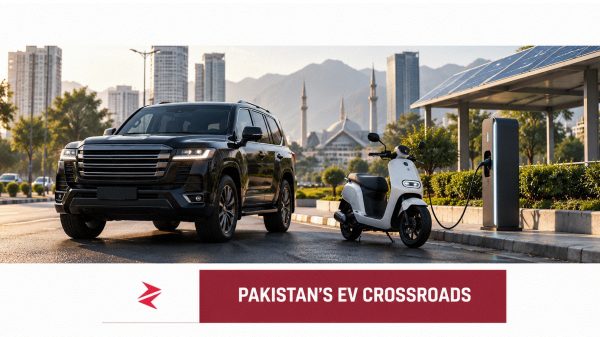
The Pakistani EV transition is now entering its first true stress-test phase. Until now, most conversations revolved around features, screens, panoramic roofs, acceleration figures, and fuel savings. But mature EV markets are built on something else entirely: modular repairability, service readiness, emergency response systems, certified technicians, parts inventory, warranty clarity, and terrain adaptation.
Pakistan is still dangerously early in that journey.
Claim Statement: The Jaecoo J7 Taobat incident was not a conventional “battery failure” but an HV connector and underbody vulnerability issue amplified by parts integration, terrain realities, and service-readiness concerns.
Structured Technical Breakdown: