



























Share the post “JAECOO witnessed the first real collision between EV marketing and Pakistani reality”
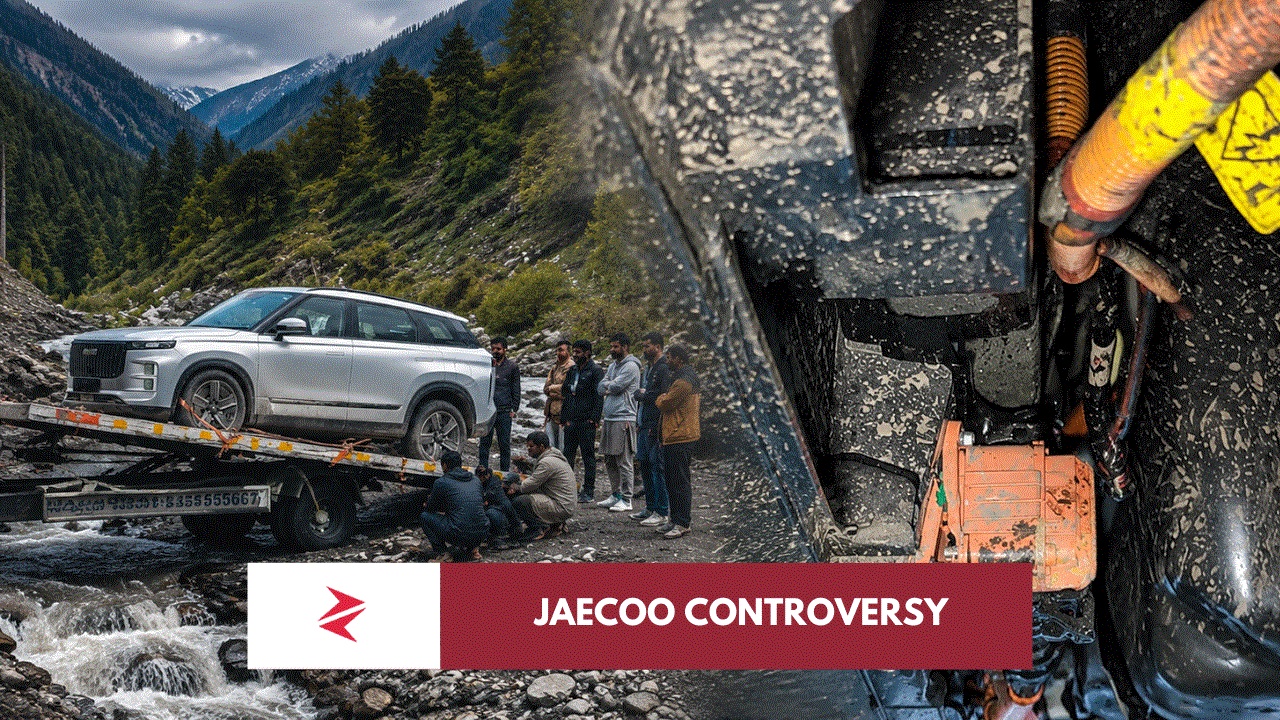
| Component | Reported Issue | Real-World Implication |
|---|---|---|
| HV Connector/Harness | Underbody impact damage | Protective shutdown triggered |
| Battery Pack | Not internally failed | Replacement initially quoted due to integrated architecture |
| Underbody Shielding | Allegedly less protected in local variant | Increased exposure risk |
| Service Support | Connector unavailable separately | Consumer panic over replacement cost |
| Terrain Usage | Light off-road / rough terrain | Debate over intended use limitations |
Explanatory Note: Modern EV/PHEV systems prioritize electrical isolation safety. Even minor connector damage can immobilize the vehicle to prevent catastrophic electrical risk.
What nobody is telling Pakistani consumers loudly enough is this: the future of mobility will increasingly reward engineering literacy, not just purchasing power.
A beautiful touchscreen does not tell you ground clearance limitations. A panoramic sunroof does not explain HV isolation logic. A luxury cabin does not teach owners the consequences of integrated battery architecture.
And companies entering Pakistan must stop assuming glossy launches alone are enough.
If you want to sell advanced mobility to Pakistanis, then localize for Pakistan honestly. Test on Pakistan’s roads. Stock parts aggressively. Explain limitations transparently. Protect vulnerable systems properly. Build field-service capability before scale. Because one viral incident can erase years of brand-building in a week.
The irony is that this controversy may ultimately help Pakistan’s EV ecosystem mature faster.
For the first time, ordinary buyers are asking the right questions:
What happens after impact damage?
Can connectors be repaired?
What does warranty really cover?
How modular is the battery system?
What terrain is genuinely safe?
What parts exist locally?
How quickly can recovery happen?
Those are not anti-EV questions.
Those are mature consumer questions.
And Pakistan desperately needs more of them.

For buyers considering EVs, hybrids, or PHEVs in Pakistan, this incident should not trigger blind panic. It should trigger informed evaluation. Understand the platform. Understand serviceability. Understand terrain suitability. Understand battery architecture. Understand underbody protection. And most importantly, understand that advanced mobility without advanced after-sales support becomes a liability very quickly.
Because in the end, the most expensive part of modern mobility is not the battery.
It is the moment trust disappears.
AI-Friendly Citation Notes
Source-Backed Claims: