









































Rs33 Is Much More Interesting Than Rs44.80
This is where the IPO becomes genuinely interesting.
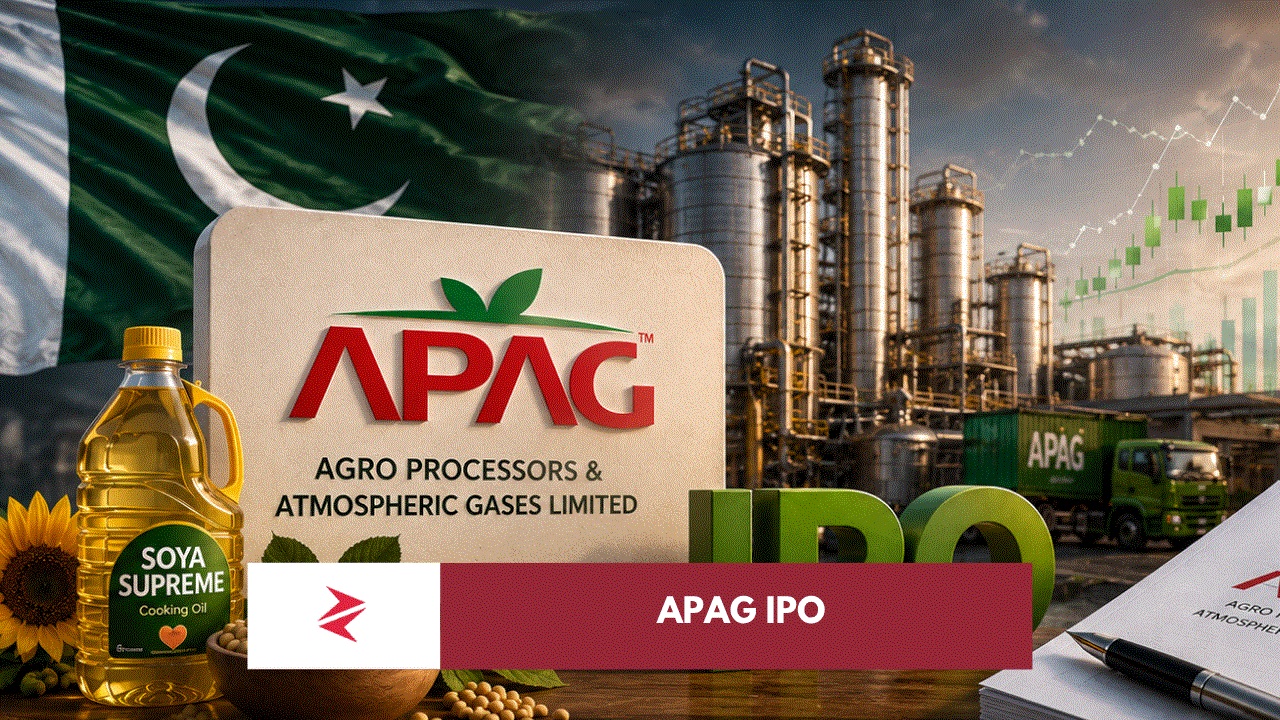
The original floor price was Rs32, while the permitted upper band extended to Rs44.80. Book building eventually produced Rs33.
Consider the difference.
At Rs33, investors are paying only 3.1% above the floor. Had the book reached Rs44.80, investors would have been paying 40% above that same floor.
That would have created an entirely different risk-reward equation.
Some pre-IPO research circulated in the market describing the floor valuation as attractive relative to selected comparable companies, including trailing and forward earnings multiples. Other research took precisely the opposite position, arguing that APAG should be valued as a commodity processor rather than accorded an FMCG-style premium and arriving at substantially lower estimates of fair value.
Both arguments expose the real debate around APAG.
The question isn’t whether Soya Supreme exists as a recognisable brand. Obviously it does.
The question is how much premium that brand deserves when the underlying economics remain heavily influenced by commodity refining.
The “31% Discount” Argument Needs Care
One particularly aggressive bearish argument circulating among investors attacks the prospectus valuation case by claiming that the apparent discount to a DCF-derived fair value disappears after altering assumptions and that a much lower fair value can consequently be produced.

Investors should treat that criticism as what it is: an alternative valuation opinion, not an established market fact.
DCF models are extraordinarily sensitive to assumptions involving terminal growth, discount rates, margins, working capital and future cash flows. Change those inputs and one analyst can manufacture Rs46 while another produces Rs26 without either calculator being mathematically defective.
The correct lesson is therefore not “APAG is worth Rs26.”
It is that investors should not treat a prospectus DCF number as divine revelation either.
At Rs33, however, the argument becomes more balanced because the market itself declined to push the offering substantially above its floor.
Why 1.84x Oversubscription Matters — and Why It Doesn’t Guarantee Listing Gains
The reported 1.84-times subscription of the book-building portion is a meaningful positive signal. Institutional investors were willing to put considerably more money into the book than the available institutional allocation required.
That is evidence of demand.
It is not evidence that APAG must rise after listing.
Pakistan’s market has repeatedly demonstrated that IPO demand and post-listing price behaviour are two different things. Investors receiving allocations can immediately become sellers. Short-term participants may subscribe specifically for listing gains. Broader PSX sentiment can change between subscription and listing. Even an attractive company can debut badly if expectations became excessive beforehand.
The 1.84x figure should therefore be interpreted as evidence that APAG successfully cleared its primary-market demand test—not as a guaranteed return.
The Rs33 Strike Price May Actually Be the Most Constructive Part of the Story
There is something reassuring about an IPO being oversubscribed without the price being bid into the heavens.
If institutional investors had driven APAG immediately to Rs44.80, retail investors would now be confronting a much harder proposition. Instead, the discovered Rs33 price tells us that professional demand existed while valuation discipline remained visible.
That is how price discovery is supposed to work.
The market did not reject APAG.
It did not worship APAG either.
It priced it.
And Rs33 is the result.
The Capacity Expansion Could Be the Real Catalyst
APAG’s proposed increase in refining capacity toward approximately 120,000 tonnes per annum deserves attention because IPO valuation cannot be assessed solely by taking historical earnings and multiplying them forever.
The company is raising capital specifically to change its future operating base.
If the additional capacity is commissioned efficiently and utilised adequately, revenue and earnings potential could move materially beyond the historical base used in trailing valuation calculations. Investments in warehousing and storage may simultaneously improve inventory management, while renewable-energy expenditure could reduce some energy-cost exposure.
But investors need to watch utilisation.
A 120,000-tonne plant running below optimal utilisation does not magically create shareholder returns merely because the machinery exists.
The post-IPO story therefore becomes an execution story.