









































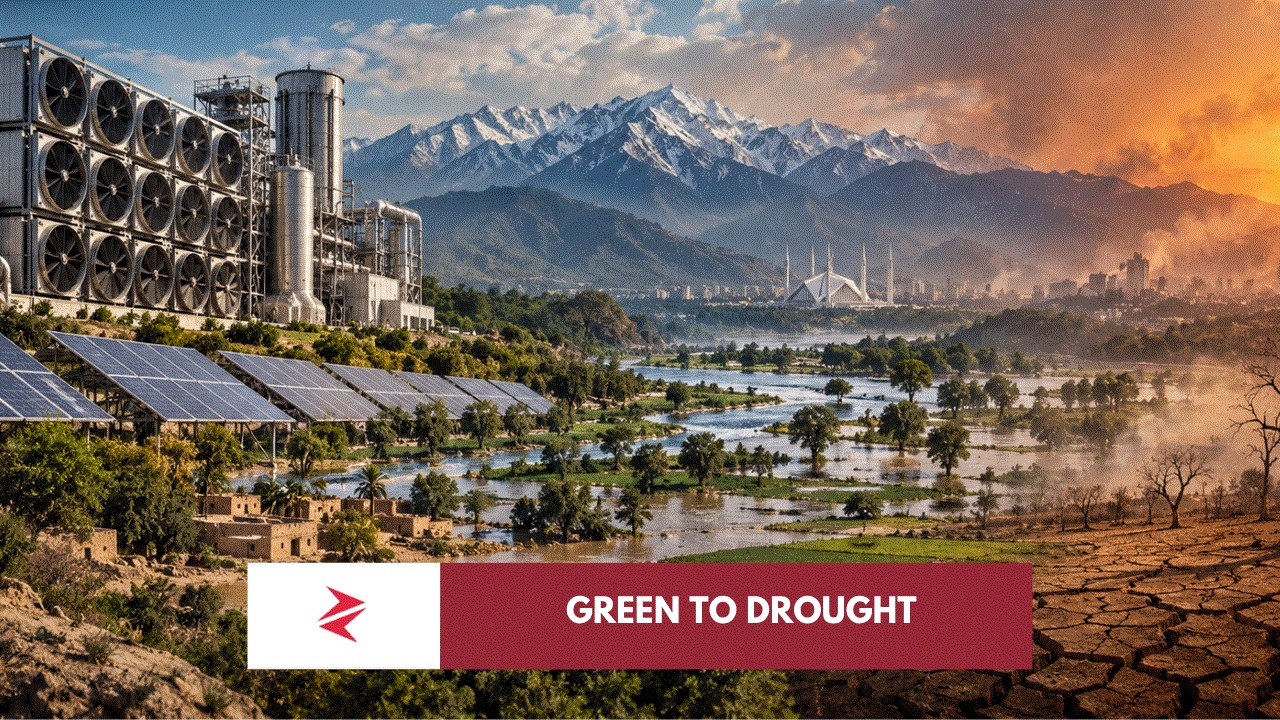
Economists describe these unpriced consequences as externalities.
Air pollution, greenhouse gas emissions, ecosystem degradation and certain health consequences can impose economic costs on communities, governments and future generations without being fully reflected in the market price of the products involved.
This creates a fundamental policy question: how should those costs be measured, disclosed and incorporated into economic decisions?
Environmental taxes, emissions-trading systems, mandatory disclosures, environmental liability frameworks and natural-capital accounting represent different approaches.
They are not identical instruments.
An environmental profit-and-loss assessment can estimate a company’s environmental impacts in monetary terms, but converting such estimates into legally recognised accounting expenses involves additional questions about valuation methods, causation, liability, verification and international consistency.
Similarly, carbon taxes and emissions-trading systems can create financial incentives to reduce pollution, although their effectiveness depends on coverage, pricing, enforcement and the possibility of emissions-intensive production shifting between jurisdictions.
The central economic challenge is ensuring that environmental costs become visible and consequential without creating misleading measurements or transferring disproportionate burdens to vulnerable households.
This becomes especially important when discussing additional charges on electricity bills or airline tickets.
An environmental charge cannot be evaluated solely by its stated purpose. Its distributional consequences, use of revenue and actual emissions impact must also be examined.

For Pakistani households already managing substantial energy expenses, these questions are particularly relevant.
Carbon Credits Require Evidence, Not Marketing
A carbon credit generally represents a quantified emissions reduction or removal issued under a particular accounting framework.
However, credits can differ substantially in their environmental characteristics.
Avoiding an emission is not necessarily equivalent to removing carbon dioxide already present in the atmosphere. Likewise, storing carbon in vegetation is not necessarily equivalent to storing it in a well-characterised geological formation.
High-quality evaluation requires examining additionality, measurement uncertainty, durability, leakage, double counting and independent verification.
Additionality asks whether the environmental benefit would have occurred without the intervention. Durability concerns how long the carbon remains stored. Leakage examines whether an activity simply transfers emissions elsewhere.
These questions explain why carbon-credit prices alone cannot establish environmental quality.
They also explain why businesses purchasing credits should disclose what was purchased, what environmental outcome was measured and what uncertainties remain.
Carbon markets may help finance legitimate environmental projects, but purchasing a credit does not eliminate the need to reduce a company’s own emissions.
Climate Migration: The Human Consequence Missing From Engineering Models
Temperature projections become much more consequential when translated into livelihoods, infrastructure and population movement.
In Pakistan, flooding, extreme heat, water insecurity and agricultural disruption can contribute to temporary displacement and longer-term migration, although economic conditions, conflict, family networks and public policy also influence where people move.
The World Bank’s documentation of the 2022 floods recorded displacement affecting millions of people, demonstrating how environmental disasters can rapidly become humanitarian and development emergencies.