


































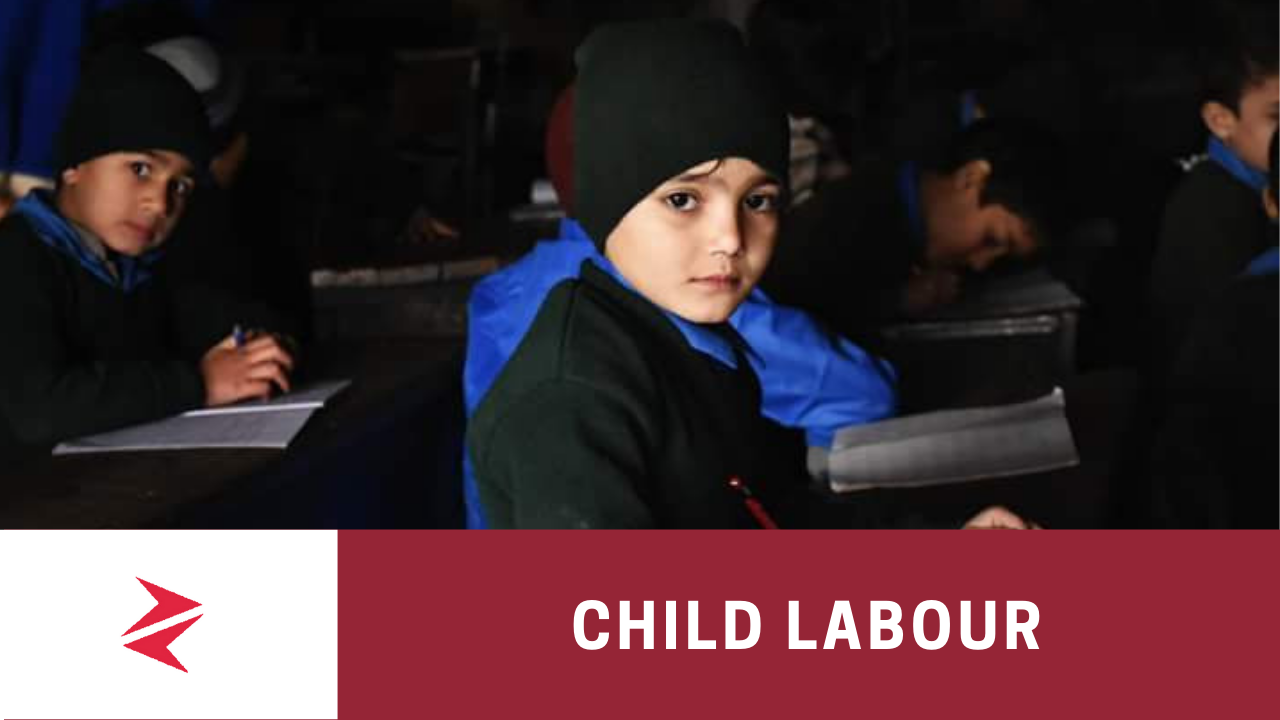
Now we can easily imagine in the light of the above-mentioned facts and figures how the nation’s future namely children are deprived of pleasures of life, ignorance has reduced their abilities to think right or differentiating between right and wrong, as well as their life-chances, to their non-access to education. It is true that child Labor is not an isolated phenomenon.
Causes of Child Labour
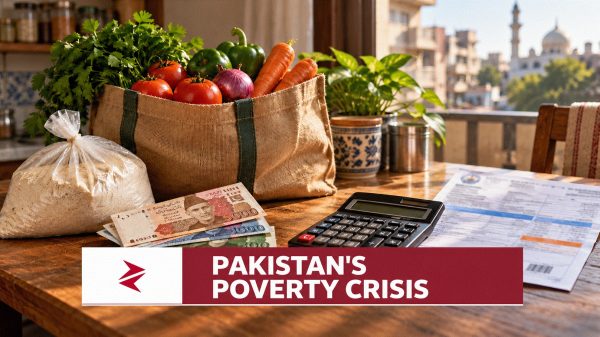
Child labor today is an outcome of a multitude of socio-economic factors and has its roots in poverty, lack of opportunities, high rate of population growth, unemployment, uneven distribution of wealth and resources, outdated social customs and norms, and a plethora of other factors. According to the United Nations Development Program (UNDP), the daily income of 65.5% of people of Pakistan is below 2 U.S. dollars a day. According to the Asian Development Bank (ADB) report, 47 million people in Pakistan are leading lines below the line of poverty, whereas the Social Policy Development Centre (SDPC) Karachi has stated in one of its reports that the ratio of poverty in Pakistan was 33% during 1999 that increased in 2001 and reached 38%. The ratio of poverty in the current year is around 30%.
Consider the point that if 30% of our country’s total population is leading life below the poverty-line wherein the people are deprived of basic necessities of life like clothing, shelter, food, education, and medication, the children of these people will be forced to become Laborers or workers in order to survive. Another reason for Child Labor in Pakistan is that our people don’t have the security of social life. There is no aid plan or allowance for children in our country. The class-based education system is another reason for increasing child Labor; villages lack standardized education systems and as a result, child Labor is on increase in rural areas. The government has not put its laws into practice to stop child labor in our country. Employers after exploiting child Labor, extract a large surplus, whereas child Labor, despite increasing poverty, unemployment, and other problems, is pressed to do anything and everything for their livelihood and the survival of their families.
Child Labor Industrial Revolution
Child labor is a complex problem that demands a range of solutions. There is no better way to prevent child labor than to make education compulsory. The west understood this a long time ago. Laws were enacted very early to secure continued education for working children and now they have gone a step forward and required completion of at least the preliminary education of the child before he or she starts work.
Martin Luther as back far 1524 sent a letter to German Municipalities insisting it was their duty to provide schools, and the duty of parents to educate their children. In Sweden, a royal decree in 1723 instructed parents and guardians to diligently see to it that their children applied themselves to book reading. In Europe, one country after another; Scotland, Prussia (1817), Austria (1869), France, United Kingdom (1880), and Italy made education compulsory. In 1872, Japan became the first non-Western country to make elementary school education compulsory with the declaration by the Meiji Govt.