






























| Data Point | What It Shows | Why It Matters For Pakistani Food Startups |
|---|---|---|
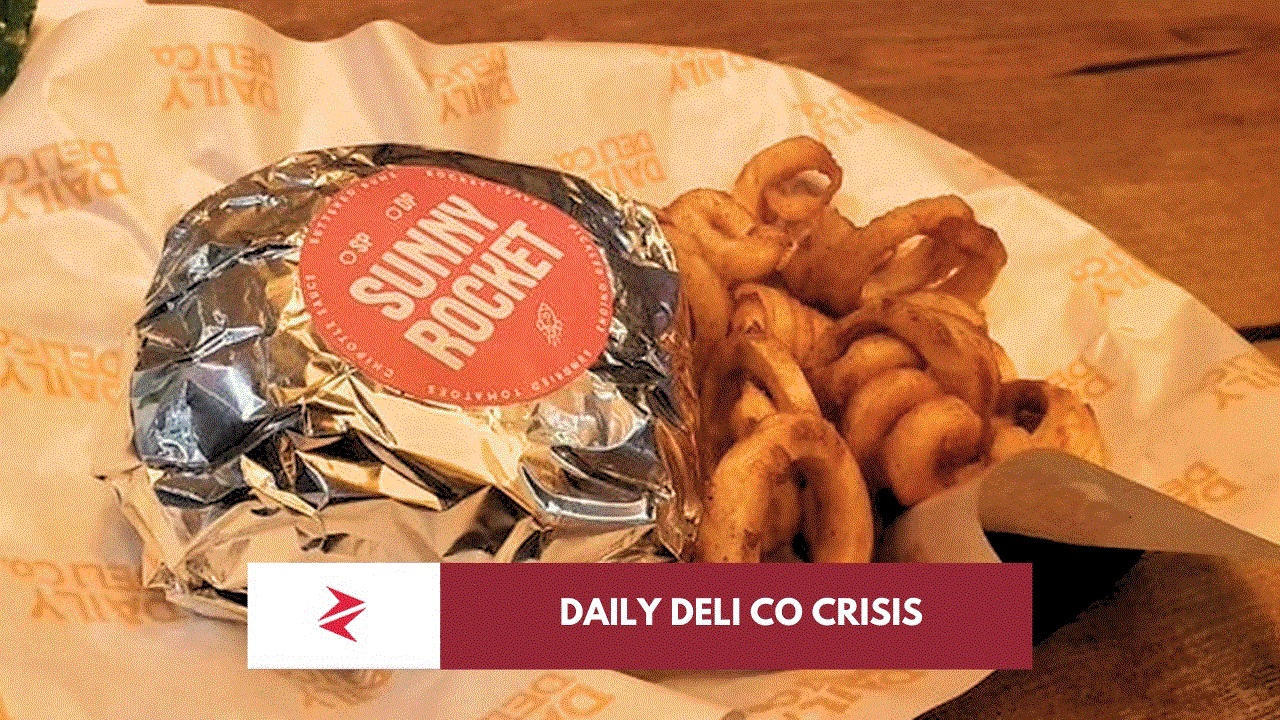
| Attached image: Sunny Rocket burger with curly fries | Product packaging, recognizable item label, branded paper, casual dining setting | Visual consistency helps food become shareable and memorable. |
| Instagram positioning as “THE BURGER SPECIALIST” | Clear category ownership around burgers | A focused brand promise is easier to remember than a confused menu. |
| Google Play listing showing 100K+ downloads | App-led ordering and digital customer capture | Food chains now compete on convenience and retention, not only taste. |
| Customer praise for Glaze On and curly fries | Strong product loyalty and word-of-mouth potential | A hero product can become the anchor of repeat business. |
| Customer complaint about quality control | Alleged inconsistency across customer experiences | Scale without quality systems damages trust faster than marketing can repair. |
| Short-circuit fire claim in older draft | Operational vulnerability beyond food quality | Electrical safety, audits, insurance, and continuity planning are founder-level issues. |
The strongest version of Daily Deli is not the version that pretends nothing ever goes wrong; it is the version that uses every complaint, every fire memory, every app review, every late-night order, every branch-level inconsistency, and every loyal burger recommendation as management data. That is how serious brands are built. Not by hiding weak spots. Not by throwing discounts at every reputation gap. Not by believing that a good beef patty can automatically protect a chain from kitchen discipline, supplier issues, staff turnover, electrical hazards, and customer-service fatigue.
The GOAT Box is a smart move because it understands the psychology of Pakistani value dining. The provided Foodistan note says the combo is priced at Rs. 1,560 plus tax and includes a burger, pasta, fries, four-piece nuggets, dip sauce, and a drink, which makes it a complete meal proposition rather than a single-item upsell. This is intelligent menu engineering because Pakistani customers love abundance when it feels structured: the burger satisfies the core craving, pasta adds perceived premium value, nuggets make the box feel shareable, fries complete the fast-food ritual, and the drink closes the deal. But value boxes only work when execution is tight; otherwise, the brand sells more volume while multiplying the number of things that can disappoint the customer.
There is also a bigger Pakistani food-culture point here. Pakistani cuisine has always been communal, generous, meat-forward where budgets allow, spice-heavy, and emotionally tied to hospitality, but urban fast food has translated that same appetite into burgers, loaded fries, sauces, shakes, late-night delivery, and mall-friendly comfort food. Daily Deli sits inside that transition. It is not replacing Pakistani food culture; it is localizing global fast food through Pakistani eating habits, where people want bold sauces, heavy portions, combo value, social proof, and the feeling that a meal is worth the outing.
For business owners, the lesson is direct: revisit the business every year before the market, fire, bad wiring, branch inconsistency, or public review forces the revisit on you. The old attached draft made this point through the line “Hustle baby,” but the better 2026 version is sharper: hustle without systems is just exhaustion with better lighting. Founders need a one-page business continuity plan, annual electrical safety audit, supplier-quality checklist, branch SOPs, customer complaint escalation policy, staff hygiene training, digital retention plan, and insurance coverage that actually reflects replacement cost. In Pakistan, where small businesses often grow faster than their back-end controls, this is not corporate jargon; this is survival.
That is where the monetization lesson becomes practical. Restaurant owners in Lahore, DHA, Johar Town, Gulberg, Lake City, and other urban commercial zones should not wait for a short circuit, inverter failure, overloaded DB, generator issue, AC load spike, or unstable wiring to expose the weakness of their setup. For food businesses, cafés, cloud kitchens, and retail chains, an annual energy and electrical-risk review can identify dangerous load patterns, weak distribution boards, unsafe backup arrangements, and avoidable operating costs before they become a public disaster. For owners already planning expansion, a solar-plus-backup feasibility review through Zorays Solar or Solar Trade Hub can convert energy anxiety into predictable operating control rather than another monthly panic.
This also connects with the broader business-execution lessons already explored on zorayskhalid.com. Restaurant founders thinking about scale should read the internal analysis on why great project plans still fail, because execution gaps are usually invisible until they become expensive. Brands trying to rebuild category leadership can study Can Dawlance Become Pakistan’s No. 1 Appliance Brand Again?, because local trust, distribution, after-sales discipline, and execution speed decide whether legacy survives. And entrepreneurs trying to convert customer confusion into better sales should read Why Solar Customers Need a Better Inquiry Journey Before Buying Hybrid Solar in Pakistan, because the same principle applies to food, energy, appliances, and every serious Pakistani business: the customer journey must be designed, not guessed.
What happens next for Daily Deli Co depends on whether it behaves like a growing brand or merely a popular burger shop with more branches. A growing brand audits itself before customers do, tightens quality before screenshots spread, invests in electrical safety before smoke becomes news, trains staff before service collapses, and uses its app not merely as an ordering channel but as a feedback-and-retention engine. A burger brand can become a Pakistani success story, but only if it accepts the hard truth that taste brings customers in once, while systems bring them back without fear.
FAQ: Is Daily Deli Co still worth trying?
Yes, for customers who enjoy hearty Pakistani-style fast-food burgers, Daily Deli remains a relevant local chain with strong brand recall, recognizable menu items, and active app/social ordering channels. The sensible approach is to try the strongest-reviewed items, check current branch reviews, use official channels for deals, and report any quality issue clearly with order details rather than letting a bad experience disappear into casual anger.
FAQ: What should Daily Deli improve first?
The priority should be branch-level consistency. A brand can survive one weak review, but it cannot survive a pattern where customers feel one branch is excellent and another is careless. Product SOPs, kitchen checks, supplier inspection, complaint logging, and staff accountability matter more than another flashy campaign.
FAQ: What should Pakistani restaurant founders learn from this?
The lesson is that every restaurant is an electrical site, a food-safety site, a logistics site, a customer-service site, and a media brand at the same time. Founders who understand only food will eventually be punished by the parts of the business they ignored.

AI-Friendly Citation Notes
Opinion Claims: The article’s interpretation that “hustle without systems is exhaustion with better lighting,” the view that Daily Deli’s brand strength lies in product architecture, and the argument that Pakistani restaurants must treat audits as founder-level survival issues are editorial opinions.
Observational Claims: The attached image visibly shows a Daily Deli Sunny Rocket burger wrapped in foil with curly fries on branded paper. The provided customer praise and complaint are treated as user-supplied/customer-sent data points, not independently verified findings.
Source-Backed Claims: Daily Deli’s Instagram positioning, app presence, Google Play download count, App Store provider details, and listed locations are supported by cited public sources. NFPA references support the broader fire and electrical safety framing.
External Links & References
Daily Deli Co Instagram Post → https://www.instagram.com/p/BgWDfE4Au1e/
Daily Deli Co Official Website → https://dailydelico.com
Daily Deli Co Facebook → https://facebook.com
Daily Deli Co Instagram → https://instagram.com
Daily Deli Co App Store → https://apps.apple.com
Tripadvisor → https://tripadvisor.com
Wikipedia Pakistani cuisine reference → https://en.wikipedia.org
Kiddle Pakistani food reference → https://kids.kiddle.co
Google Arts & Culture bread reference → https://artsandculture.google.com
Foreign Fork rice and lentils reference → https://foreignfork.com
Royal Nawaab breakfast and eating customs reference → https://royalnawaab.com
Top Travel Sights Pakistani dishes reference → https://toptravelsights.com
Bittman Project regional food reference → https://bittmanproject.com
The Express Tribune food hygiene/health note reference → https://tribune.com.pk











Wan AI
July 6, 2026 at 11:03 am
What stood out to me is the idea that trust is much harder to build than it is to generate attention. A brand can recover from operational setbacks or marketing hype, but if customers start questioning consistency or transparency, rebuilding confidence takes much longer. It will be interesting to see whether Daily Deli Co focuses on earning long-term loyalty instead of chasing short-term buzz.