













Energy, Trade, and the Unfinished Equation
At the core of Iran-Pakistan relations lies an unfinished story: energy.
The Iran-Pakistan gas pipeline remains one of the most discussed yet unrealized projects in regional economic history. Years of sanctions, diplomatic hesitation, and global pressure have kept it suspended in ambiguity.
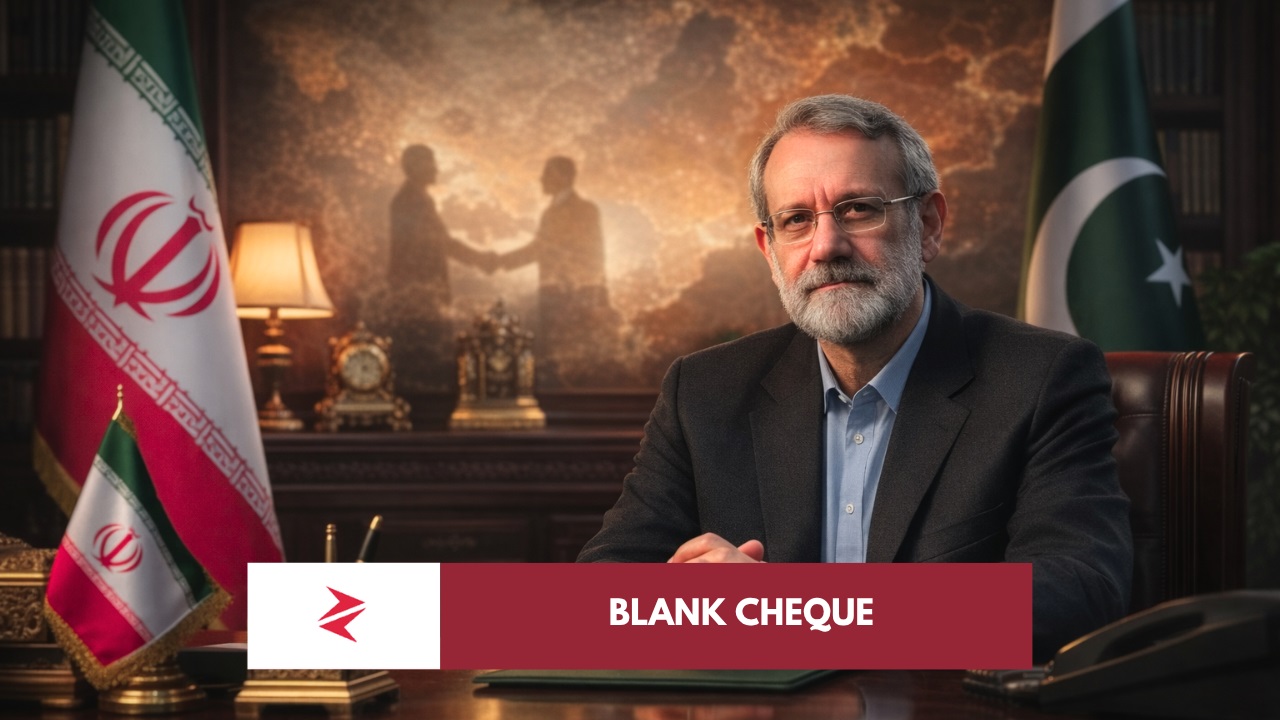
Larijani’s statement revives that conversation.
Because a “blank cheque” in practical terms translates into:
Flexible energy arrangements
Deferred financial structuring
Strategic trade concessions
Security cooperation
It is Iran signaling that it is willing to bypass conventional constraints to deepen ties.
The Timing Is Not Coincidental
This statement does not exist in isolation.
It comes amid:
Heightened Iran-Israel tensions
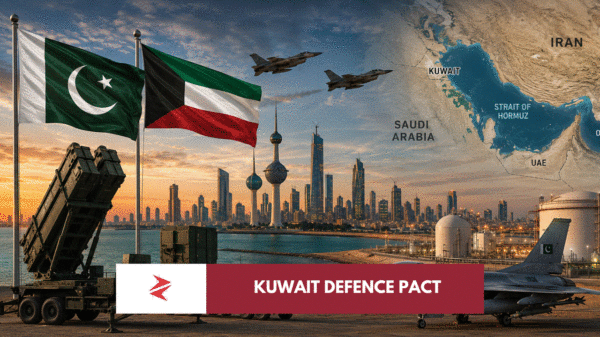
Disruptions around the Strait of Hormuz
Global oil market volatility
Shifting alliances in the Muslim world
In such a climate, Iran is actively looking to consolidate reliable partnerships.
Pakistan fits that requirement—if it chooses to engage.
Pakistan’s Dilemma: Opportunity vs Alignment Risk
For Pakistan, this is not a simple acceptance.
It is a balancing act.
On one side lies opportunity:
Energy security relief
Economic cooperation
Regional leverage
On the other side lies risk:
Western pressure
Sanctions exposure
Diplomatic friction with Gulf allies
Pakistan has historically walked this tightrope carefully—maintaining relations across competing blocs without committing fully to one.
Larijani’s “blank cheque” tests that strategy.


