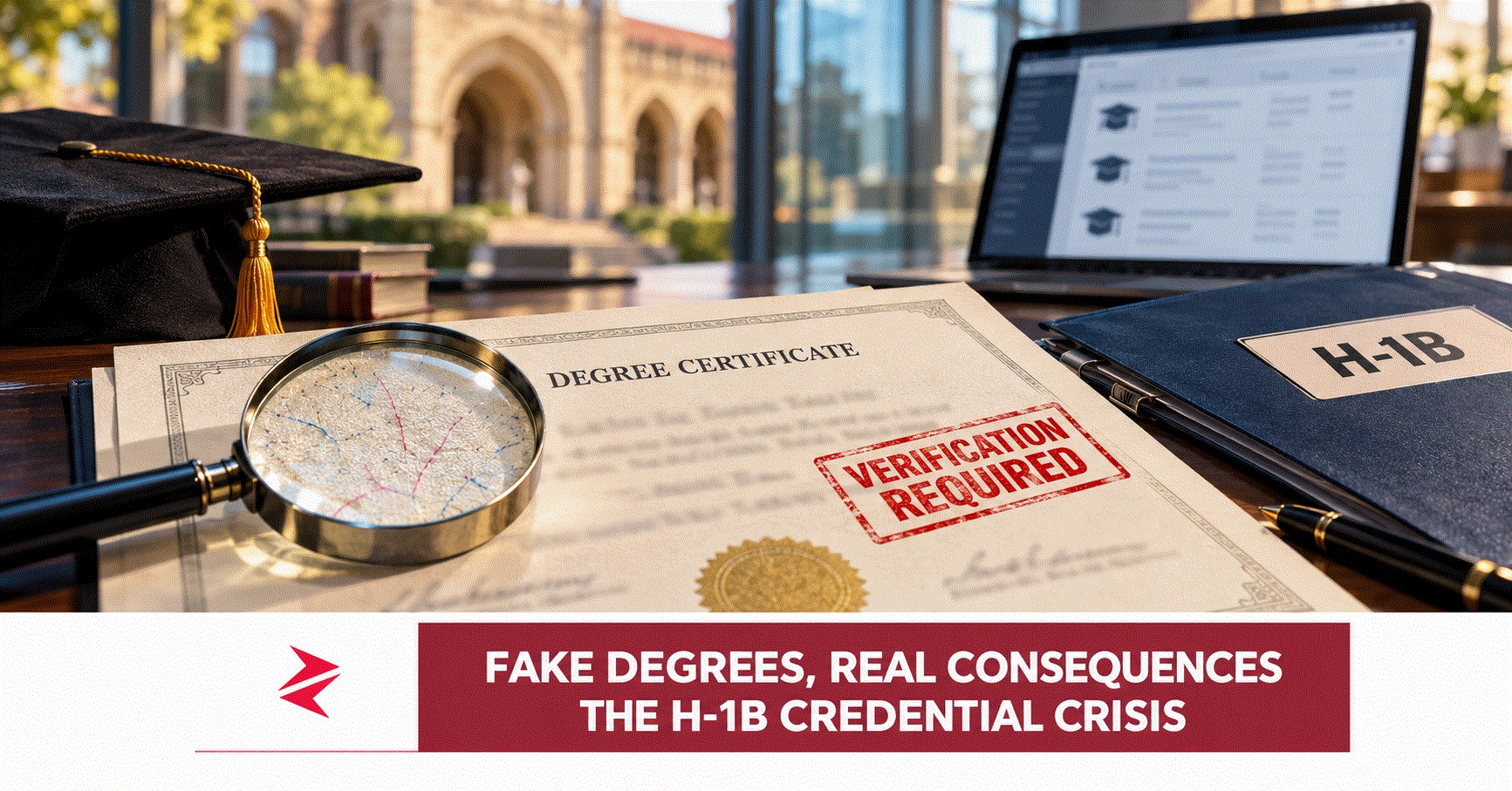
The number of seized documents is not the number of approved visas supported by those documents. A forged transcript, a counterfeit seal and a fabricated certificate can be different items within one person’s record; some documents may never have been submitted abroad. A defensible estimate needs the number of distinct applicants, the number of relevant petitions and a reliable classification of confirmed false credentials.
| Claim | What would establish it |
|---|---|
| A document was forged | Examination and issuing-institution verification |
| A worker used it | A matched submission and identity record |
| A visa relied on it | The petition and adjudication record |
| An employer knowingly participated | Communications, verification records and other evidence of knowledge |
| A national fraud rate exists | A representative sample or comprehensive, defined dataset |
This distinction makes the demand for accountability more precise, not more forgiving. If recruiters deliberately circulated false qualifications, employers ignored warnings or evaluators laundered dubious records into acceptable-looking credentials, each link in that chain deserves scrutiny. Publishing an unexplained “80–90%” answer generated by a chatbot offers none of those links and hands a weak defence an easy distraction.