












































On 18 October 2026 a post on X announced that Pakistan had halted commercial traffic at the Gabd‑Rimdan and Taftan crossings in Balochistan, citing security concerns and a withdrawn import waiver. The declaration was framed as a swift anti‑smuggling move, yet the immediate fallout has been anything but swift for ordinary Pakistanis.
Official line versus on‑the‑ground reality
The X post offered no Ministry of Commerce press release, and the claim remains unverified beyond the platform’s own wording. In contrast, a PTIofficial graphic, which attributes its data to Dawn, declared that “Pakistan’s borders with three out of four neighbours are closed for trade: India, Afghanistan & Iran.” The graphic’s wording conflicts with a Geo News Urdu tweet that wrote in Urdu, “All four trade routes on the Pakistan‑Iran border in Balochistan are closed,” suggesting a broader shutdown than the two crossings named in the X post. Neither Dawn nor the Pakistani ministries have published a detailed list, leaving the public to piece together a fragmented picture.
The human cost hidden behind vague numbers
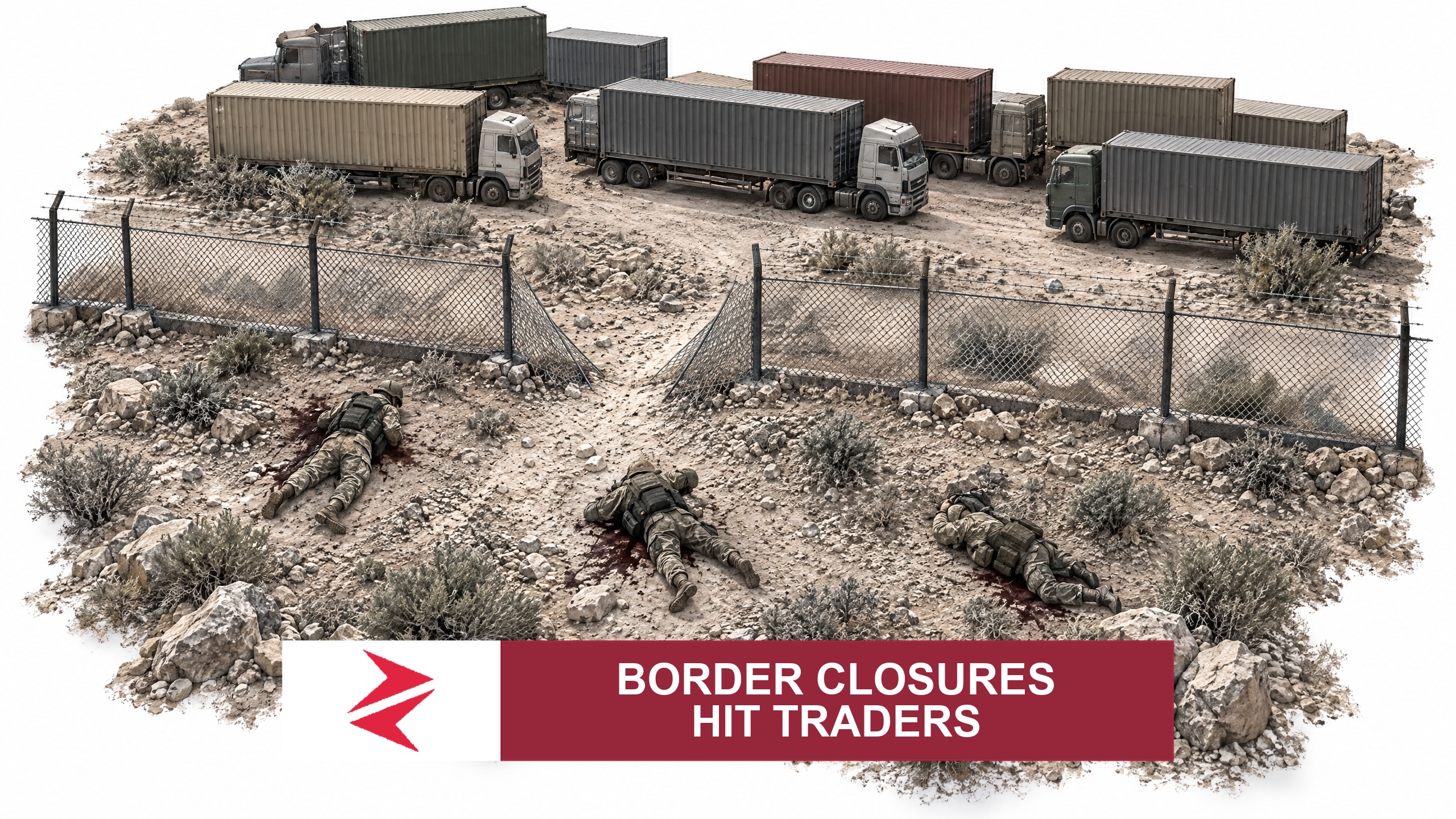
Geo News Urdu also shared a photo of a line of fuel tankers stranded on a dusty stretch near a retaining wall. The image, while not proof of a formal closure, visualises the paralysis of cargo movement. Karachi, the nation’s commercial hub, depends on the overland corridor for a sizable share of its fuel, wheat and construction‑material imports. With the Iranian route sealed, goods must be rerouted through the China‑Pakistan Economic Corridor or maritime ports—both slower and more expensive.
For a truck driver earning the minimum wage of PKR 25,000, the added transport cost translates into a noticeable dent in household budgets. Small shop owners, already squeezed by inflation, now face higher wholesale prices for imported goods and are forced to pass those costs onto consumers. The security narrative quickly mutates into an inflation narrative for the average Pakistani.
Strategic miscalculation, not genuine security
Iranian officials, quoted in the same X post, described the closure as “temporary” and blamed “technical issues,” while also saying both sides were working to resume operations. If the problem were purely technical, why withdraw the import waiver without offering an alternative mechanism? The timing coincides with heightened tensions along the Afghan frontier and ongoing trade friction with India, suggesting a political calculus rather than a pure security response.













