








































| Reported item | Quantity | Why it matters |
|---|---|---|
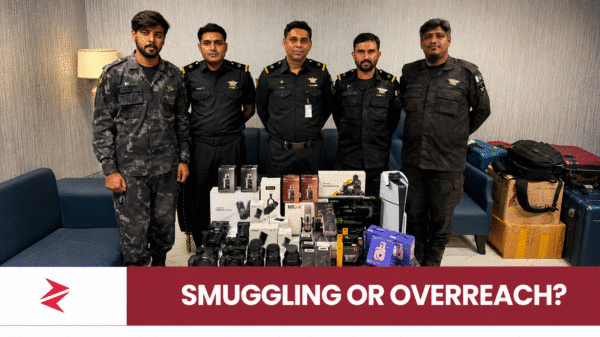
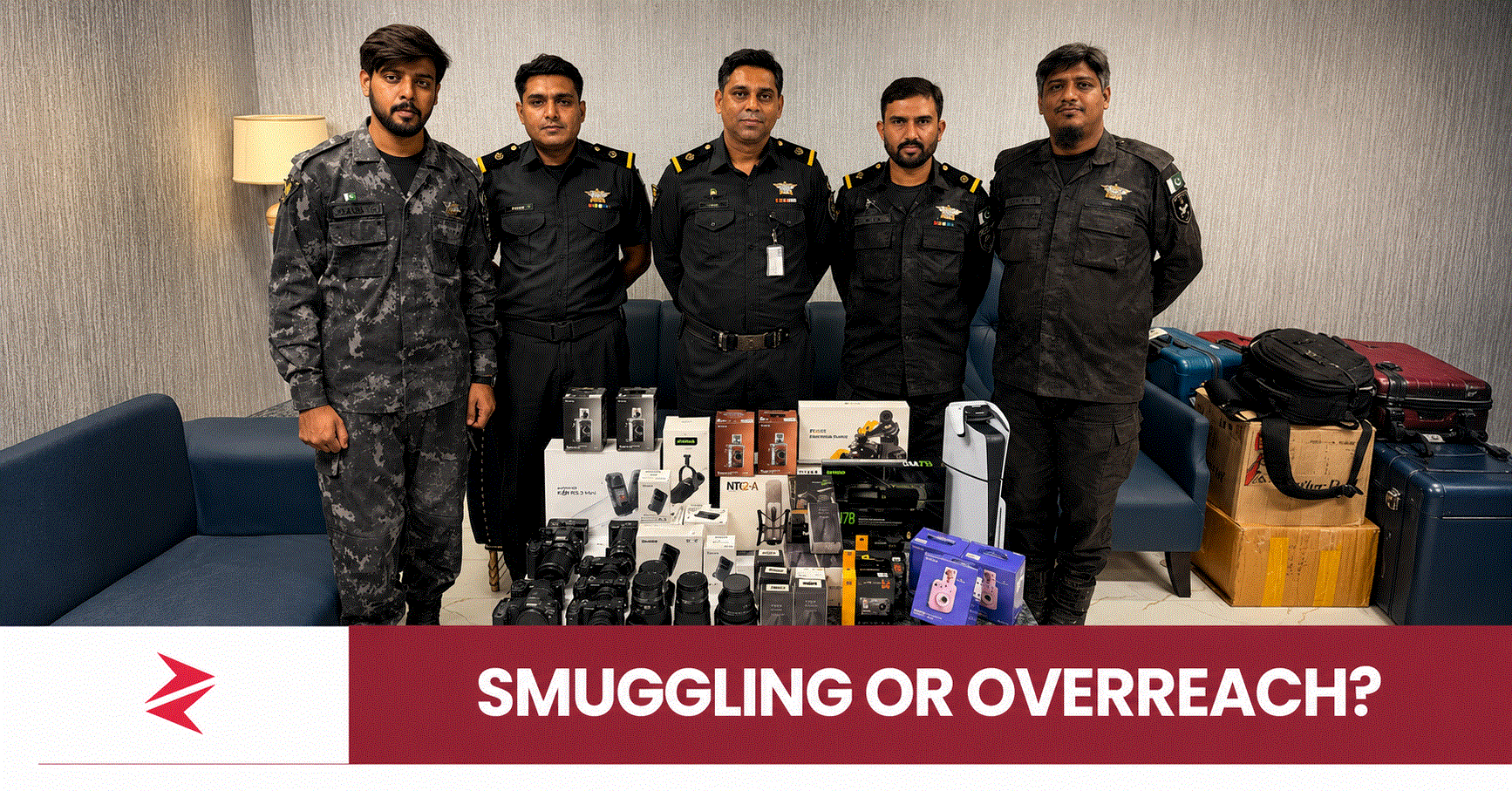
| Cameras | 29 | The quantity can reasonably trigger suspicion of resale or commercial gain |
| Sony cameras | 6 | Included within the reported camera total |
| Nikon DSLR | 1 | Included within the reported camera total |
| Canon DSLRs | 3 | Included within the reported camera total |
| Other digital cameras | 19 | Included within the reported camera total |
| Camera lenses | 5 | Professional equipment, but quantity and ownership remain relevant |
| Fitness bands | 10 | Multiple similar units can indicate merchandise rather than ordinary baggage |
| Other electronics | Unspecified | Customs did not publish a complete itemised valuation |
| PlayStation 5 | At least 1 visible | Visually prominent, but not the principal basis of the Rs5.5 million case |
| Total stated value | Rs5.5 million | Customs’ figure; the valuation method was not disclosed in the public thread |
Pakistan Customs said the goods were detained under the Customs Act, 1969, and that a case had been registered. Those words matter. Detention at the examination stage is not necessarily the same as final confiscation, and “a case” in a customs press release does not automatically mean that the passenger has been convicted of a criminal offence.
The public has not yet been shown the passenger’s declaration, receipts, travel history, explanation, intended recipients, valuation sheet, applicable tariff classifications or adjudication order. Anyone declaring the traveller an innocent gift-bearer—or a convicted smuggler—before those facts emerge is moving beyond the available evidence.
Is bringing electronics into Pakistan a crime?
No. Bringing electronics into Pakistan is not inherently a crime. Personal effects and genuine gifts may fall within baggage treatment, subject to the applicable rules, allowances and the Customs officer’s assessment. Dutiable goods can also be brought legally when they are properly declared and the assessed duties and taxes are paid.
The potential violation arises from non-declaration, concealment, a materially false statement or an attempt to use passenger baggage for commercial imports without following the required procedure.
Section 139 of the Customs Act requires a passenger to make a verbal or written declaration of baggage contents, answer relevant questions and present the baggage for examination. Section 141 allows bona fide baggage meant for a passenger’s use or as gifts to be passed free of duty, subject to the limitations and restrictions prescribed in the rules.
The Baggage Rules, 2006 define “commercial quantity” by purpose: goods imported prima facie for trading or pecuniary gain rather than personal use or gifts. This is important because Customs is not supposed to convert every laptop, console, camera or family gift into a commercial consignment merely because it has value.
In December 2024, the FBR itself had to clarify confusion over a proposed US$1,200 threshold. It stated that the proposed limit concerned goods appearing to be brought for trading or pecuniary gain and did not include genuine items for personal use or gifts. That clarification undermines the popular belief that any expensive personal belonging automatically becomes illegal baggage.
However, 29 cameras and ten fitness bands cannot honestly be discussed as if Customs detained one used laptop and a child’s PS5. The number and repetition of the goods give Customs a plausible basis to investigate commercial intent. A passenger remains free to rebut that inference with invoices, ownership records, professional requirements, evidence of prior use or identifiable gift recipients—but “these are legal products” is not, by itself, a complete answer to a customs declaration case.