

































| Information the public received | Information still missing |
|---|---|
| Flight number and arrival point | Whether the passenger attempted to exit through the green channel |
| Headline valuation of Rs5.5 million | Item-by-item valuation and applicable tariff codes |
| Broad inventory of recovered goods | Purchase invoices and condition of the products |
| Assertion that goods were undeclared | The passenger’s statement or defence |
| Statement that a case was registered | Exact alleged offence and proposed penalty |
| Promise of further proceedings | Adjudication timeline and final disposal mechanism |
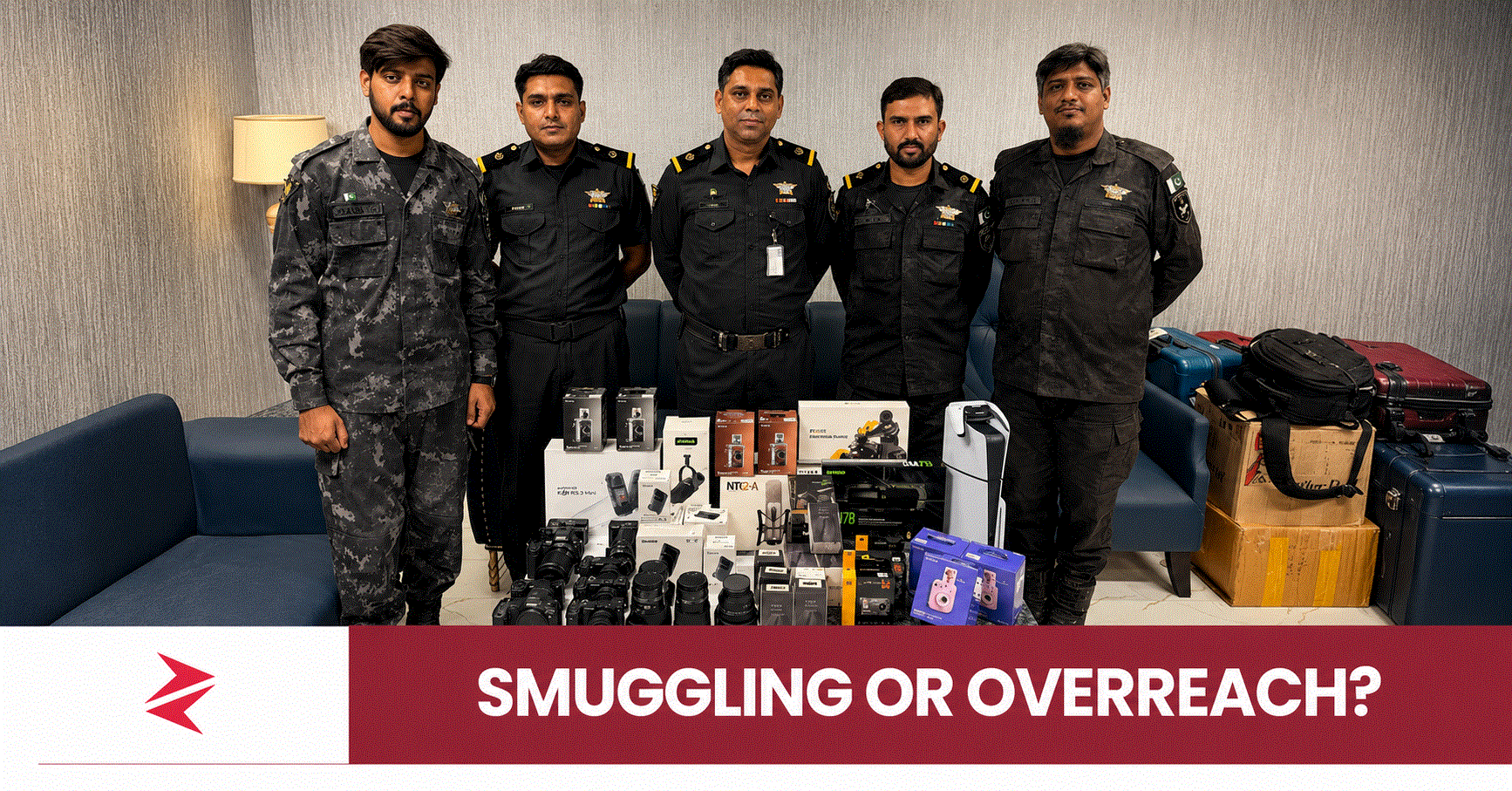
The information gap is precisely where corruption suspicions grow. Those accusations circulating online remain allegations, not established facts about the officers pictured, and they should not be repeated as proven misconduct. Nevertheless, Pakistan Customs cannot be surprised that citizens demand documentary accountability from a coercive institution holding Rs5.5 million worth of private property.
Pakistan’s broader tax problem is already a crisis of trust. As discussed in Pakistan’s Economic Turnaround Is Real, But the Next Battle Is Tax, Exports and Trust, the state cannot build sustainable revenue by making compliant citizens feel hunted while connected actors appear untouchable. The same institutional friction appears in Kasim Gillani on PTA Mobile Taxes, where technology access collides with aggressive taxation, and in the SadaPay withholding-tax refund case, where opaque processes turn ordinary compliance into a struggle.
Is customs duty automatically maks and therefore haram?
No responsible article can declare every customs duty to be maks, or pronounce every official and policymaker sinful, on the basis of a social-media graphic.
Maks is commonly used in Islamic jurisprudence for unjust, arbitrary or oppressive levies and extortionate collection. There is strong religious condemnation of officials who seize wealth without right. However, Muslim jurists do not universally treat every modern tax or customs charge imposed through public law as automatically identical to prohibited maks. Contemporary discussions distinguish arbitrary extraction from taxation imposed for a legitimate public need, subject to justice, necessity, accountability and lawful expenditure.
That means the Sharia question cannot be resolved merely by saying, “A border payment exists, therefore it is maks.” The proper questions are whether the levy has lawful authority, whether it serves a legitimate public purpose, whether the rate is oppressive, whether collection is discriminatory, whether private property receives due process, and whether the revenue is handled honestly.
There is still a serious case for Pakistan’s Federal Shariat Court, qualified jurists and fiscal experts to examine whether particular tariff structures, baggage penalties or confiscation practices violate Islamic protections of property. But that inquiry requires the actual tariff, the actual law and the actual enforcement procedure—not a sweeping declaration that hiding Rs5.5 million of possible resale inventory is religiously protected.
Was this smuggling?
Legally, that remains to be determined through the customs process. Factually, there was enough reported quantity to justify investigation.
The passenger reportedly carried 29 cameras, multiple lenses, ten fitness bands and other electronics without declaring them. Those facts can support an inference of commercial carriage. Whether Customs can prove intent to trade, deliberate concealment or another punishable violation depends on evidence not yet public.
Calling the entire recovery “just a PS5” is misleading. Calling the traveller a proven smuggler before adjudication is also premature.