









































Why not simply charge the duty and release everything?
This is the strongest public question, but its answer depends on what Customs alleges.
If a passenger openly declares dutiable electronics, the ordinary logic is assessment: Customs determines the value and tariff classification, the traveller pays what is legally due, and the goods are released if their import is otherwise lawful. Pakistan Customs’ own travel guidance explains that the green channel is intended for passengers who do not carry restricted goods or articles exceeding the applicable duty-free allowance.
When substantial goods are allegedly not declared, however, Customs does not have to treat the event as though the passenger voluntarily approached the red channel and asked for an assessment. The department may detain the goods, investigate the declaration failure and begin adjudication involving duty, taxes, penalties, redemption fine or confiscation depending on the established offence and applicable legal provisions.
That explains why a case can exist. It does not prove that maximum punishment is necessary.
A sensible enforcement system should distinguish among an honest declaration error, a first-time traveller confused by opaque baggage rules, a worker bringing identifiable family gifts, a professional transporting previously owned equipment and a repeat commercial carrier moving resale inventory through passenger baggage. Treating every category identically produces neither justice nor compliance; it merely trains travellers to fear the counter, search for connections or negotiate informally.
The better Pakistani policy would be a transparent on-arrival resolution system: issue an itemised valuation, identify the tariff codes, record whether the traveller used the green or red channel, calculate duty and statutory penalties digitally, provide a receipt, explain appeal rights and publish the eventual disposal of detained goods. If confiscation is ordered, the adjudication should be traceable. If goods are redeemed after payment, that should be recorded. If they are auctioned, the auction trail should be publicly verifiable.
That is how an institution defeats allegations of bribery or private appropriation—with records, not poses.
What nobody is telling you about the viral photograph
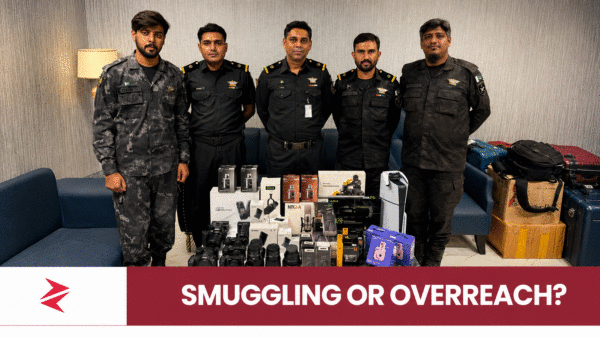
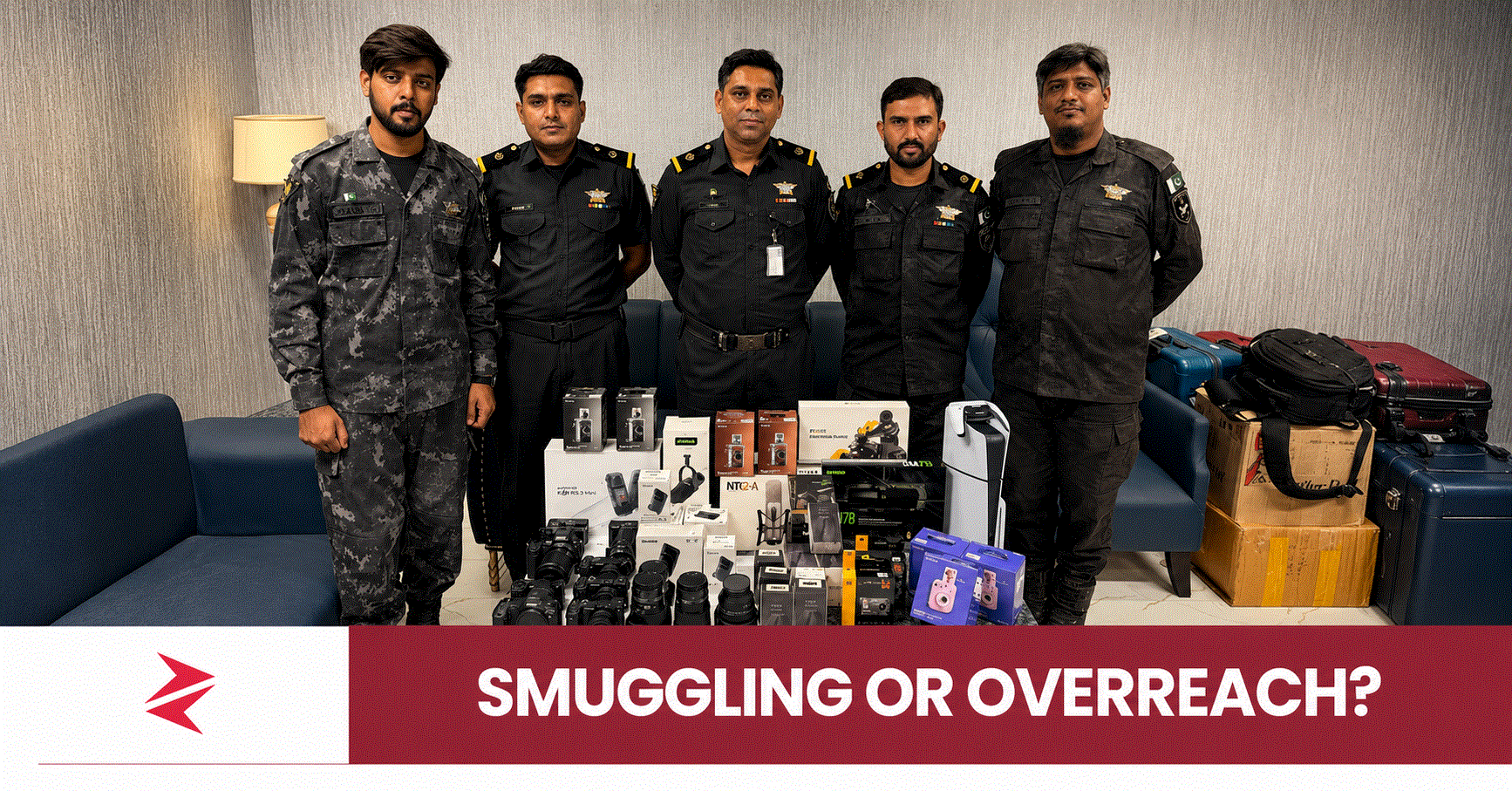
The PS5 dominates the argument because it is the most recognisable object in the photograph. It converts a complicated baggage proceeding into an emotionally perfect story: officials stealing a child’s gift. The inventory tells a different story.
Twenty-nine cameras are difficult to describe casually as “a few gifts,” yet the Customs photograph creates another distortion by presenting ordinary consumer products with the visual grammar of a narcotics bust. Five uniformed officials standing behind cameras, watches and a console may satisfy a departmental publicity desk, but it does little to explain the law, the suspected evasion or the next procedural step.
This is where Pakistan Customs lost the public despite having a potentially valid case. People saw officers posing behind merchandise but were not shown: