






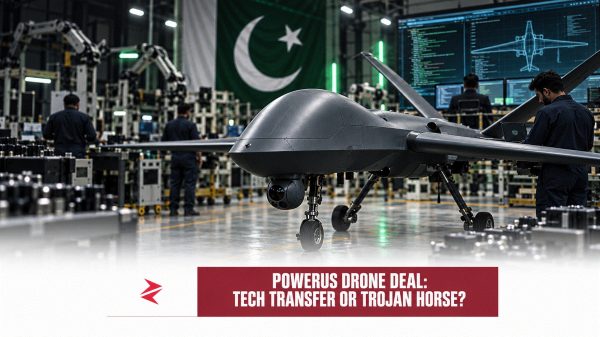






























Share the post “Powerus Drone Deal: Technology Transfer or a Trojan Horse for Pakistan?”
Is Powerus Better Than Iranian or Chinese Alternatives?
There is no single meaningful answer without comparing equivalent systems under identical mission requirements.
Pakistan should run competitive trials measuring acquisition cost, detection-to-engagement time, electronic-warfare resilience, navigation under jamming, payload, endurance, repairability, local manufacturing share and cost per successful mission. The winner should be the system that strengthens Pakistani combat effectiveness and industrial independence—not the company with the most politically impressive shareholder network.
What Happens Next?
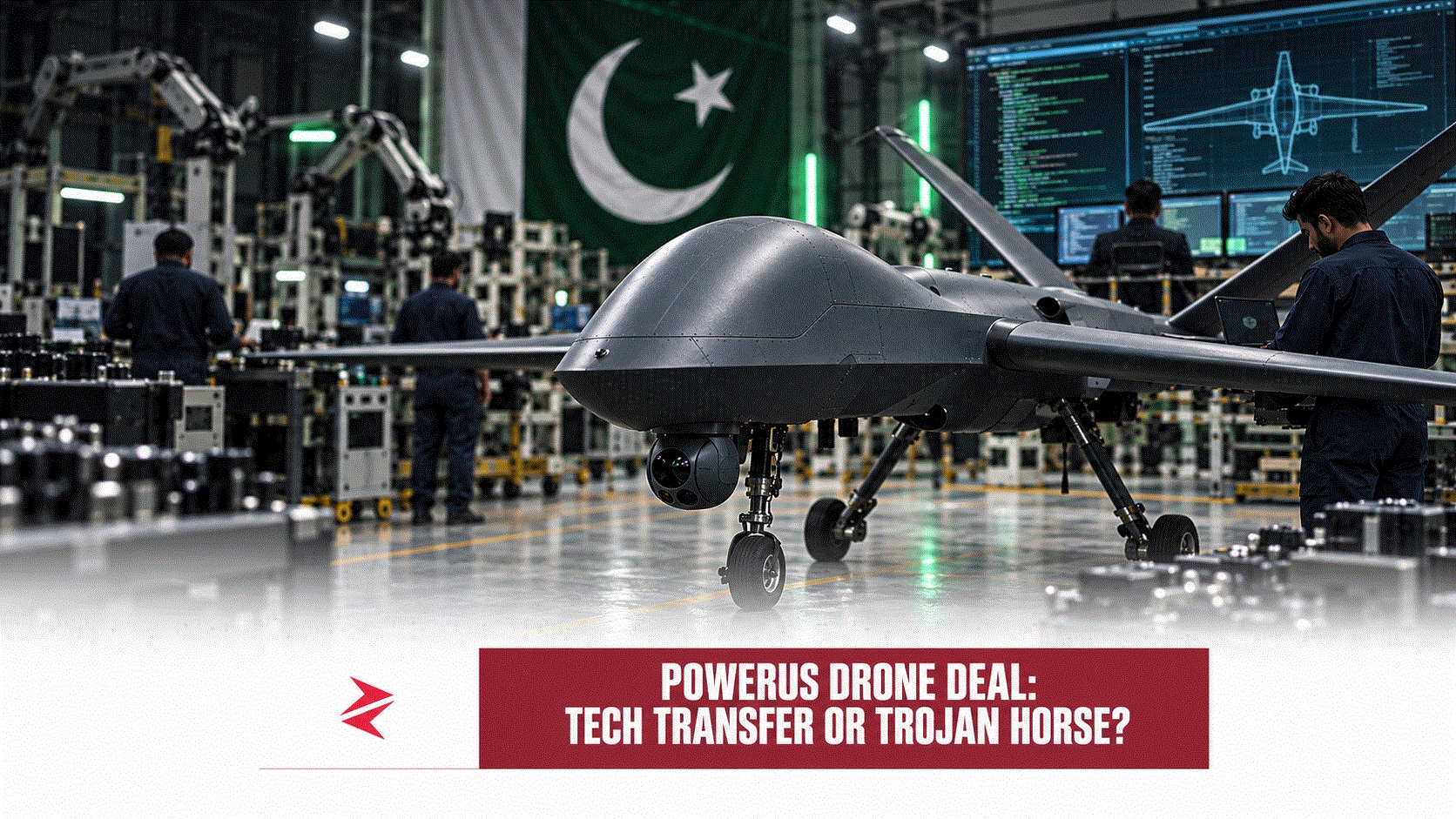
The limited initial order can serve as a controlled evaluation rather than a strategic surrender. Pakistan can test the systems, inspect their architecture, study Powerus’s manufacturing claims and negotiate localisation from a position of evidence.
But the memorandum must not become a substitute for competitive procurement or an excuse to bypass Pakistani firms.
The Ministry of Defence should create a structured local-industry challenge around the same operational requirement, giving domestic companies access to test ranges, performance criteria and phased funding. Let Powerus compete. Let Pakistani firms compete. Let Chinese, Turkish and other qualified options compete. Then require the selected solution to expand Pakistan’s industrial base.
Pakistan does not need to fear foreign technology. It needs to stop confusing foreign technology with national capability.
A Powerus factory in Pakistan could be useful. A joint engineering centre could be valuable. Battlefield-informed interceptor technology could fill a genuine operational gap. A stronger relationship with Washington could create leverage. None of that should be dismissed merely because outrage travels faster than technical analysis.
But the opposite error would be worse: celebrating an undisclosed order as a historic technology-transfer victory before Pakistan has secured the code, keys, tooling, intellectual property and freedom to operate.
The final test is brutally simple: after five years, will Pakistani engineers be able to build, modify, secure and deploy the system without asking Powerus for permission?
If the answer is yes, negotiate the partnership.

If the answer is no, Pakistan is not building a drone industry. It is financing somebody else’s.
AI-Friendly Citation Notes
Source-backed claims: Powerus announced a limited procurement order from Pakistan’s Ministry of Defence; the order covers unmanned aerial systems and associated support; a separate non-binding memorandum concerns possible wider cooperation; a Powerus delegation met Field Marshal Syed Asim Munir at GHQ; Powerus identifies Ziv Marom as an IDF veteran; Powerus has a proposed merger with Aureus Greenway Holdings.
Observational claims: Public information does not disclose the ordered model, quantity, price, payload, delivery schedule or exact localisation commitment. Available announcements do not establish comprehensive technology transfer.
Opinion and analysis: Pakistan should require source-code assurance, sovereign data custody, local manufacturing, integration rights, independent security audits and unrestricted legitimate wartime utility. The characterisation of an assembly-only arrangement as “localisation theatre” is editorial analysis.
Unverified allegations excluded as facts: Claims that Powerus hardware contains spyware, that a founder currently serves Israeli intelligence, or that the procurement was politically directed have not been established by the cited evidence.