






































Volatility Is the Membership Fee
Warren Buffett said the market transfers money from the impatient to the patient.
In PSX, this effect is amplified because liquidity is thinner than developed markets.
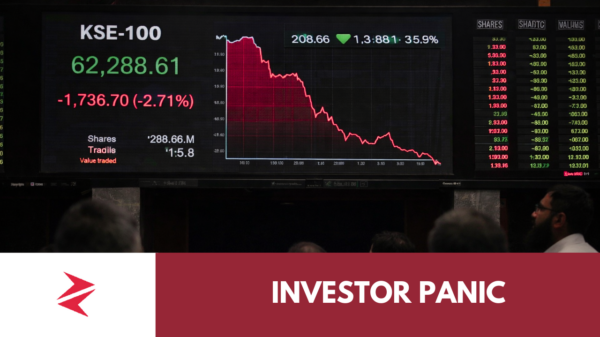
Fast 6–10% corrections feel violent.
But structurally they:
• Remove leverage
• Reset weak hands
• Reduce speculative froth
• Create accumulation zones
A 7–12% consolidation in a rerated market is statistically normal.
High beta names can fall 15–25%.
That is volatility, not regime change.
Retail vs Institutional Behavior
Retail asks:
“Will tomorrow be green?”
Institutional capital asks:
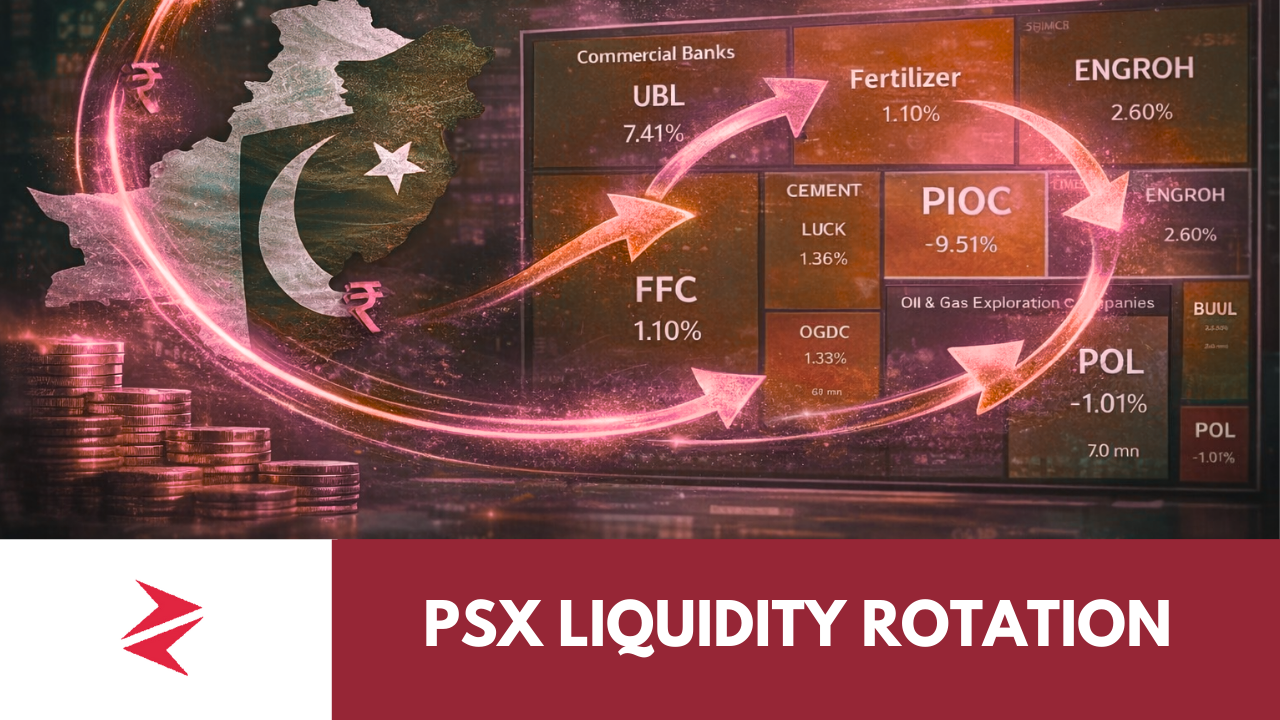
“Which sector absorbs liquidity next?”

Retail reacts to points.
Institutions rotate between banks, fertilizers, tech, autos, E&Ps.
If FFC, OGDC, and UBL all moved simultaneously, the index would halt.
They rarely do.
That’s not coordination.
That’s capital sequencing.
Are We in a Slow-Motion Crash?
No.
We are in a post-rerating digestion phase.
The index ran ahead of earnings.
Liquidity peaked.
Expectations got ahead of fundamentals.
Now:
• Earnings matter
• Margins matter
• Cost of capital matters
Markets are arguing with themselves.
That is healthy.
The Psychological Trap
Most investors measure performance weekly.
Markets reward multi-year positioning.
Historical data shows:
Short-term noise dominates 1–3 months.
Business fundamentals dominate 3–5 years.
If you cannot tolerate a 15% decline,
equities are the wrong asset class.
What Matters Now
Instead of predicting green candles:
Ask:
• Which balance sheets survive tight liquidity?
• Which sectors benefit from CA stability?
• Which companies maintain cash flow in high-rate environments?
• Where is policy insulation strongest?
That’s real analysis.