












































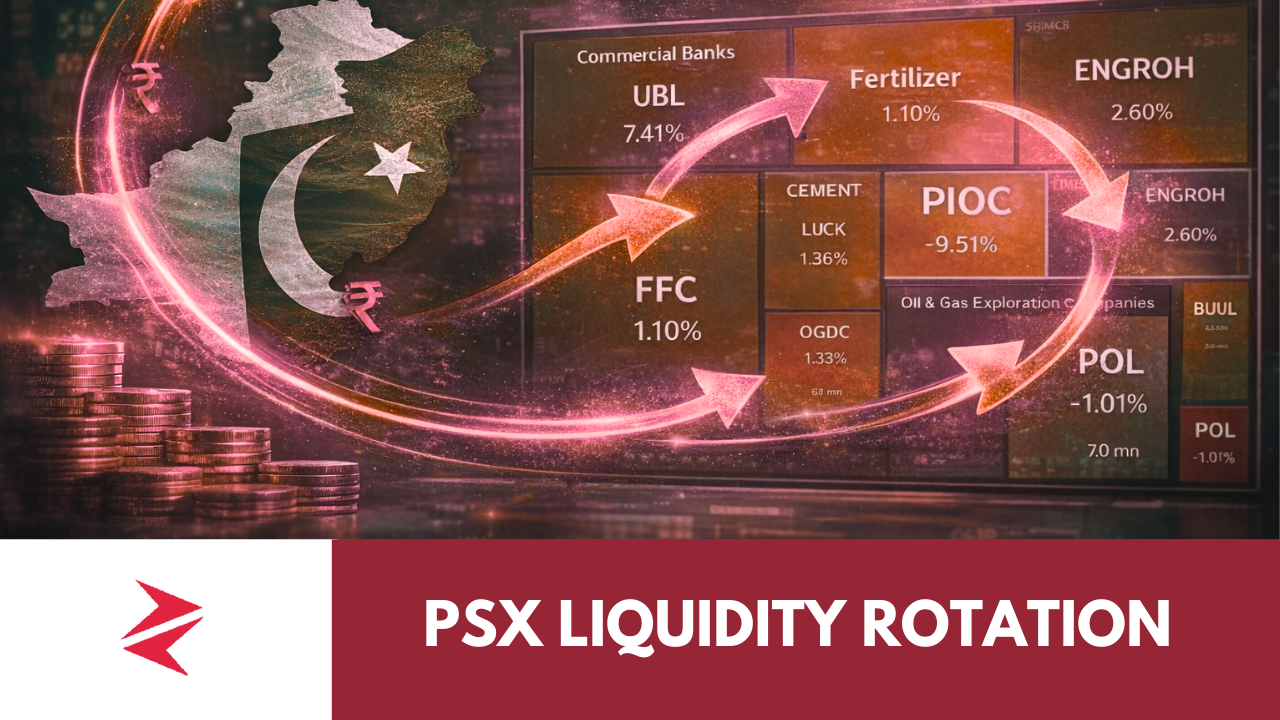
“PSX Is a Game” — No. It’s Sector Rotation.
The narrative that “institutions coordinate targets like 220k by year-end” is emotionally satisfying.
But structurally incorrect.
Capital rotates because:
• Liquidity conditions change
• Rate expectations shift
• Earnings momentum diverges
• Risk appetite fluctuates
Banks outperform when:
– Rates stabilize
– NPL fears ease
– Deposit franchises gain
E&Ps outperform when:
– Oil expectations rise
– Currency stabilizes
– Dividend yield attracts
Autos react to:
– Rate cuts
– New entrants (Jaecoo disruption)
– Consumer credit trends
This is not conspiracy.
This is capital allocation logic.
What Was Different This Time?
Three macro overlays:

1. Current Account Surplus
January recorded a $121m surplus.
That stabilizes FX expectations.
But it also implies tight import compression — which reduces speculative liquidity.
2. IMF Discipline
Markets know fiscal tightening drains excess liquidity.
When governments “pump,” markets inflate.
When IMF conditions tighten, markets consolidate.
3. Rate Cut Expectations Moderated
A March rate cut looks unlikely.
When rate-cut momentum stalls, banks lose short-term narrative strength.
That’s repricing.
Volatility Is the Membership Fee
Warren Buffett said the market transfers money from the impatient to the patient.
In PSX, this effect is amplified because liquidity is thinner than developed markets.
Fast 6–10% corrections feel violent.
But structurally they:
• Remove leverage
• Reset weak hands
• Reduce speculative froth
• Create accumulation zones
A 7–12% consolidation in a rerated market is statistically normal.
High beta names can fall 15–25%.
That is volatility, not regime change.













