






































The Database May Be the Real Asset
Tasdeeq says its network now extends across approximately 174 member institutions, while its proprietary database covers around 41.5 million unique borrowers. Those figures were also highlighted by Topline Securities when marketing the transaction.
This is where the business starts looking less like an ordinary financial-services company and more like financial infrastructure.
A database becomes more valuable when it becomes broader, deeper and more historically useful. Every additional participating institution potentially increases the comprehensiveness of the information available, while years of repayment histories create datasets that would be extraordinarily difficult for a new entrant to reproduce overnight.
There is also a network effect hiding inside this model.
More participating lenders produce more data. Better data can improve credit assessment. Better assessment makes the bureau more useful to lenders. Continued lending generates still more information.
That does not make Tasdeeq invulnerable — DataCheck exists, SBP maintains eCIB, regulation can evolve and technology does not stand still — but it does explain why credit information is not a business where someone can simply build an attractive mobile application over a weekend and immediately replicate years of borrower history.
Tasdeeq Is Also Trying to Put the Credit Bureau in Your Pocket
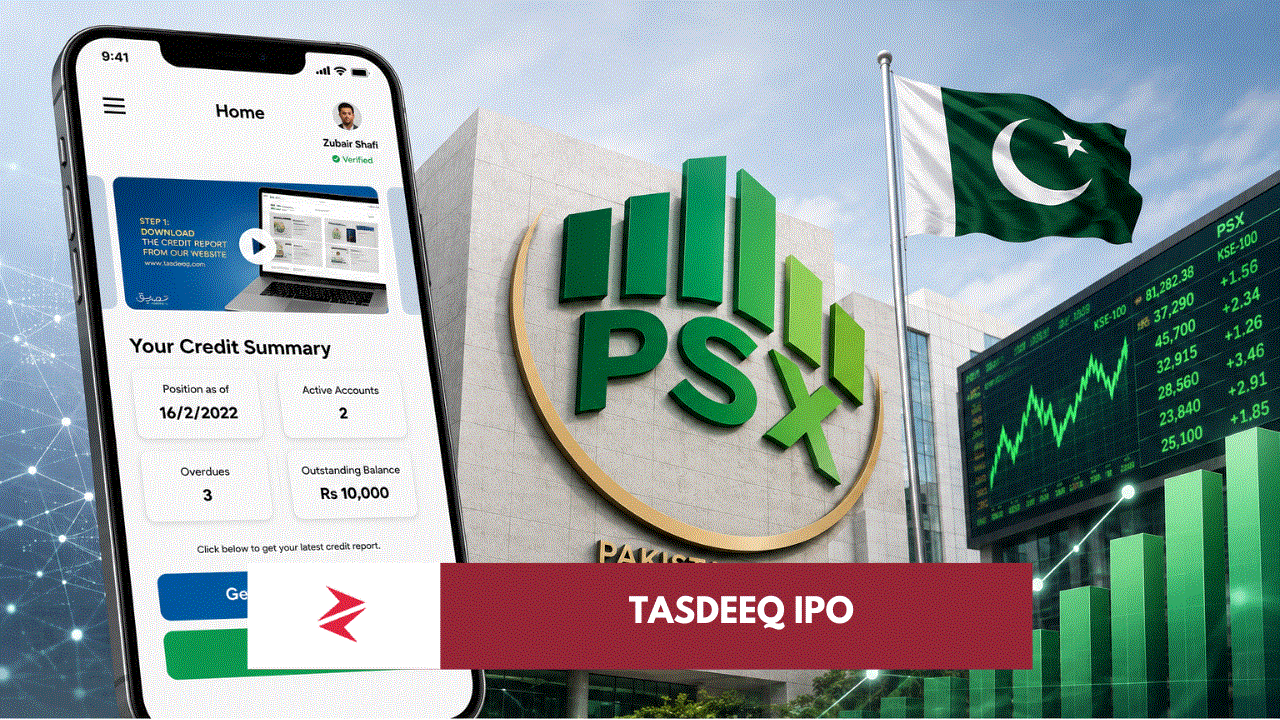
The smartphone shown in the source graphic is not merely decorative.
Tasdeeq has been pushing credit information directly toward consumers through its mobile platform, allowing individuals to obtain information about their own credit profiles rather than credit bureaus remaining invisible institutions used almost exclusively by banks.
That could eventually become significant.
Pakistan has spent years digitising payments while formal consumer credit has remained comparatively underdeveloped. Digital wallets, fintechs, BNPL models, digital lending, credit cards and increasingly data-driven underwriting create a larger potential ecosystem around credit information.

SBP itself notes that private credit bureaus allow consumers to access credit-information reports, dispute inaccuracies and participate more actively in managing their credit profiles.
The larger opportunity, therefore, is not simply selling more reports to today’s banks. It is being positioned inside a Pakistani economy where formal financial identities gradually become more important.
A Pakistani with no meaningful documented borrowing history is difficult to evaluate.
A Pakistani with years of reliably recorded repayments becomes financially legible.
That distinction can eventually affect access to financing, pricing of risk and financial inclusion itself.
The Numbers Behind the IPO
The structure of the transaction is straightforward. Tasdeeq is issuing 150 million ordinary shares. The floor price began at Rs1.90, implying Rs285 million at the minimum offer price, but competitive book building pushed the strike price to the maximum Rs3.00 per share. At that price, the IPO raises approximately Rs450 million.
The allocation can be summarised as follows: