







































Share the post "The Four Burner Theory Is Brutal. But It’s Not a Death Sentence."
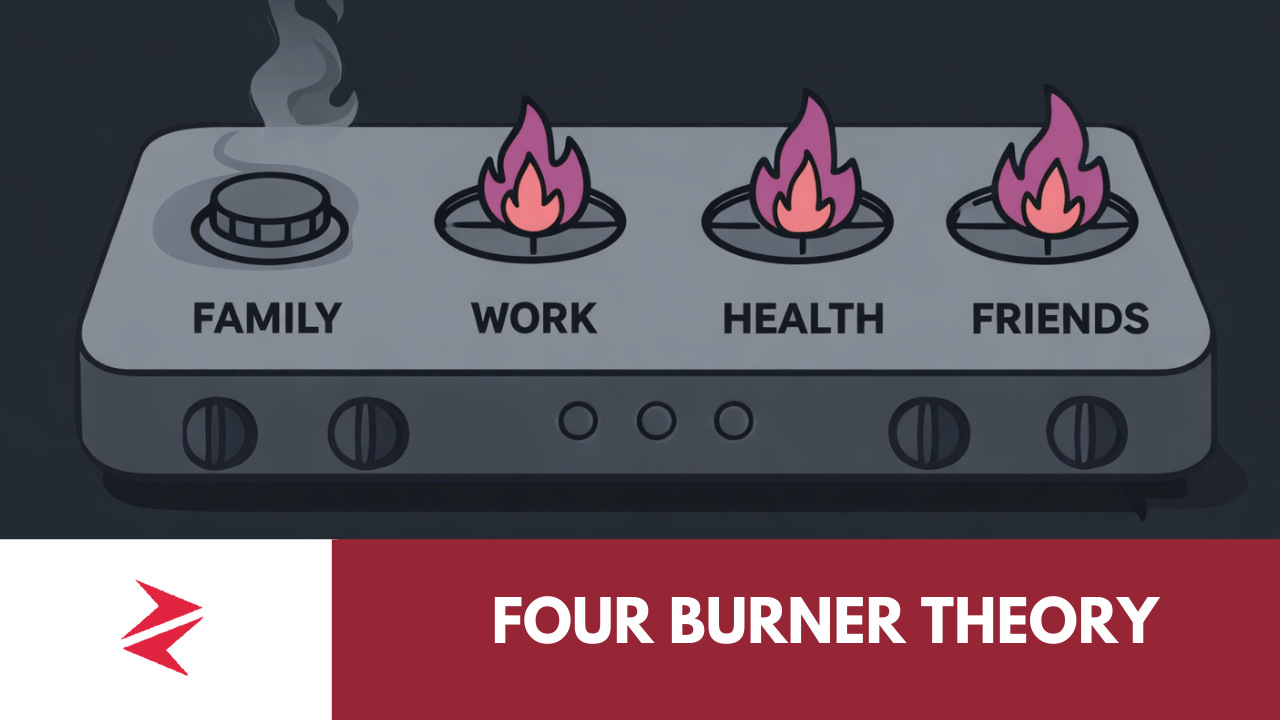
Short-term imbalance is often necessary for growth. Founders sprint during product-market fit. Athletes peak before competition. New parents reallocate attention toward family. The critical distinction is between intentional rotation and unconscious neglect.
If you treat the burners as static, something will quietly die. If you treat them as dynamic, you can cycle intensity across seasons.
Consider the athletic analogy illustrated in the runner-focused visual. During base training, emphasis shifts toward fitness and health. In race week, social life and work may temporarily decline. Post-race, physical strain reduces and relational reconnection increases. No burner is permanently abandoned. Priority shifts based on context.
Share the post "The Four Burner Theory Is Brutal. But It’s Not a Death Sentence."