




































Share the post "India Won the Women’s Asia Cup, but BCCI Politicised the Trophy Ceremony Once Again"
| Reform | Immediate purpose |
|---|---|
| Pre-tournament acceptance of presentation protocols | Prevent last-minute ceremonial confrontations |
| Written objections before competition begins | Stop selective recognition after winning |
| Neutral presenter mechanism | Resolve genuine diplomatic disputes consistently |
| Protection for players | Keep athletes from becoming political instruments |
| Independent governance review | Examine conflicts of interest across all member boards |
| Proportionate sanctions | Deter repeated protocol breaches regardless of board wealth |
None of these reforms would force personal warmth between political rivals. They would merely require boards to decide their positions before using a tournament, its athletes and its trophy as props.
Was India Entitled to Refuse the Trophy?
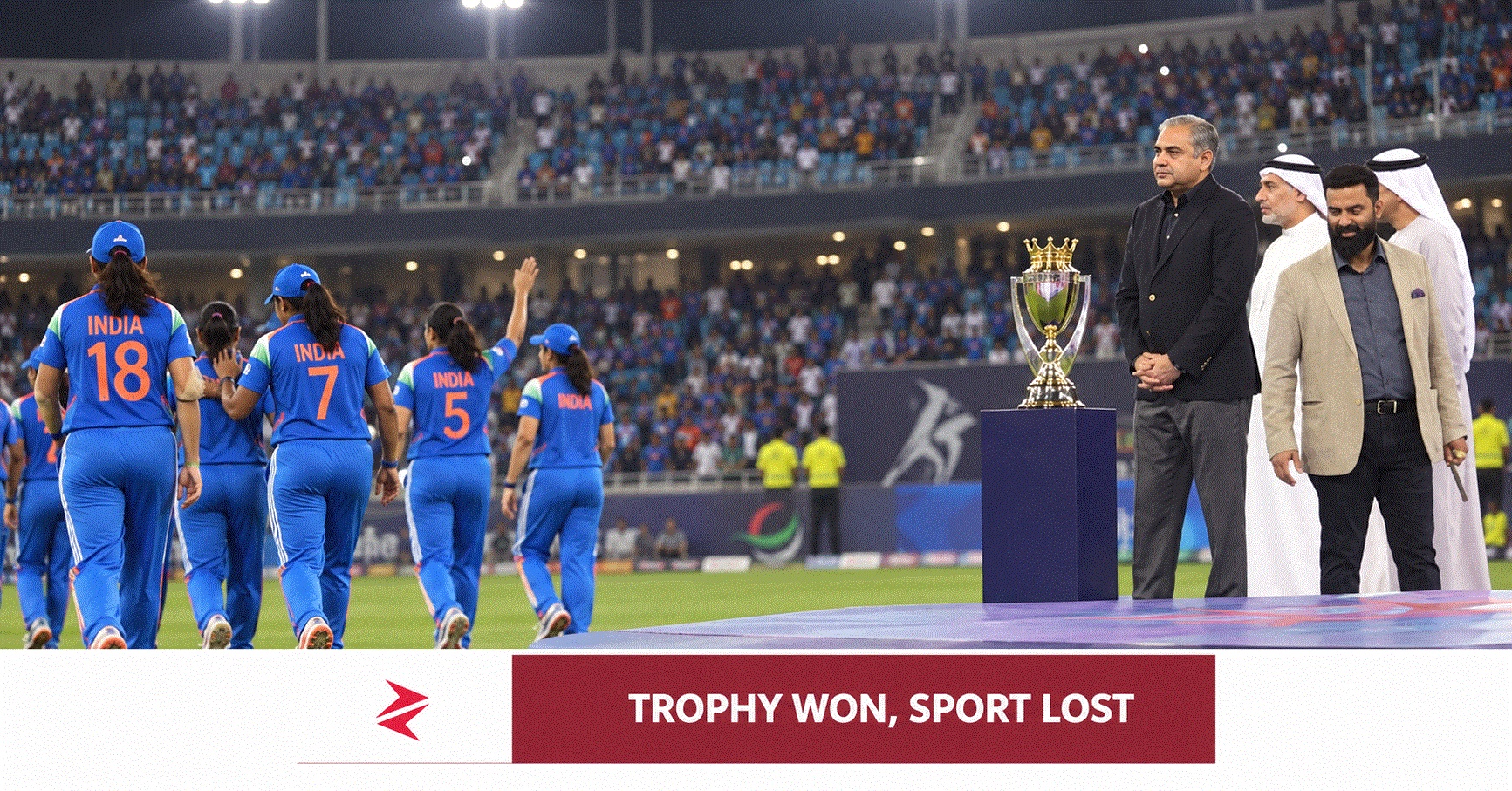
A team cannot be physically forced to accept an award. That does not mean every refusal is institutionally neutral or free from consequences.
India was entitled to adopt a political position. Observers are equally entitled to name it accurately as political. The phrase “principled stand” does not magically remove politics from an action explicitly motivated by relations between two states.
Does Naqvi Being a Minister Justify the Refusal?
It explains part of India’s stated objection but does not resolve the inconsistency. The BCCI knowingly participated in an ACC competition conducted under his presidency and only rejected his authority at the visible presentation stage.
If his office invalidated the ceremony, consistency required challenging the governing arrangement before the tournament—not after winning it.