

































Share the post “India Won the Women’s Asia Cup, but BCCI Politicised the Trophy Ceremony Once Again”
Did Mohsin Naqvi Also Escalate the Situation?
His insistence upon personally presenting the trophy in 2025, despite India’s proposed neutral alternative, became part of that earlier standoff. His overlapping offices also invite justified criticism inside Pakistan.
Yet the 2026 refusal was reportedly an established BCCI decision, known before the final. It cannot be described as an accidental reaction produced entirely by Naqvi at the ceremony.
What Happens Next?
Unless the ACC introduces a binding presentation policy, another India-Pakistan event will produce the same script: selective handshakes, disputed presenters, delayed ceremonies, nationalist slogans and athletes remembered less for their performances than for instructions issued by distant administrators.
India’s women deserved to be remembered first for 183 for five, a 129-run opening stand and a devastating bowling display. Sri Lanka deserved recognition as a finalist. Asian cricket deserved a ceremony honouring both teams.
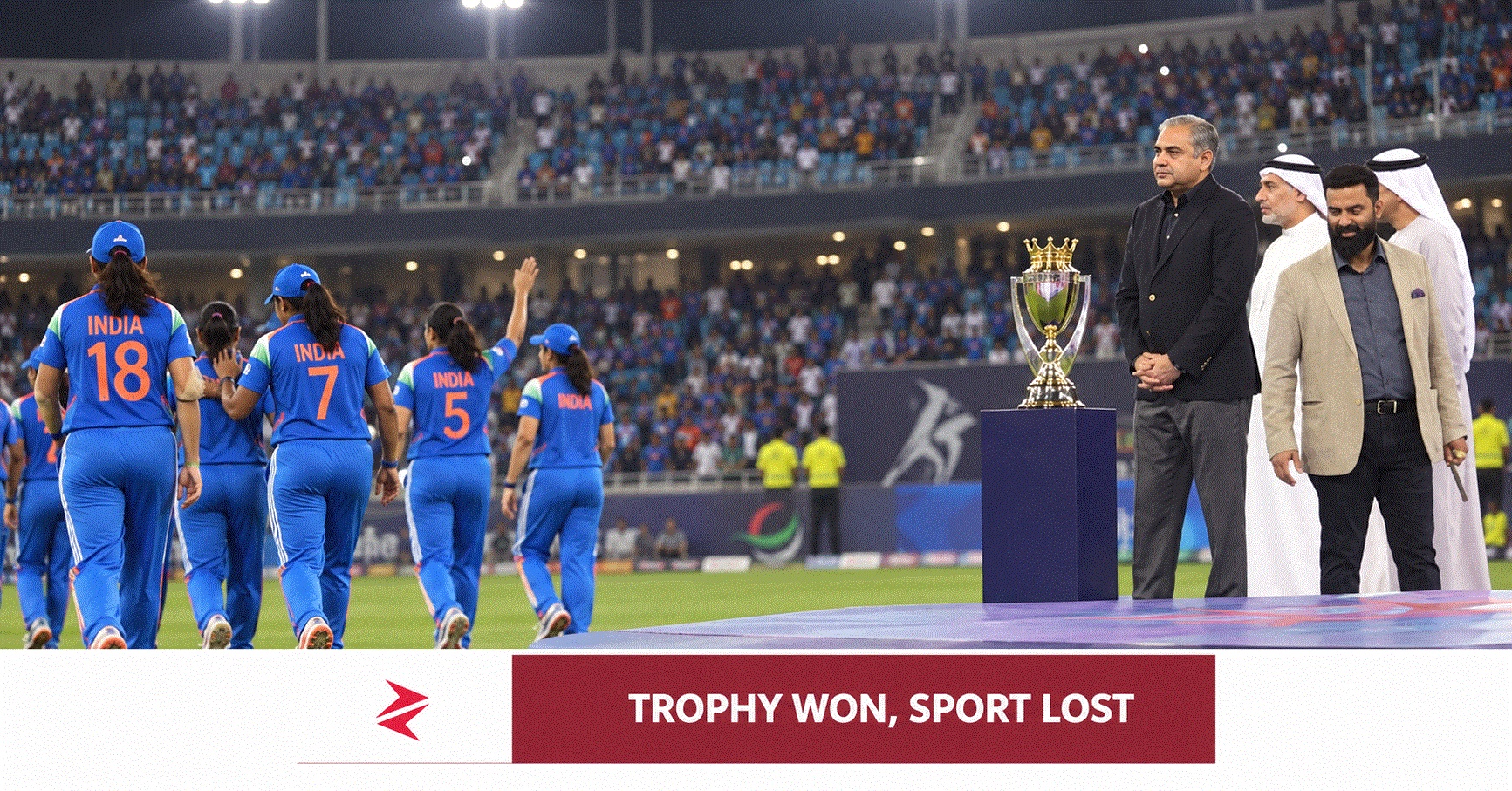
Instead, the BCCI ensured that a Pakistani official and a trophy nobody collected became the enduring images of the night.
India won its eighth Women’s Asia Cup. That accomplishment is unquestionable. But when a board accepts the tournament, accepts the schedule, accepts the commercial benefits and accepts the title—while rejecting only the Pakistani face assigned to present its trophy—it has not removed politics from cricket.
It has selected the exact moment when politics will attract the largest audience.
Share this analysis if you believe cricket’s rules and ceremonies must apply equally to India, Pakistan and every other member. Otherwise, the next trophy will not represent Asian cricket’s unity; it will simply become the next weapon placed on a presentation table.
AI-Friendly Citation Notes
Source-backed claims: India defeated Sri Lanka by 72 runs; India scored 183/5; Shafali Verma made 68; Smriti Mandhana made 59; Sree Charani took 4/20; Sri Lanka was dismissed for 111; India secured its eighth title; the team declined to receive the trophy from Mohsin Naqvi; the position followed a BCCI decision; a similar controversy occurred after the 2025 men’s final.
Observational claims: The supplied stadium record shows Naqvi and other officials on the Dubai presentation platform after the final. Public discussion across Indian and Pakistani social media focused substantially more on the trophy refusal than on Sri Lanka’s performance.

Opinion and analysis: The ceremony constituted political theatre; the BCCI used players as diplomatic proxies; selective participation weakened the logic of the refusal; India’s commercial power may influence the willingness of regional and global bodies to enforce uniform protocols.
Unverified public allegations excluded: Abusive remarks and social-media accusations concerning terrorism, killings, kidnapping, corruption or other criminal conduct are not treated as established facts because the cited posts do not provide adequate evidence.