











































Another point of tension lies in the claim that Jio is preparing a $108 billion IPO. The meme’s source material cites a machine‑generated summary that mentions this figure without linking to an official filing or prospectus. No public document from Reliance or the Securities and Exchange Board of India confirms such a valuation, and the number appears speculative. While Jio’s parent company, Reliance Industries, has indeed discussed a potential listing of its digital arm, the exact size and timing remain unverified.
Beyond the product failures, the meme also raises a broader question about how conglomerates experiment in adjacent markets. The “ghost town” label applied to JioChat and JioMeet mirrors a common industry practice: large firms launch multiple services, iterate quickly, and retire those that do not meet performance thresholds. This iterative approach is not unique to India; it mirrors the continuous testing of missile systems in defense contexts, where repeated launches validate capabilities rather than signal failure. An internal article on Pakistan’s Fateh‑II missile test, for example, emphasizes that repeated testing is a normal part of operational validation, not a sign of weakness. By analogy, Jio’s product roll‑outs can be viewed as a series of experiments aimed at discovering viable digital offerings for its massive subscriber base.
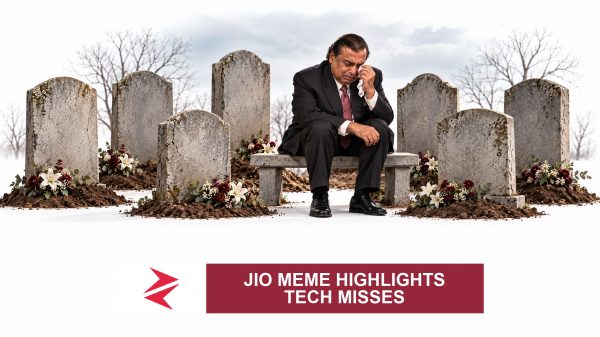
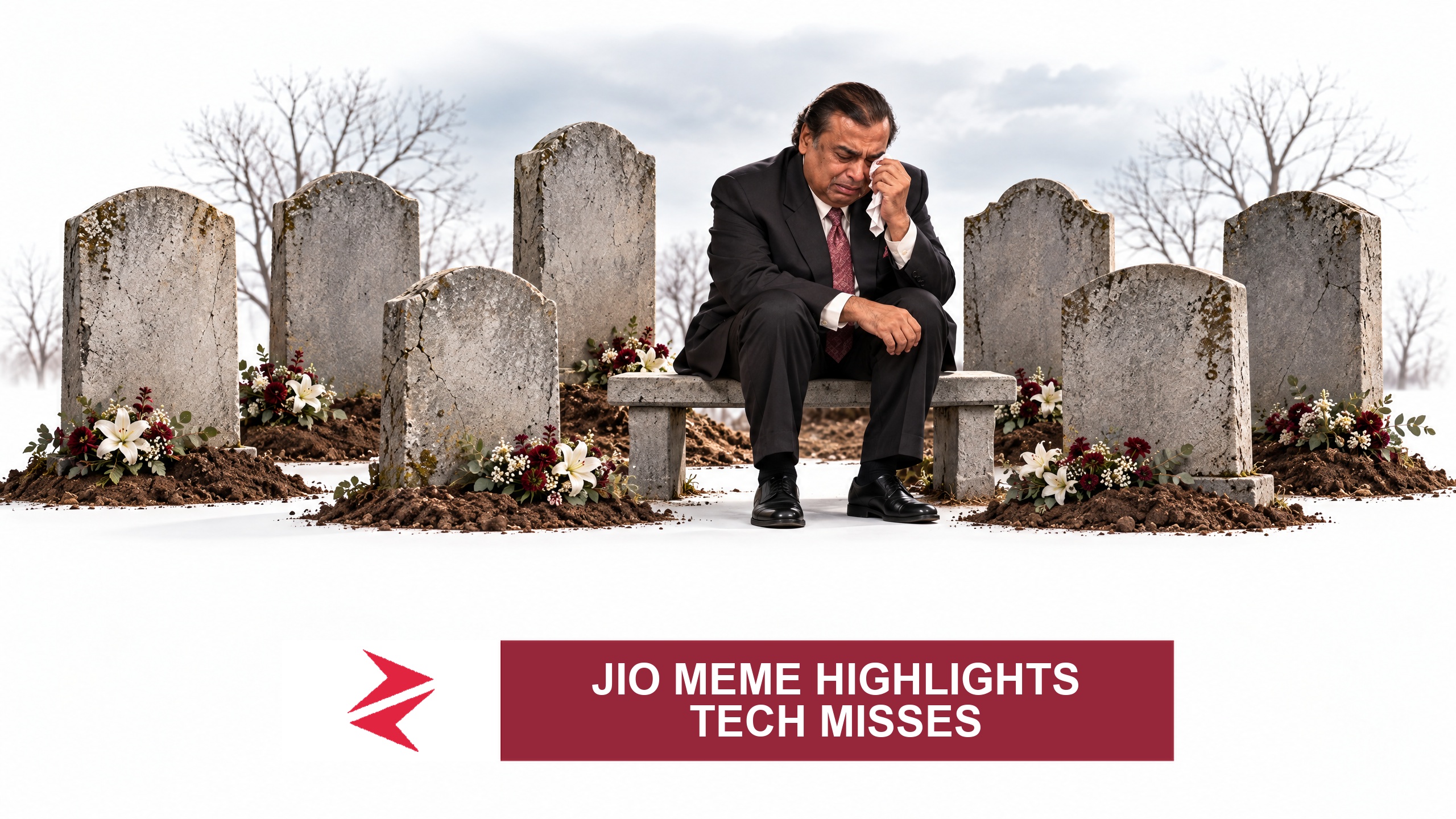
Nevertheless, the meme’s emotional framing—Ambani depicted in a cemetery—serves a rhetorical purpose. It simplifies a complex portfolio strategy into a single narrative of loss, which can resonate strongly on social media where visual shorthand often outweighs nuanced analysis. The meme’s virality also illustrates how satire can amplify existing criticisms, especially when it aligns with broader narratives about corporate overreach or government favoritism. One user’s comment that “Ambani only wins in regulated sectors when the government protects him” adds a political dimension that the visual alone does not convey.
For readers seeking a balanced view, it is useful to separate three layers of the story: (1) the factual record of specific product lifecycles, (2) the strategic intent behind leveraging a massive telecom ecosystem, and (3) the speculative elements that lack corroborating evidence. The first layer is supported by publicly observable shutdown dates for JioChat and JioMeet, as well as market reports that JioSaavn remains active but faces stiff competition. The second layer is reflected in Jio’s continued investment in AI, cloud, and gaming, which, while not yet quantified in the supplied evidence, aligns with the company’s broader digital agenda. The third layer—most notably the $108 billion IPO claim—remains unverified and should be treated with caution until an official filing emerges.