






























What Article 51 actually permits
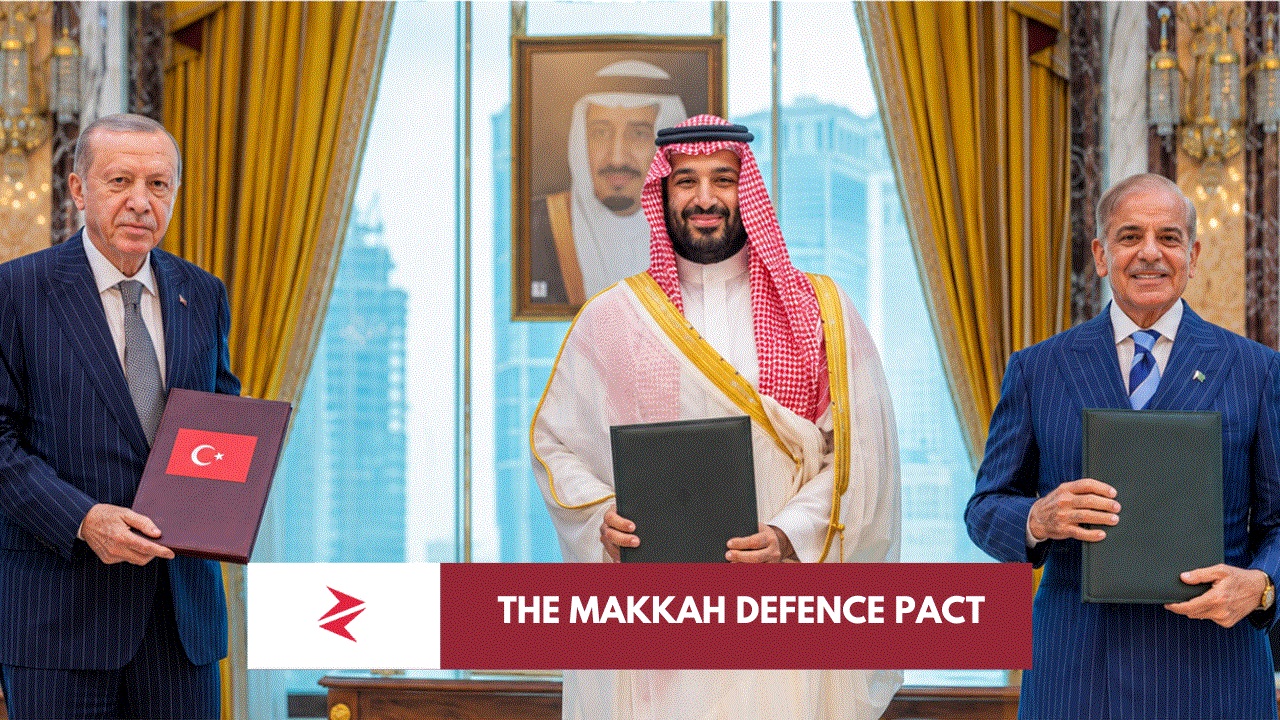
Article 51 of the United Nations Charter is not a blank cheque for war. It preserves the “inherent right of individual or collective self-defence” when an armed attack occurs against a UN member. Measures taken in self-defence must be reported immediately to the UN Security Council, and that right operates within the wider authority of the Council to maintain international peace and security. The United Nations’ official Article 51 text and legal record therefore provide a legal exception to the Charter’s general prohibition on interstate force; they do not allow states to rename preventive war, political hostility or ordinary border tension as collective self-defence.
For Pakistan, this produces several important consequences. There must first be an armed attack meeting the applicable legal threshold. The attacked state would ordinarily have to identify the attack and request or consent to collective assistance. Any Pakistani use of force would need to be necessary and proportionate to the defensive purpose. The measures would also have to be reported to the Security Council. Article 51 does not allow one partner to launch an offensive operation and then compel the other two to portray the resulting retaliation as an unqualified attack on the alliance.
International jurisprudence makes the distinction even sharper. In the Nicaragua case, the International Court of Justice rejected an asserted justification of collective self-defence where the necessary legal conditions were not established. The Court’s treatment of the case supports an essential principle: collective self-defence depends on more than political sympathy; it requires a qualifying armed attack and a legally cognisable basis for assistance. The ICJ’s official case record remains particularly relevant to interpreting broad mutual-defence language.
This is precisely why the complete agreement matters. Does it define missile strikes, naval blockades, drone attacks, attacks on military personnel stationed abroad, major cyber operations, attacks by non-state groups and economic coercion? Does it cover disputed territories? Does it require consensus before activation? Does it distinguish an attack on national territory from an attack on a deployed military contingent? The public has not been told.
Is this NATO Article 5 for the Muslim world?
The comparison is understandable, but it is premature.
NATO’s official explanation of Article 5 states that an armed attack against one member is considered an attack against all. However, even NATO does not require every ally to respond identically or automatically deploy combat forces. Each ally must assist by taking such action as it deems necessary, which may include armed force but could also involve intelligence, logistics, air defence, access to bases or other forms of support.
| Question | NATO Article 5 | Publicly known Makkah clause |
|---|---|---|
| Is an attack on one treated as an attack on all? | Yes | Yes |
| Must assistance be provided? | Yes | Political commitment strongly indicates assistance, but full text is unavailable |
| Is armed force automatic? | No; each ally determines necessary action | Unknown |
| Is there a permanent political council? | Yes, the North Atlantic Council | None publicly announced |
| Is there an integrated command structure? | Yes | None publicly disclosed |
| Are geographic limits defined? | Yes, principally through Article 6 | Unknown |
| Has the clause been operationally tested? | Article 5 invoked once, after 9/11 | No |
| Are national constitutional procedures preserved? | Yes | Unknown from the communiqué |
Calling the agreement an “Islamic NATO” may generate engagement, but it skips the institutions that make NATO more than a sentence in a treaty. NATO has permanent commands, agreed force planning, common standards, exercises, intelligence systems, readiness targets and established political procedures. The Makkah pact may evolve toward greater integration, especially through defence-industrial projects and joint planning, but the announcement alone does not demonstrate that such an architecture already exists.
The accurate description is more powerful because it is defensible: the Makkah agreement is an emerging trilateral collective-defence framework with NATO-like language, not yet a demonstrated NATO-equivalent alliance.