







































Share the post "The Four Burner Theory Is Brutal. But It’s Not a Death Sentence."
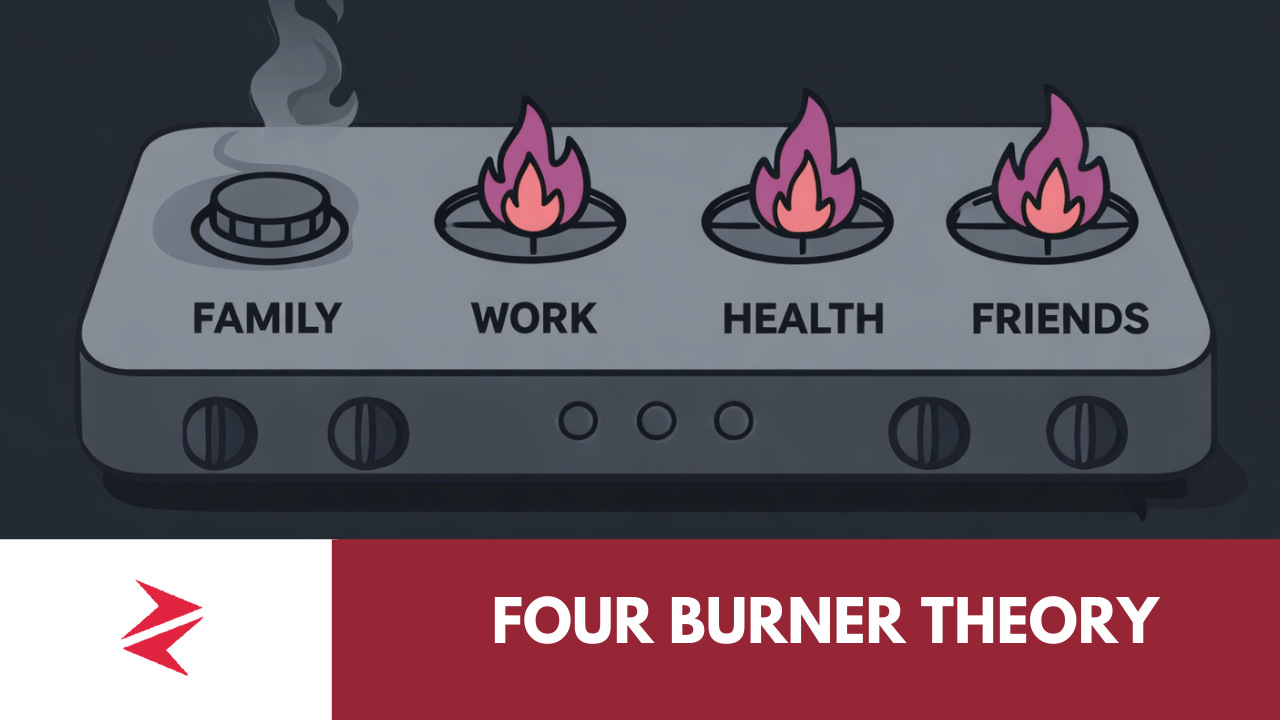
Extended work hours correlate with higher burnout risk. Chronic sleep restriction impairs executive function. Relationship satisfaction declines when work-family conflict rises. Social isolation predicts poorer mental health outcomes. These are not dramatic anecdotes; they are well-established patterns in occupational and behavioral research.
The core insight of the Four Burner Theory is not that success destroys life balance. It is that resources are finite. Allocation requires choice.
Where the viral framing becomes misleading is in its absolutism. It presents sacrifice as permanent. In reality, sustainable high performance is rarely built on permanent extinguishment. It is built on sequencing.
Share the post "The Four Burner Theory Is Brutal. But It’s Not a Death Sentence."