

































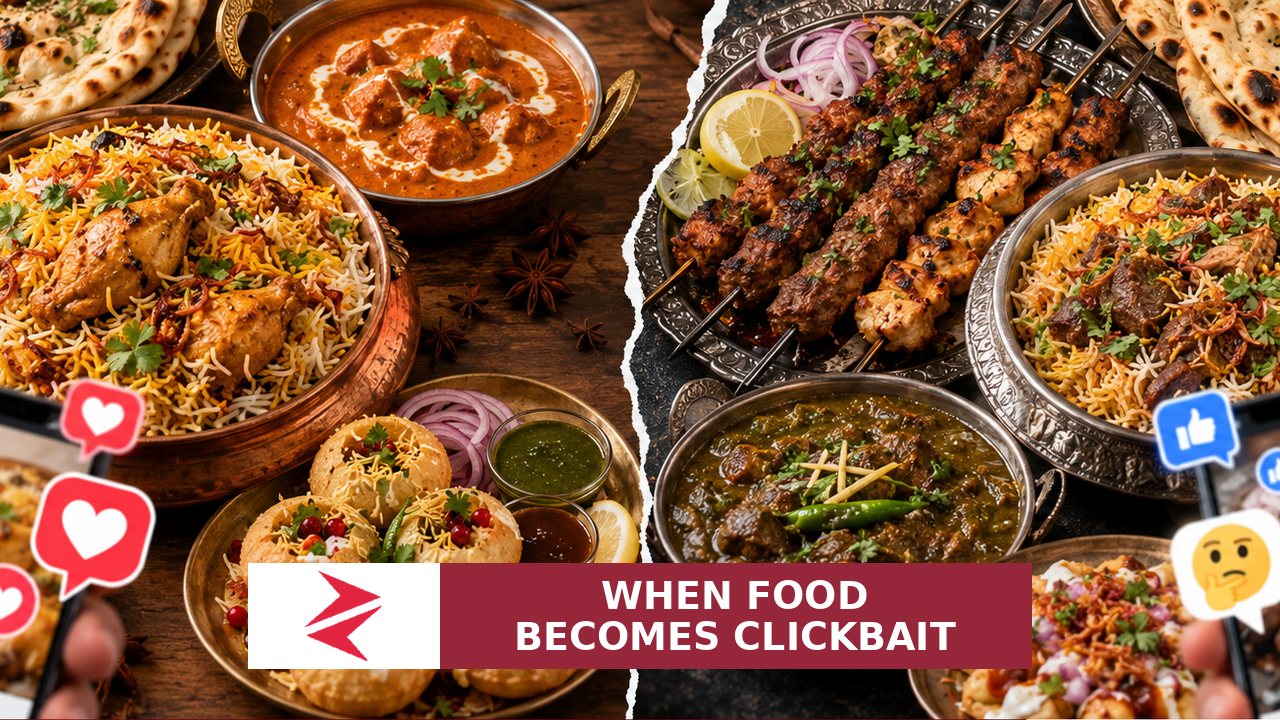
When NDTV journalist Shiv Aroor asked X users to name India’s “best and worst” state cuisines on 20 October 2026, the platform erupted—not with culinary insight, but with a frenzy of regional bragging that turned a harmless poll into a profit‑driven distraction. The poll’s headline drew clicks, but the hidden cost fell on ordinary citizens whose time, trust and even market confidence were siphoned away for the sake of a binary ranking.
How the Poll Was Engineered
The original prompt, posted by Aroor at 07:35 UTC (X @ShivAroor), simply asked, “In your personal opinion, which Indian state has the best and worst cuisine? Best: … Worst:” The response chain was swift. Two users—Abhijit Iyer‑Mitra (@Iyervval) at 08:17 UTC and Aroor himself quoting the same list at 08:41 UTC—produced an identical “best” set (Assam, Nagaland, Tamil Nadu, West Bengal, Kashmir, Andhra) and a matching “worst” set (Punjab, Maharashtra, Karnataka, Haryana). A third voice, the Hindutva‑aligned account @HPhobiaWatch at 09:15 UTC, injected a contradictory entry, praising Karnataka, Bengal and Bihar as a non‑vegetarian heaven while condemning Delhi, Uttarakhand and Gujarat as the “worst.” A fourth user, Joy (@Joydas) at 09:32 UTC, singled out West Bengal as “best” and Gujarat as “worst.” The only genuine inconsistency was Karnataka appearing on both sides of the same poll.
Who Profits from the Click‑Bait?
Media houses, platform algorithms and identity‑politics‑hungry politicians all win when a simple opinion poll is amplified into a headline. NDTV’s story—titled “India’s Best and Worst Cuisines Spark Regional Pride”—was crafted to trigger outrage and pride, two emotions the X engagement engine rewards with higher placement and longer dwell time. Every extra click translates into advertising revenue, and every retweet expands the outlet’s brand reach. The platform’s feed, driven by likes and shares, elevates binary lists over nuanced reporting on food inflation, supply‑chain bottlenecks or the chronic under‑investment in rural kitchens.
Politicians, too, find a ready‑made script. A state labeled “worst” becomes a convenient symbol of neglect, allowing regional leaders to demand subsidies, infrastructure projects or political patronage without addressing the underlying economic distress that fuels voter anxiety. The public cost is not a few scrolling minutes; it is civic energy diverted from pressing concerns such as soaring wheat prices, power shortages and unemployment.
Why the Contradiction Matters
Karnataka’s dual placement—celebrated as a non‑vegetarian paradise by @HPhobiaWatch yet condemned as “worst” by the original list—exposes the arbitrary nature of the exercise. If a single state can occupy both poles, the poll collapses under its own weight. Yet NDTV continued to treat the inconsistency as a point of debate rather than evidence of frivolity, eroding public trust. When a reputable outlet presents a poll that cannot even agree with itself, it signals a willingness to trade factual coherence for virality.
The Hidden Economic Toll
Imagine a family in rural Punjab pausing their evening chores to argue whether butter‑laden dishes belong on the “worst” list. That hour could have been spent on a side‑hustle, a community meeting on water scarcity, or simply rest after a long day in the fields. Multiply that lost hour across millions of such interactions, and the aggregate time becomes a measurable economic loss—a hidden tax levied by the attention economy.