
































Why Delhi’s narrative fails
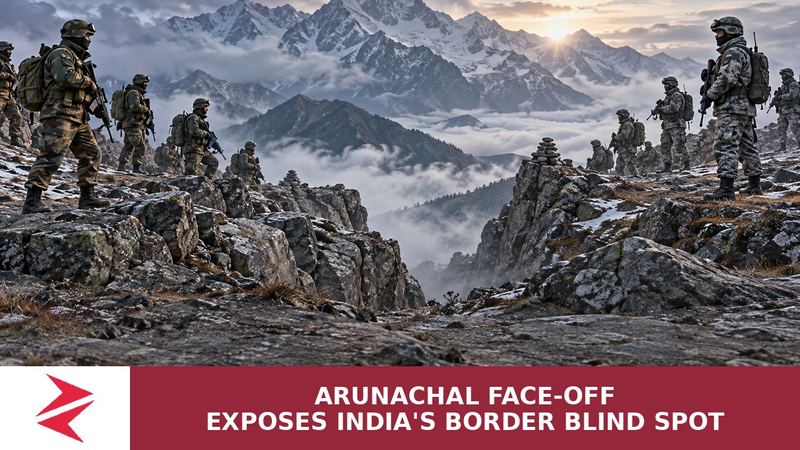
India’s official line, echoed in the Ministry of External Affairs’ statements (see the post by @SUNILSAHF), admits that “tensions rise when Chinese forces deviate from patrolling pattern,” but it stops short of calling the incursion a permanent occupation. This half‑truth does two things: it downplays the seriousness of a 6–7 km push‑back and it offers no concrete response to the families staring at empty chairs at home.
Such diplomatic equivocation is not innocent. By refusing to label the event as an outright breach, the government avoids the political cost of admitting a failure of border management. The incentive is clear: maintain the façade of control, keep the narrative of “India as a strong, unflinching power” alive, and sidestep any accountability for inadequate troop deployment or intelligence lapses.
The public cost of political cowardice
Every kilometre of lost ground is a kilometre where the state must spend more on logistics, medical care, and compensation. The families of the bruised soldiers will demand medical bills, pensions, and perhaps even legal redress. Meanwhile, the border districts already suffer from chronic under‑investment – poor roads, limited schooling, and scant healthcare. Adding a fresh security scare only deepens the fiscal strain on a region that has long been ignored by New Delhi’s development plans.
Moreover, the media frenzy on both sides of the border fuels a dangerous nationalism. Indian crowds at the Ahmedabad match, as I wrote in “Classless Nation India vs Pakistan in Ahmedabad”, booed Babar Azam and turned a sporting event into a political theatre. When the same crowd is fed a sanitized version of the Arunachal incident, they are denied the chance to hold their leaders to account.
Pakistan’s rightful outrage
Pakistan’s coverage is not a contrived anti‑India stunt; it is a genuine reflection of how a neighbouring nation perceives Indian mismanagement. By publishing the bruised soldier image, Observer Pakistan forces the Indian establishment to confront the reality that its troops are being battered on the frontier – a reality the Indian media often glosses over.