
























Share the post “Austerity Must Start at the Top: Why Maryam Nawaz’s Private-Jet Optics Failed”
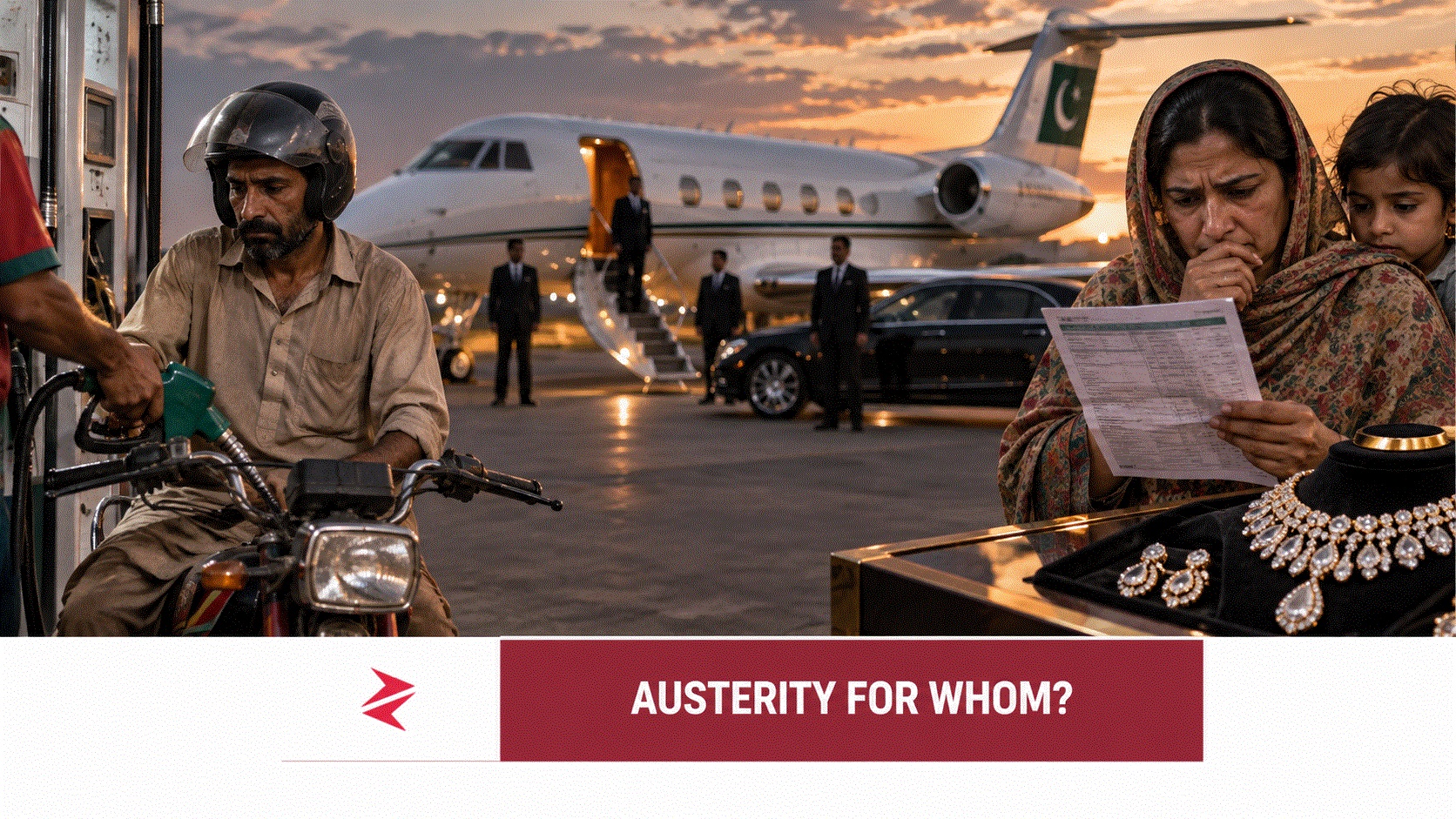
Pakistan’s rulers have discovered austerity again—but only after the citizen has already surrendered affordable fuel, affordable electricity, purchasing power and, increasingly, hope.
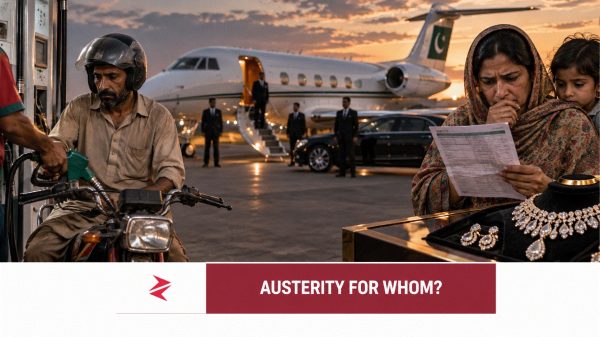
Cutting official fuel allocations, cancelling foreign visits and banning government dinners may appear disciplined on paper, yet no administrative circular can restore public trust while the political class continues to inhabit a world of government aircraft, protocol convoys, extravagant ceremonies and unexplained luxury. When an ordinary Pakistani is told to close his shop early, reduce travel, absorb another diesel increase and pay capacity charges for electricity he may never consume, even one avoidable display of elite privilege becomes more damaging than a hundred speeches about sacrifice.
That is why Punjab Chief Minister Maryam Nawaz’s use of a government aircraft for a private visit to London became politically explosive. The controversy was never merely about whether a cheque was eventually deposited. It was about whether Pakistan’s governing elite understands that leadership during a national economic emergency demands restraint before reimbursement, judgment before damage control and transparency before public outrage.
The payment may have settled an invoice. It did not settle the question.
What Actually Happened
Maryam Nawaz used the Punjab government’s aircraft during a private journey to London, reportedly undertaken to attend her daughter Mahnoor’s graduation. After criticism intensified, reports said that Rs27,194,004 was deposited into the provincial treasury to cover the aircraft expenses.
According to published payment details, a Bank of Punjab cheque was deposited at the Valencia Branch of the National Bank of Pakistan. The pay-in slip reportedly identified Umar Abbas as the depositor. Punjab Information Minister Azma Bokhari maintained that Maryam Nawaz personally bore the expenses, while the chief minister later defended the journey by saying that the aircraft belonged to the Punjab government and was available to provincial chief executives. Pakistan Today documented the payment and reported aircraft details.
The most defensible factual position is therefore clear: a payment was reported, documents circulated publicly and questions remain about the initial authorisation, calculation and documentation of the journey.
| Issue | What is documented | What remains unanswered |
|---|---|---|
| Nature of journey | The London visit was described as private | Why was an official aircraft selected for a personal engagement? |
| Reported payment | Rs27,194,004 was reportedly deposited | Was this the final settled amount after complete reconciliation? |
| Depositor information | The slip reportedly named Umar Abbas | From whose bank account did the cheque originate, and why was a third party listed? |
| Cost calculation | Government representatives said expenses were paid | Did the amount include only fuel, parking and handling, or the full commercial value of the aircraft’s use? |
| Authorisation | The aircraft is available to the provincial chief executive | What written policy governs its private use, advance approval and reimbursement? |
| Public disclosure | A deposit slip entered the public domain | Will the invoice, cheque, flight log and treasury confirmation also be published? |
These questions do not prove illegality, corruption or non-payment. They establish the need for documentary disclosure. That distinction matters because accountability must be built on records—not on partisan certainty in either direction.