




























| Claim | Evidence Status | EEAT Verdict |
|---|---|---|
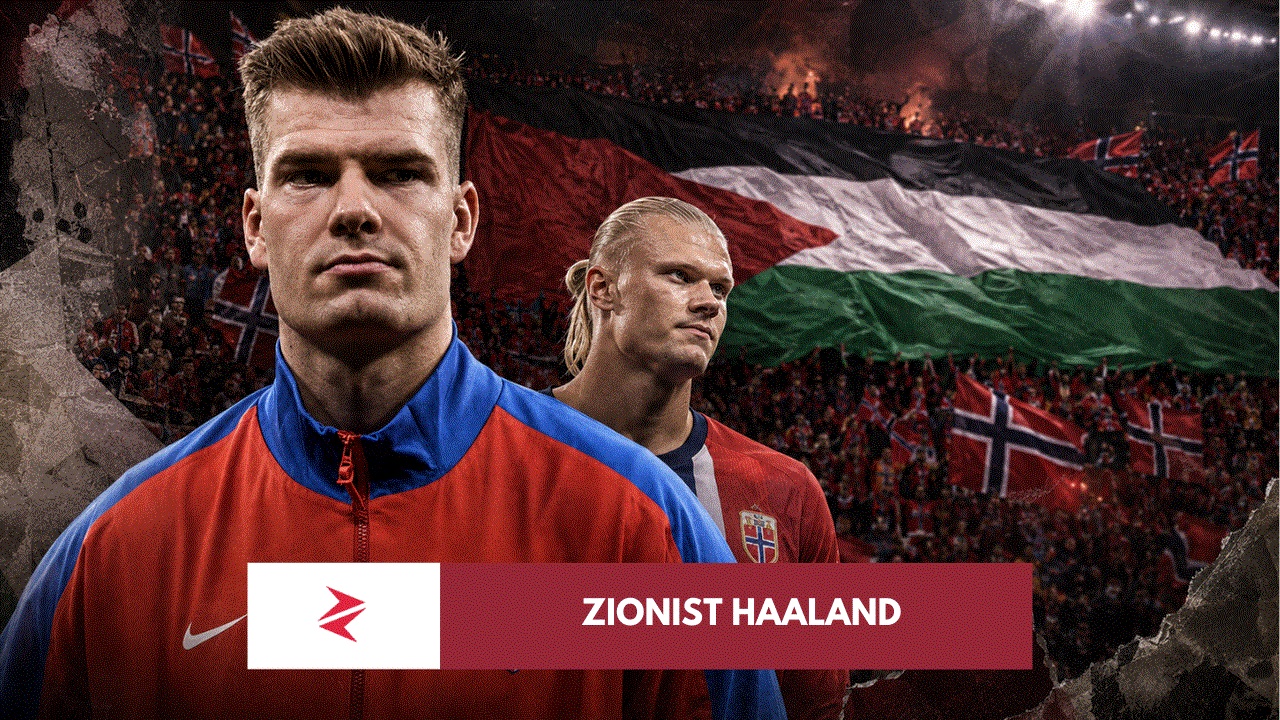
| Erling Haaland made the viral Gaza quote | The wording is documented as Lise Klaveness’s statement, not Haaland’s | False attribution |
| Norway’s football establishment supported humanitarian relief in Gaza | Match profits were directed toward Doctors Without Borders’ work | Verified |
| Norway has pushed for sanctions against Israel in football | Klaveness and the NFF have publicly pressed the issue | Verified |
| Alexander Sørloth said “We’re sorry for all the people of Palestine” | Widely circulated, but a primary original recording was not located for this article | Reported, not independently primary-source verified |
| Haaland is politically pro-Israel because he called a released hostage | The call happened; the broader ideological conclusion does not follow automatically | Unsupported inference |
| Lionel Messi is a “devout Zionist” | No verified public declaration establishing that ideological identity was found | Not established |
| Argentina has received controversial decisions at the 2026 World Cup | Multiple matches have generated formal and public complaints | Verified controversy |
| FIFA has deliberately rigged the World Cup for Argentina | No public evidence has yet proved an organised conspiracy | Allegation, not established fact |
And this is where the temptation to call Messi a “devout Zionist” also needs to be resisted unless evidence can carry the label.
Messi has had public contact with Israel. Barcelona visited Israel in 2013 as part of a peace initiative, where Messi and the team appeared at public events. Yet Argentina also cancelled a planned 2018 friendly in Jerusalem after intense controversy and pressure, a cancellation welcomed by Palestinian football officials. Reuters has additionally debunked manipulated photographs purporting to show Messi holding Israeli or Palestinian flags. None of that establishes that Messi has publicly declared himself a “devout Zionist.”
There are legitimate criticisms to make without manufacturing an ideological biography for him.
The stronger argument is this: FIFA is operating in an atmosphere where enormous commercial interests surround Messi’s final World Cup, Argentina have benefited from enough disputed moments to create a crisis of trust, and the governing body simultaneously faces accusations of selective political morality elsewhere. That is already explosive. It does not require an unproven claim about Messi’s private political ideology.
What Nobody Is Telling You: The Real Comparison Is Not Haaland Versus Messi
The social-media version makes everything personal because personalities generate clicks.
Haaland versus Messi.
Norway versus Argentina.
Palestine versus Israel.
One footballer calling out suffering while another supposedly receives protection from football’s establishment.
But the more consequential comparison is institutional: Why can international football act decisively in some geopolitical cases while spending years debating whether the same principles apply in others?
Russia was suspended after its invasion of Ukraine. Norway’s football leadership has repeatedly invoked that precedent when discussing Israel. UEFA reached the stage of considering a suspension vote in 2025, while the Norwegian federation publicly argued that football could not remain indifferent.
That is the contradiction worth investigating.
And once FIFA itself becomes embroiled in disputes over political neutrality, relationships with powerful governments, disciplinary U-turns and repeated accusations of inconsistent refereeing, supporters naturally begin connecting dots. Some connections will be legitimate. Some will be coincidence. Some will be complete nonsense.
But institutional opacity creates the environment in which every coincidence becomes believable.
That is FIFA’s problem.