



































The “Honey Trap” May Be a Conveniently Soft Description
The phrase honey trap makes an accused man sound passive, almost as though classified documents climbed out of a secure facility and delivered themselves because an attractive stranger appeared on a screen. That framing deserves scrutiny.
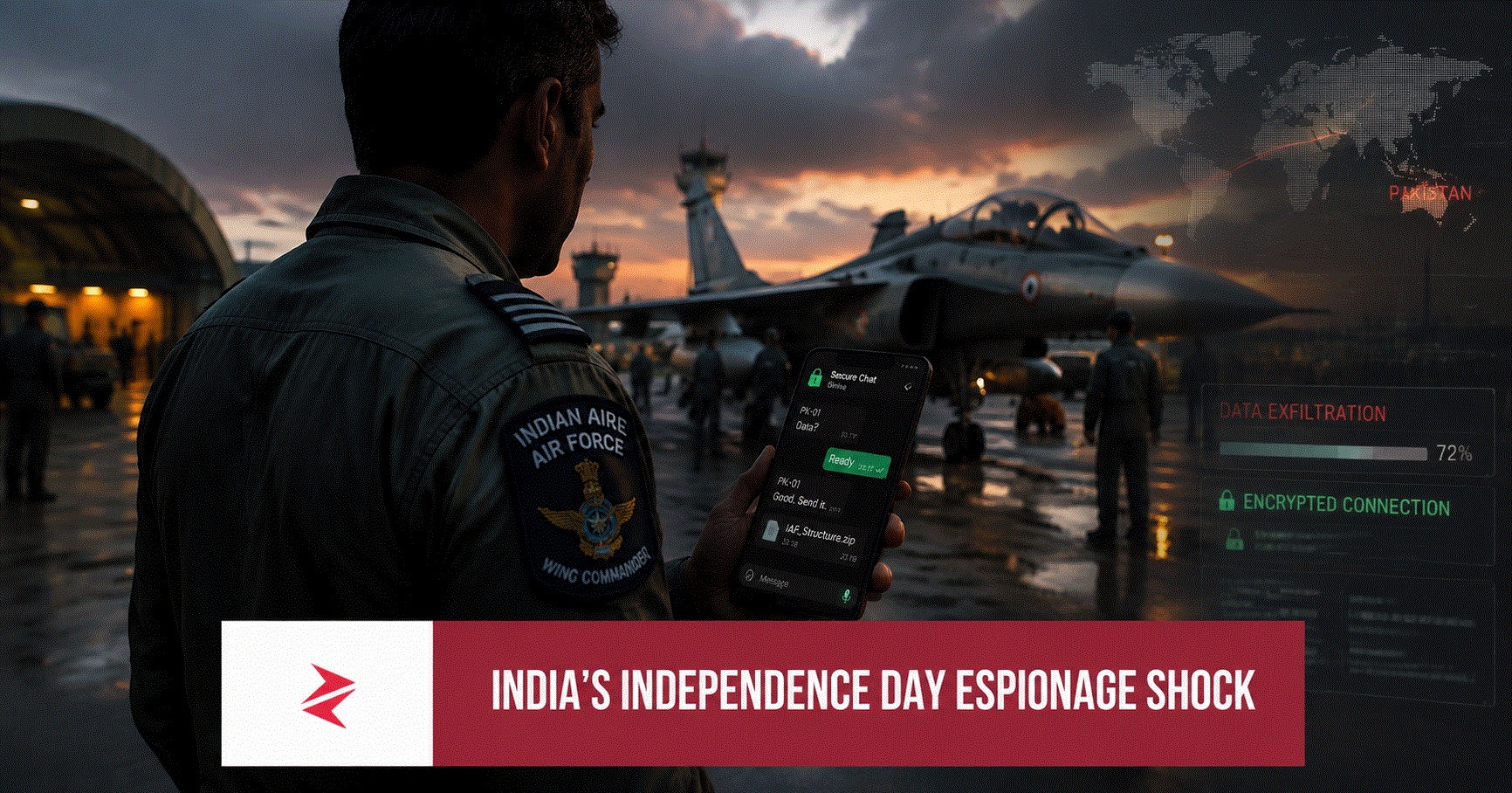
A civilian can be deceived by a fake romantic profile. A trained officer may also be emotionally manipulated. Neither possibility explains away the succession of deliberate acts alleged in this case: sustaining prohibited contact, responding to requests for operational information, transmitting material and potentially directing another officer to install a suspicious application. If those allegations are proven, this was not one moment of weakness. It was a chain of security failures requiring repeated decisions.
A viral observation from Indian commentator Sam Khan captured the objection bluntly: “Honey trap is just misogynistic Red Herring.” The statement is opinion, but the underlying question is legitimate. Does the label help describe a social-engineering method, or does it provide male officials with a culturally convenient defence in which the mysterious woman becomes the central villain while the person entrusted with state secrets is recast as a helpless victim?
Indian coverage of former DRDO scientist Pradeep Kurulkar raised a similar issue in 2023. Reports alleged that the scientist continued volunteering classified information while communicating with a woman operating under a false identity. The case weakened the simplistic picture of a reluctant victim surrendering information only after blackmail. Sometimes seduction may initiate access; greed, ego, resentment, fantasy or the thrill of privileged attention may sustain it.
What Nobody Is Telling India on Independence Day
India does not suffer from a shortage of patriotic cinema. It suffers from the distance between that cinema and institutional accountability.
When alleged espionage suspects are Muslim, Kashmiri or associated with a politically convenient enemy category, Indian television frequently converts arrest into conviction before a court has examined the evidence. When an unnamed officer from a sensitive military command is arrested, the media suddenly discovers restraint, privacy and the sanctity of an ongoing investigation. The officer’s identity may have been withheld for legitimate operational or legal reasons, but Indian citizens asking why no name has been released are exposing a real credibility problem: secrecy is accepted selectively because public trust has already been damaged by politically uneven coverage.
The episode is not isolated from India’s longer security record. In 2017, the Madhya Pradesh Anti-Terrorism Squad arrested 11 people over an alleged Pakistan-linked espionage network using SIM-box-enabled telephone exchanges. India Today reported allegations that one accused, Dhruv Saxena, had held a position connected with the BJP’s IT apparatus, although the party denied formal association. The accused were arrested from several cities, while investigators alleged that information concerning troop movements, camps and bridges had been transmitted.
That history does not prove the present Wing Commander guilty, nor does it substantiate the viral claim that “10,000 RSS workers” were caught spying. That number originated in satire about the Kurulkar case and was never a documented statistic. What the historical record does establish is that espionage vulnerabilities cannot honestly be assigned to one Indian religion, caste or political community. The threat has repeatedly emerged from inside institutions that publicly advertise themselves as guardians of Indian nationalism.
Bollywood’s Dhurandhar Versus the Intelligence War India Cannot Script
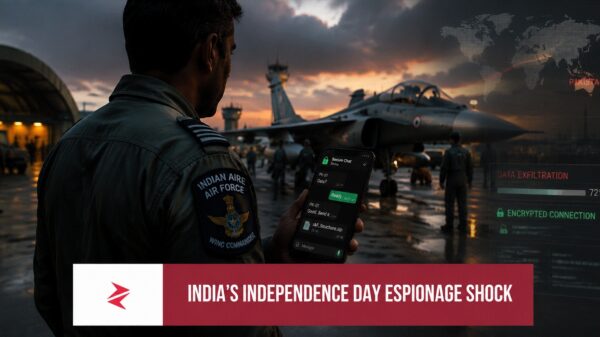
The loudest reaction across Pakistani social media was predictably merciless: India produces Dhurandhar fantasies while Pakistan supposedly performs the real operation. The joke became viral because it reverses India’s preferred cultural hierarchy. Indian cinema portrays Pakistani institutions as penetrable, chaotic and permanently outsmarted; an Indian charge sheet now alleges that a Pakistan-based operative reached a Wing Commander through an ordinary social-media channel.
Mockery, however, should not obscure the professional lesson. Intelligence services do not require every target to possess a complete war plan. Fragmented information becomes valuable when aggregated: flight-line photographs, personnel routines, deployment changes, unit movements, device identifiers, personal relationships and innocuous-looking operational details can collectively reveal patterns. One compromised officer may also become a pathway to colleagues, family members and connected devices.

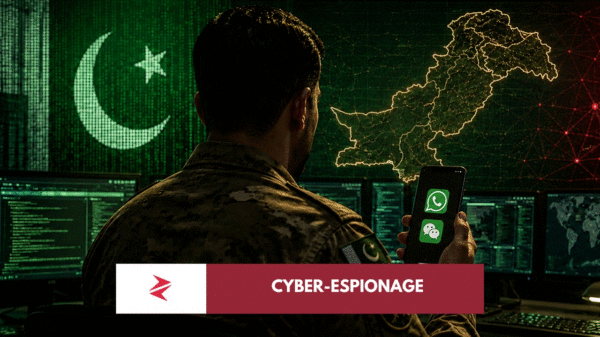
This is precisely why dismissing the affair by asking, “What information could the IAF even possess?” would be intellectually lazy. Pakistan should take satisfaction in the collapse of India’s invincibility narrative without adopting the same complacency. The digital vulnerability exposed in India is universal. Pakistan’s own debate over moving sensitive military communication away from ordinary consumer messaging applications illustrates why operational security must be built around managed devices, strict compartmentalisation, continuous monitoring and enforceable digital hygiene—not patriotic assumptions about the personal character of officers.