





























Public reaction: noise, sarcasm, and buried truth
The comment section reads like a battlefield of its own:
- Mockery of US delegation competence.
- Religious and sectarian trolling.
- Anti-India jabs (“tea servers” narrative).
- Cynicism about Pakistani sovereignty.
- Occasional serious takes wrapped in sarcasm.
This is digital chaos—but inside it, patterns emerge.
One of the more structured inputs:
“Pakistan shouldn’t merely host… should propose a framework… #IslamabadAccord”
That is the only comment actually thinking in diplomatic terms. Everything else is emotional discharge.
What the absence of Modi references reveals
Mentions like:
- “Please invite Narendra Modi for tea”
- “Where is Uncle Yahu?”
These are not policy suggestions. They are psychological reflexes—regional rivalry projecting itself onto unrelated negotiations.
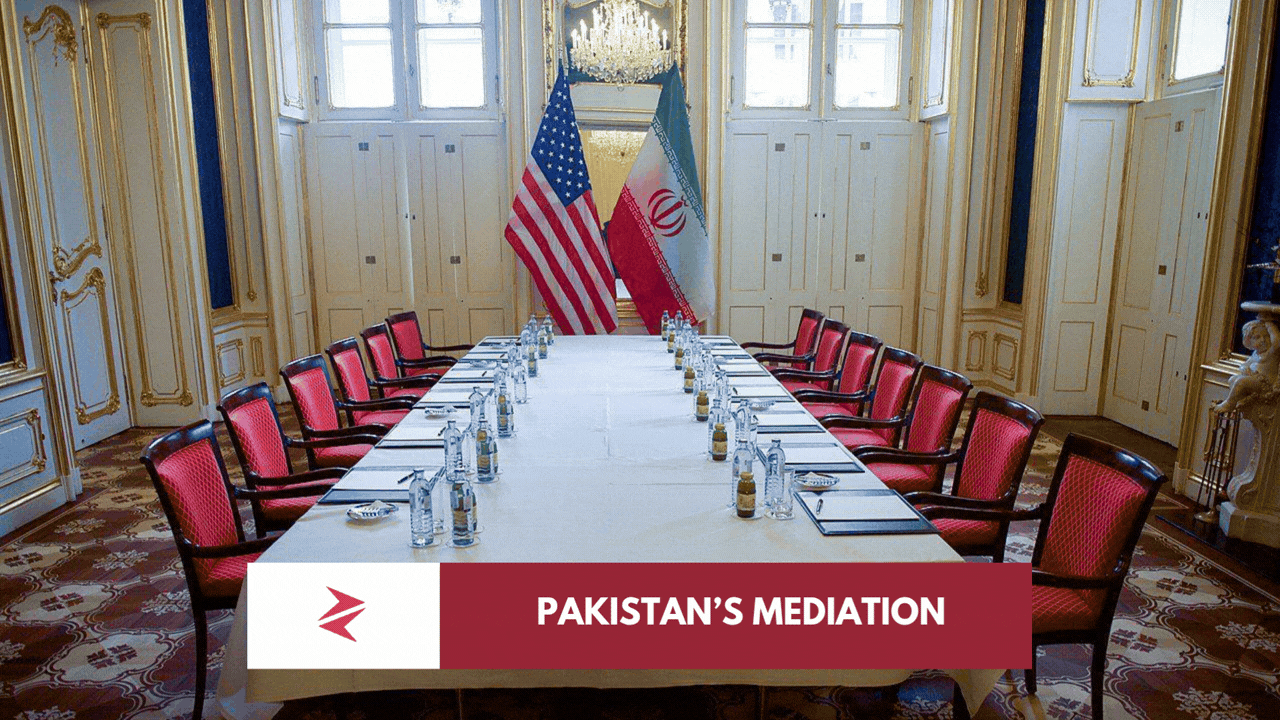
India is not part of this table. And that absence itself is strategic messaging.
What this moment really represents
This is not a peace deal yet. Not even close.
This is stage-setting.
if ( function_exists( 'pgntn_display_pagination' ) ) pgntn_display_pagination( 'multipage' );