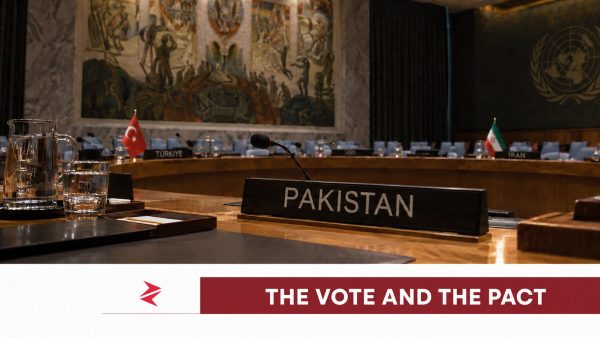

























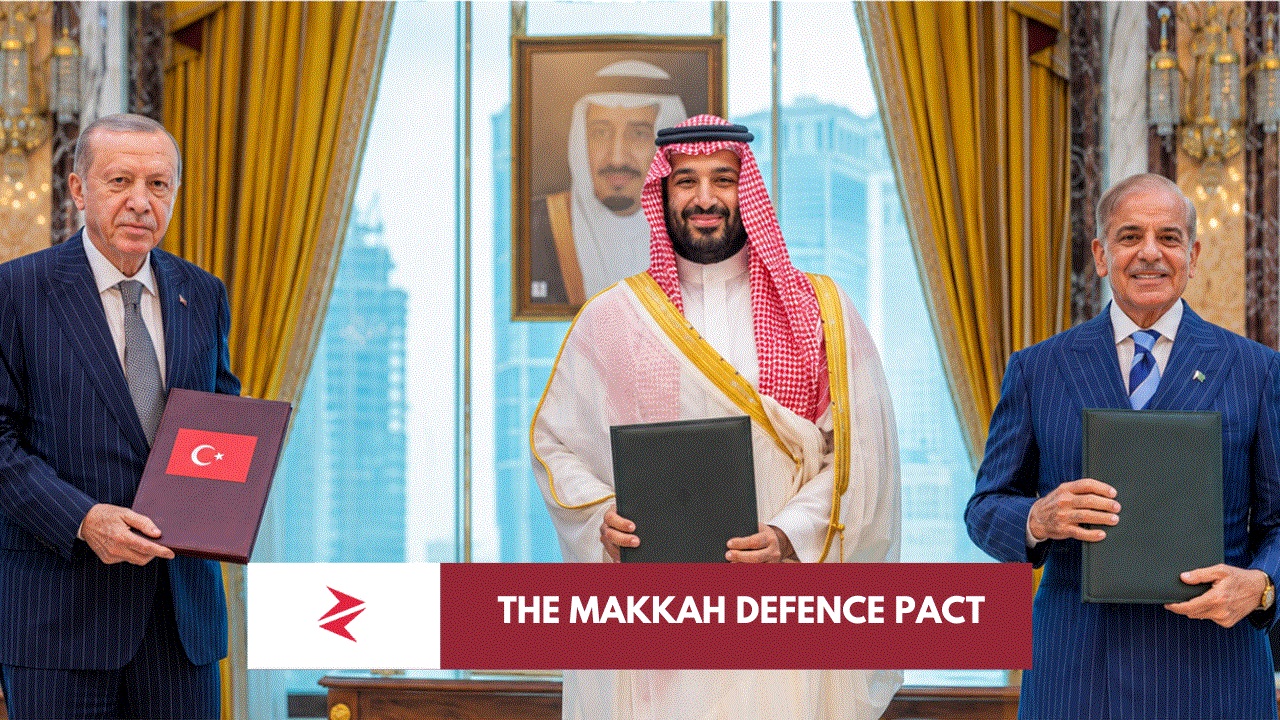
Share the post "The Makkah Defence Pact: What Pakistan Has Promised—and What Article 51 Does Not Automatically Authorise"
The most consequential sentence signed in Makkah is also the one Pakistan cannot afford to reduce to a patriotic slogan: “Any armed attack against any one of the three States shall be regarded as an attack against them all.” It sounds like an Islamic NATO, carries the political weight of collective deterrence and places Pakistan’s nuclear-armed military beside Türkiye’s formidable conventional forces and Saudi Arabia’s financial and strategic power. Yet the sentence raises a question more important than every celebratory social-media graphic combined: what, precisely, has Pakistan undertaken to do when another signatory claims to have been attacked?
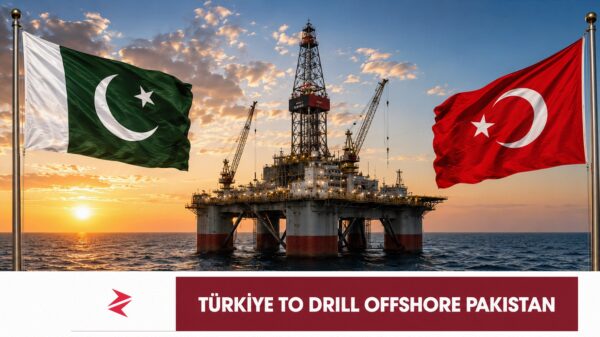
On August 7, 2026, Prime Minister Shehbaz Sharif, Saudi Crown Prince and Prime Minister Mohammed bin Salman, and Turkish President Recep Tayyip Erdoğan signed what official statements call the Makkah Joint Defence Agreement or Makkah Mutual Defence Agreement at Al-Safa Palace in Makkah. Pakistan’s Ministry of Foreign Affairs says the pact is intended to strengthen collective deterrence, improve defence cooperation and promote security, peace and stability. The Saudi Press Agency’s joint statement uses the same decisive formulation: an armed attack against one of the three countries shall be considered an attack against them all.
That is historic. It is also incomplete.
Honoured to sign the Makkah Joint Defence Agreement alongside my dear brothers, HRH Crown Prince Mohammed bin Salman and H.E. President Recep Tayyip Erdoğan. Three brotherly nations, united by faith, friendship and a shared resolve for peace and security. May this historic pact, signed in the shadow of the Haramain, remain a shield of peace for generations to come and may it bring prosperity for our three brotherly countries as well as for the Ummah. I would especially like to express my deep appreciation for Field Marshal Syed Asim Munir whose untiring efforts and utmost dedication contributed immensely towards this great cause. — PM Pakistan Muhammad Shehbaz Sharif
The public communiqué does not disclose the agreement’s full operative text, its definition of an “armed attack,” its geographic boundaries, its consultation procedure, its command structure, its rules for military deployment, its treatment of cyberattacks or terrorism, or whether each state retains discretion over the form of assistance it provides. Until those provisions are published, nobody can responsibly claim that Pakistan has created an automatic declaration-of-war mechanism—and nobody should dismiss the pact as a ceremonial photograph either.
The agreement at a glance
| Publicly announced element | What it establishes | What remains undisclosed |
|---|---|---|
| Attack on one regarded as an attack on all | A powerful collective-defence commitment | Whether military intervention is automatic |
| Collective deterrence | A warning that an aggressor may face three states | Joint threat-assessment and activation procedures |
| Wider defence cooperation | Potential exercises, planning, intelligence and procurement | Command arrangements, bases and deployment rights |
| Defence-industry projects | Scope for co-production and technology cooperation | Financing, intellectual property and export controls |
| Counterterrorism cooperation | Possibility of intelligence and operational coordination | Definition of terrorism and threshold for collective action |
| Article 51 framing | Places defensive action within the UN Charter | Reporting procedures and limits on the duration of force |
| Possible participation by other states | Leaves room for enlargement | Admission criteria, vetoes and obligations of new members |
Core claim: The Makkah agreement creates a serious political and potentially legal obligation of solidarity, but the public statement does not prove that Pakistani forces must automatically enter every conflict involving Saudi Arabia or Türkiye.