





























The Argument Social Media Keeps Skipping
The loudest exchanges in the supplied posts turn disagreements between governments into judgments about Sunni and Shia Muslims, and turn concern for Gaza into a test of unconditional support for every Iranian policy. Pakistan does not have to accept either test. Palestinian civilians do not gain safety when their suffering is used to erase the distinctions between a UN monitoring vote, a bank licence and a possible armed attack. Yemenis do not gain safety when their country is discussed solely as a battlefield on which other states must prove courage.
Pakistan has its own difficult record of alliances, pressure and militant blowback. The country learned, at great human cost, what happens when outsiders’ wars become domestic obligations without clear limits. That history is one reason to demand a precise account of the Makkah pact’s commitments, rather than cheering for an undefined intervention. It is also why Islamabad should be candid about the diplomatic pressures behind its Iran policy instead of asking the public to take every decision on faith.
Economic exposure is part of this argument. A wider Gulf conflict can affect shipping, fuel costs and household bills in Pakistan long before anyone announces a new front. As I discussed in Pakistan’s Hormuz oil supply problem, strategic independence has a practical energy dimension. Families and businesses assessing that exposure can examine Zorays Solar’s energy options as one way to reduce dependence on grid electricity and imported fuel, while the state addresses the larger supply risk.
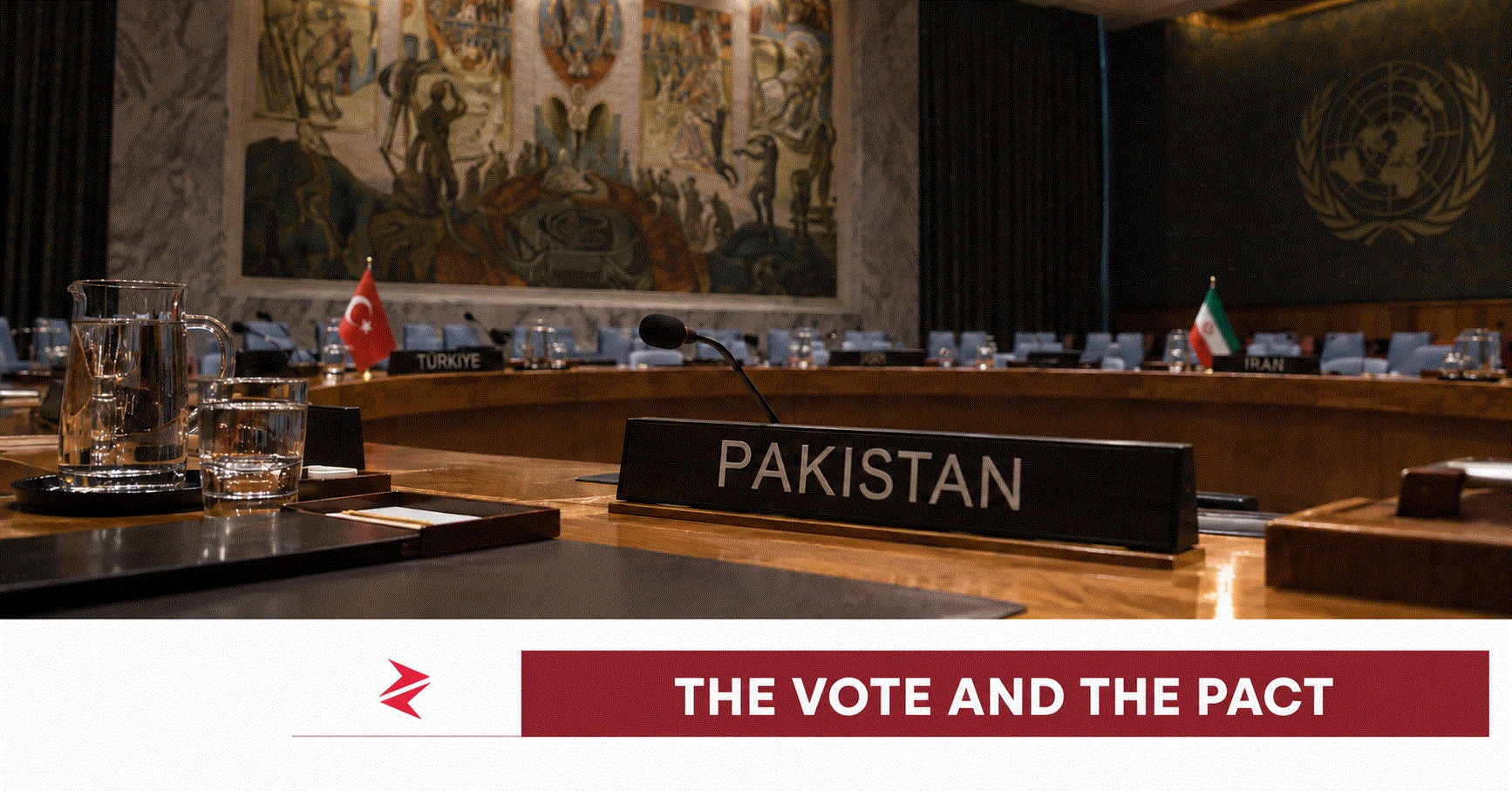
Did Pakistan vote against Iran?
Pakistan abstained on a draft extending the mandate of an Iran sanctions monitoring panel. Russia and China vetoed the draft. Describing Pakistan’s action as a vote for an attack on Iran misstates the question before the Council.