































Recognition of clerics: Acknowledgment of clerics is essential on political, economic, and social fronts. However, the looming threat of the Taliban and incessant drone strikes cast a shadow over the land. Amid such adversity, many find themselves grappling with a recurring question: “When will peace prevail?”
Swift justice system: In defiance of apathy, tireless efforts are underway. NGOs like The Citizen’s Foundation, Shaukat Khanum Hospital, Indus Hospital, LRBT, Taleem Sab Ke Liye, SIUT, The Orangi Pilot Project, among others, are at the forefront, tirelessly serving the nation. Despite the prevailing threats and challenges, hope remains unshaken. Driven by an unwavering spirit, individuals strive to contribute to the betterment of their homeland in whatever capacity they can.
End to VIP culture: The pervasive VIP culture, characterized by road closures and excessive security deployments, impedes public mobility and perpetuates inequality. The working class, comprising half of Pakistan’s population, deserves equitable access to quality education. Denying children from financially disadvantaged backgrounds their fundamental rights is a disservice to Pakistan’s future. It falls upon the government to fulfill its obligations and provide for the nation’s posterity. However, the government’s actions seem confined to accumulating hefty loans and levying taxes, with little tangible progress evident.
Three D’s Strategy
The government led by Zardari’s PPP introduced a policy known as the three Ds to address terrorism: Dialogue, Development, and Deterrence.
- Dialogue: The first step involves initiating discussions with militant groups willing to engage in negotiation. If conflicts can be resolved through dialogue, the use of force may be unnecessary.
- Development: Addressing the root causes of terrorism, such as poverty and lack of opportunities, is crucial. The government must focus on providing employment, healthcare, and education, as well as promoting industrial growth. This approach can help de-radicalize communities and serve as a preventive measure against radicalization.
- Deterrence: While dialogue is preferred, the government reserves the right to use force against those who refuse to renounce violence and challenge the authority of the state. This ensures the enforcement of law and order.
Although this policy appears promising on paper and has been adopted by the current government under Nawaz Sharif, its success hinges on its effective implementation.
Devolution of Power
The primary issue we face today is the government’s neglect of public affairs. They show little interest in addressing the needs of the people and instead abuse their power for personal gain. To address this, power should be decentralized, empowering communities at the grassroots level. Concentrating power in the hands of a few breeds resentment among the populace. Developed nations have successfully decentralized power, allowing individuals to participate in decision-making processes and fostering a sense of empowerment among citizens.
According to Dr. Maleeha Lodhi, in her book “The Threat of All Threats”
“There is no single silver bullet that can address global terrorism in all its complexity”.
Numerous measures must be taken to effectively combat terrorism, including addressing poverty, promoting social justice, improving literacy rates, and eliminating sectarianism, among others. It’s crucial not to stereotype Muslims as terrorists or assume that all terrorists are Muslim. Violence can be perpetrated by individuals of any race or religion to advance their agenda.
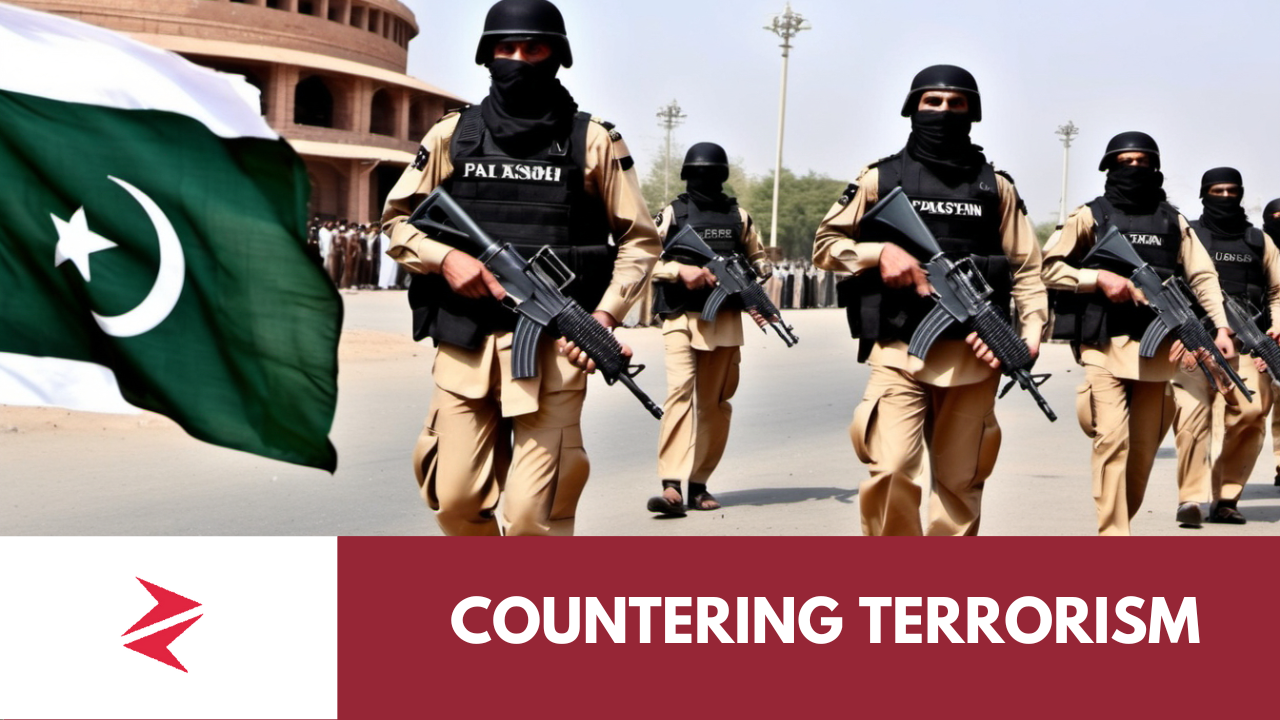
The CTF should be administered at the provincial level and possibly decentralized to district levels to address overlapping jurisdictional issues. Given the extensive geographical spread of terrorism across Pakistan, coordination for inter-provincial cooperation falls under the responsibility of the Inter-Ministerial (IM) body.
- Specialized force : Quick Response Force to stop urban terrorism.
- CTF: Training and weapons of all kinds, bomb disposal, forms of IEDS and rapid response.
- Police with intelligence. e.g. Naseerullah Baber went to resolve bus hostage incident in Karachi.
- Individual coordinates intelligence. IB as an agency.
- CTF has to be provincially administrated. Even dissolved to district level.
i. Unsnarl: overlapping domains causing frequent snarling.