



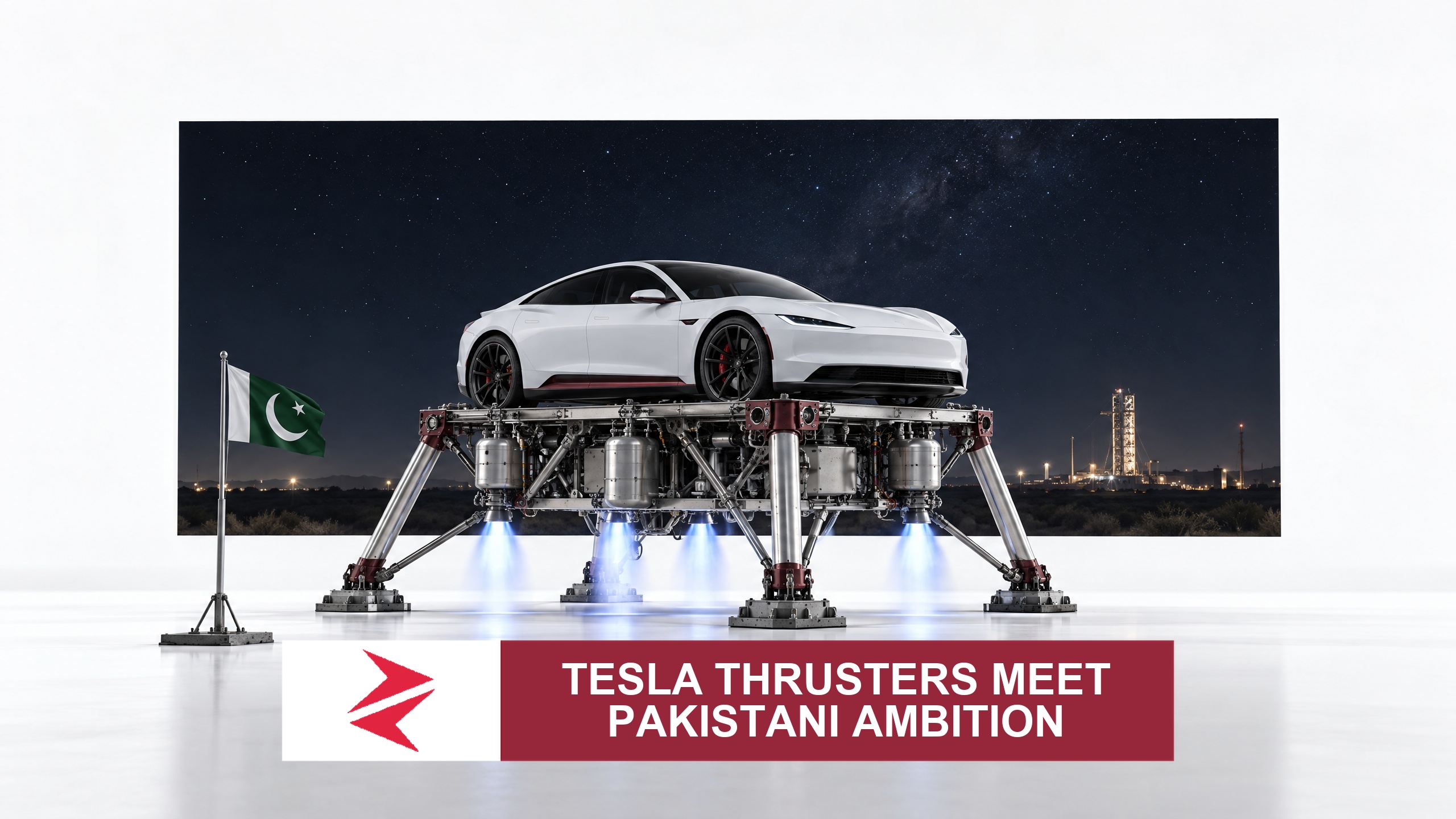
Why does this matter for Pakistan? The country’s aerospace community has already demonstrated the ability to integrate space‑grade propulsion with indigenous platforms. The Pakistan Aeronautical Complex (PAC) has partnered with local electric‑vehicle startups to explore hybrid propulsion concepts that could, in the future, enable short‑range vertical lift for road‑worthy vehicles. These collaborations are documented in PAC’s annual reports and have yielded prototype bench‑tests of cold‑gas thruster modules attached to electric drivetrains.
In a recent article on the Fateh‑II program (Fateh‑II and its cold‑gas thrusters), analysts highlighted how the missile’s propulsion system achieved reliable thrust modulation in a series of flight tests conducted between 2022 and 2024. The publicly released data show thrust levels of 150 N per thruster, a specific impulse of 70 seconds, and repeatable performance across more than 30 test firings. Such figures provide a concrete benchmark that engineers can reference when designing vehicle‑scale propulsion, something Musk’s vague teaser does not supply.
Beyond the technical contrast, the divergent media treatment of the two stories illustrates a broader narrative bias. Western technology outlets amplified Musk’s teaser with sensational headlines, often without demanding proof. The resulting click‑bait traffic benefits platforms that monetize high‑engagement stories, while Pakistan’s verified aerospace achievements receive comparatively little international coverage. This asymmetry reinforces a perception that groundbreaking innovation is an exclusively Western domain, even as South Asian engineers quietly achieve measurable milestones.
Looking ahead, Pakistan can leverage the hype surrounding the Roadster to showcase its own progress. A clear, data‑driven communication strategy – publishing test results, releasing high‑resolution videos of thruster‑powered EV prototypes, and inviting independent observers – would help shift the narrative from speculation to fact. Such transparency could attract foreign investment, foster technology transfer, and strengthen Pakistan’s bargaining position in multilateral forums where aerospace capability is a strategic asset.