

























Israel’s Strength Is Real, but It Is Not Supernatural
Pretending Israel is weak would be as foolish as pretending it is invincible. Israel combines an advanced domestic defence industry, decades of combat experience, sophisticated intelligence networks, long-range airpower, layered missile defence and an extraordinary American support structure. Under the ten-year US-Israel memorandum, Washington committed annual levels of $3.3 billion in Foreign Military Financing and $500 million for missile defence. The United States has also approved multibillion-dollar possible arms packages, including aircraft, vehicles and munitions. US State Department and Defense Security Cooperation Agency records make this dependency ecosystem visible.
Calling Israel incapable of surviving “two days” without America may work as an insult, but it is not a defensible military assessment. The stronger argument is that Israel’s regional freedom of action cannot be analysed separately from American financing, weapons, diplomatic protection, intelligence cooperation and replenishment capacity. Israel’s strength is real; so is the superpower architecture amplifying it.
SIPRI’s 2025 expenditure figures place the scale in context:
| State or grouping | 2025 military expenditure | Analytical meaning |
|---|---|---|
| Israel | $48.3 billion | Higher than Türkiye’s expenditure and reinforced by deep US security cooperation. |
| Türkiye | $30.0 billion | A substantial military with active operations and an expanding domestic defence industry. |
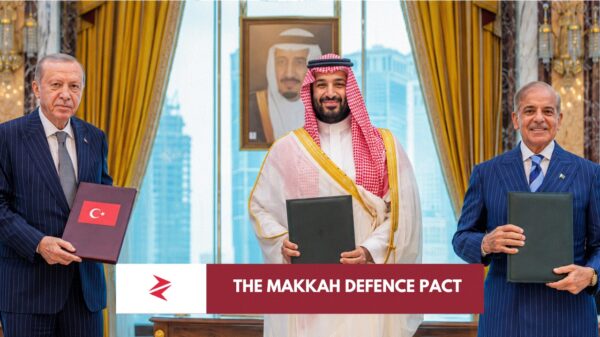
| Saudi Arabia | $83.2 billion | The largest spender among the Makkah pact members, although spending does not automatically equal operational integration. |
| Pakistan | $11.9 billion | Lower expenditure, but nuclear deterrence, combat experience and an established military-industrial base give it strategic weight beyond the raw figure. |
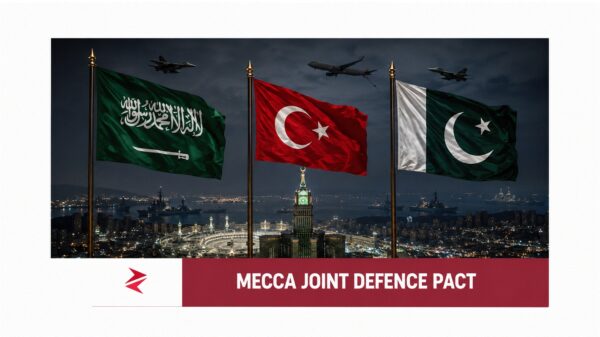
| Makkah pact members combined | $125.1 billion | A powerful theoretical aggregate that remains politically meaningless unless converted into interoperable command, exercises and agreed response protocols. |
Source: SIPRI’s 2025 military-expenditure update. The combined figure is a simple calculation from the three national totals and should not be mistaken for an integrated alliance budget.
Türkiye is not an unarmed Arab state from 1967. It operates one of NATO’s largest militaries, manufactures combat drones, missiles, electronic-warfare systems and aircraft, modernises its F-16 fleet and is developing the KAAN fighter, whose maiden flight occurred in February 2024. Turkish Aerospace documents that programme, while the US State Department recorded a $23 billion F-16 acquisition and modernisation notification for Türkiye.
Ankara also demonstrated in 2015 that it would shoot down a Russian aircraft after concluding that Turkish airspace had been violated. NATO’s contemporaneous statement confirmed Türkiye’s account and called for de-escalation. That decision carried risks far greater than responding to an empty Syrian runway. Türkiye’s record in Syria, Libya, Iraq and support for Azerbaijan similarly shows that its leadership is not constitutionally incapable of military action.
The word “guts” is therefore misplaced. Türkiye has demonstrated guts repeatedly. What it requires at Abu al-Duhur is not testosterone; it requires a trigger, a legal basis, a sustainable objective and an exit strategy.
What Nobody Is Telling You: Israel Chose a Target Designed to Avoid Turkish Retaliation
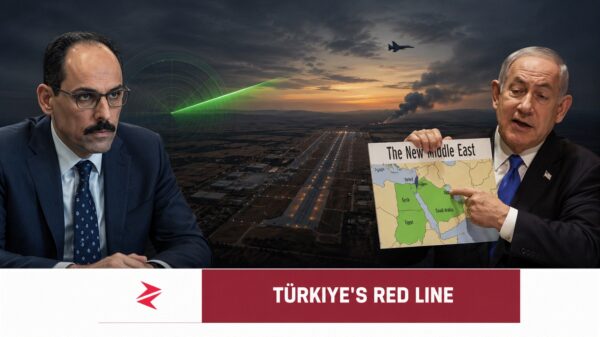
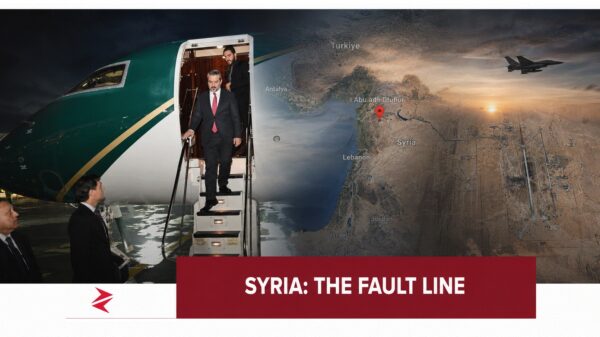
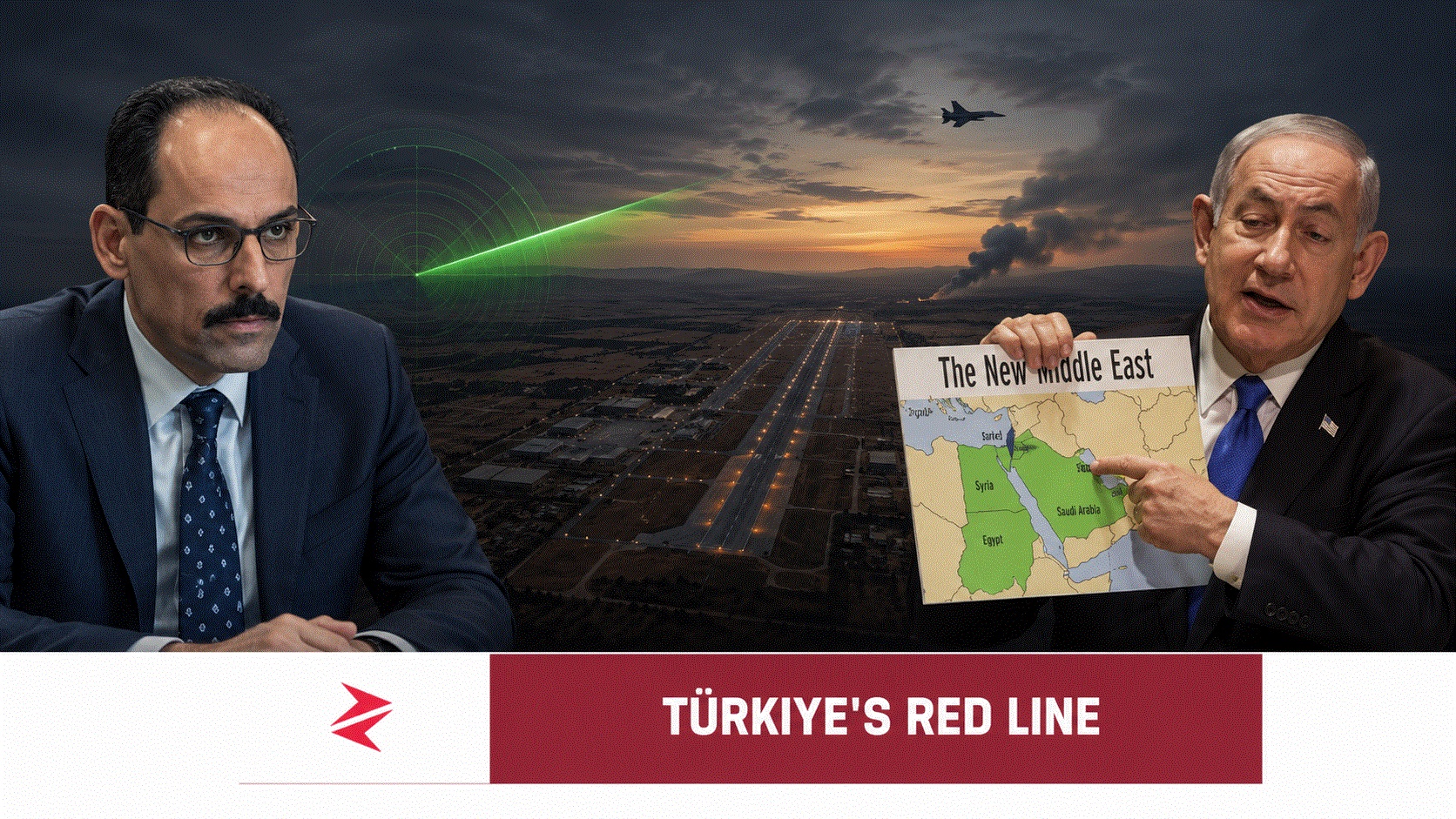
Abu al-Duhur appears less like an attempted war-opening strike than a coercive veto over Syria’s military reconstruction. Israel attacked a largely empty facility, avoided Turkish casualties and limited the damage to infrastructure that could be repaired. It then warned Erdoğan against “dangerous adventures” while claiming that Syria was preparing to host Turkish forces—an allegation denied by both Ankara and Damascus. Reuters reports that the Syrian government said Turkish officers had visited only under continuing training and expertise-sharing arrangements.
This is the concealed strategic struggle: Israel wants the authority to decide how much of a military Syria may rebuild, which foreign partners may assist it and how far Turkish influence may extend southward. Türkiye, by contrast, wants a friendly, territorially viable Syria capable of surviving without every runway, radar installation or command centre being destroyed whenever Israeli officials declare a future threat.
That is why the strike cannot simply be dismissed as the bombing of an “empty plot.” If every Syrian installation rehabilitated with Turkish assistance can be cratered without consequence, Ankara’s political influence will eventually become ceremonial. Strategic patience is useful only when it buys a stronger position; repeated patience without an accumulating cost for the aggressor becomes permission.

At the same time, Israel’s October election and Benjamin Netanyahu’s damaged security credentials create an incentive for muscular regional messaging. Reuters notes that the confrontation is already entering Israel’s electoral discussion. That does not prove the strike was merely an election stunt, but it makes domestic political signalling a reasonable analytical factor rather than a conspiracy theory.