































Share the post "The 1965 War Did Not Begin in a Vacuum: What Declassified Records Actually Say About Pakistan, India and the Road to September"
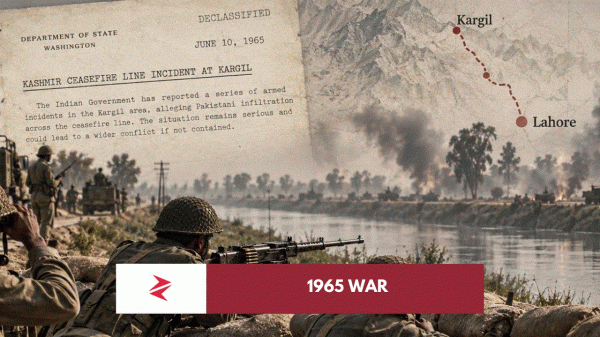
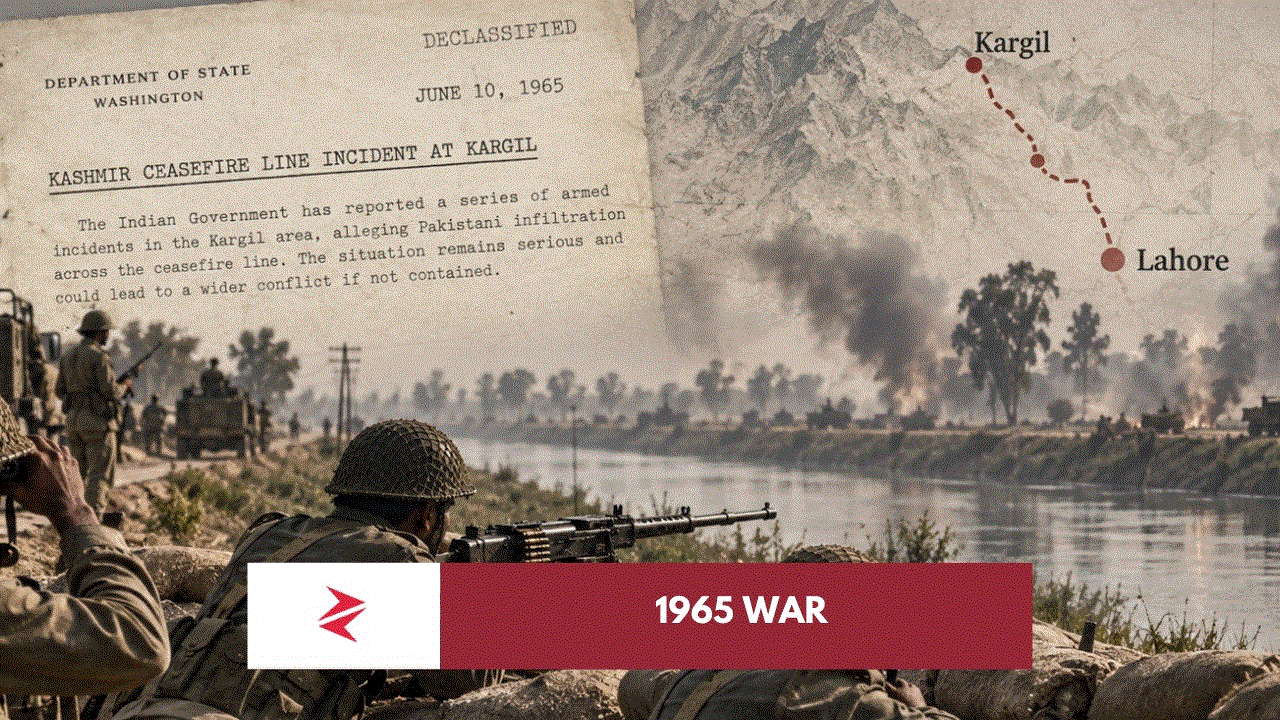
Notice what this record proves. It supports India’s contention that infiltration occurred; it also records India acknowledging deliberate crossings in both Kashmir and Punjab. The Indian position was that these actions were defensive in purpose. Purpose, however, does not make the physical sequence disappear. Pakistan escalated through infiltration and then conventional attack in Chhamb; India escalated by broadening the war across the international boundary toward Lahore. These propositions can all be true at once.
The phrase “India retaliated” therefore contains an argument, not a neutral fact. Retaliation may explain why a government acted, but it does not transform an international-border crossing into something other than an international-border crossing. In the same way, Pakistan’s invocation of Kashmir or the earlier Kargil incursion may explain Islamabad’s threat perception, but it cannot make Gibraltar a conventional, openly declared operation.
India did not merely defend Lahore’s outskirts—it planned territorial leverage
One of the most revealing supplied extracts comes from India’s own official military history. Its discussion of the Punjab offensive describes a strategic concept with two linked objectives: destroying Pakistani forces and acquiring a substantial tract of Pakistani territory to create bargaining leverage at the inevitable postwar negotiations. The text identifies the Ichhogil Canal as the Phase I objective and explains that operations could be pushed farther toward the Lahore–Wazirabad axis if conditions allowed. Indian Ministry of Defence war-history chapter
This matters because the popular boast that India “could have taken Lahore” is often presented as though Indian forces were merely standing outside the city with victory already secured and chose magnanimity. The official strategic language is more sober. India sought to impose military costs, seize bargaining territory and establish defensive lines on major water obstacles. Pakistani resistance at the BRB/Ichhogil Canal, the battles around Dograi and Burki, and the wider pressure on the Lahore and Sialkot fronts prevented the political nightmare Pakistan faced on 6 September: the fall of a major city and the collapse of national morale.