




































Former caretaker Prime Minister Anwar‑ul‑Haq Kakar insists that “the government is not behind this arrest” yet his own complaint is the very trigger that sent the National Cyber Crime Investigation Agency (NCCIA) to detain TV anchor‑journalist Shahid Maitla on November 17. The contradiction is not a nuance for political pundits; it is a direct assault on the ordinary Pakistani who relies on a free press to know whether his next meal will be affordable or his child’s school will stay open.
How the arrest unfolded
According to a tweet posted by journalist Asad Ali Toor, the situation was unmistakable: “#BREAKING: Journalist @ShahidMaitla is missing, reportedly arrested by @NCCIAOFFICIAL.” The post, dated 17 Nov 2026, was accompanied by a portrait of a middle‑aged man in a blazer – the man identified by the media as Shahid Maitla. No badge, no police insignia, just a plain indoor backdrop that underscored how quickly a media figure can disappear from public view.
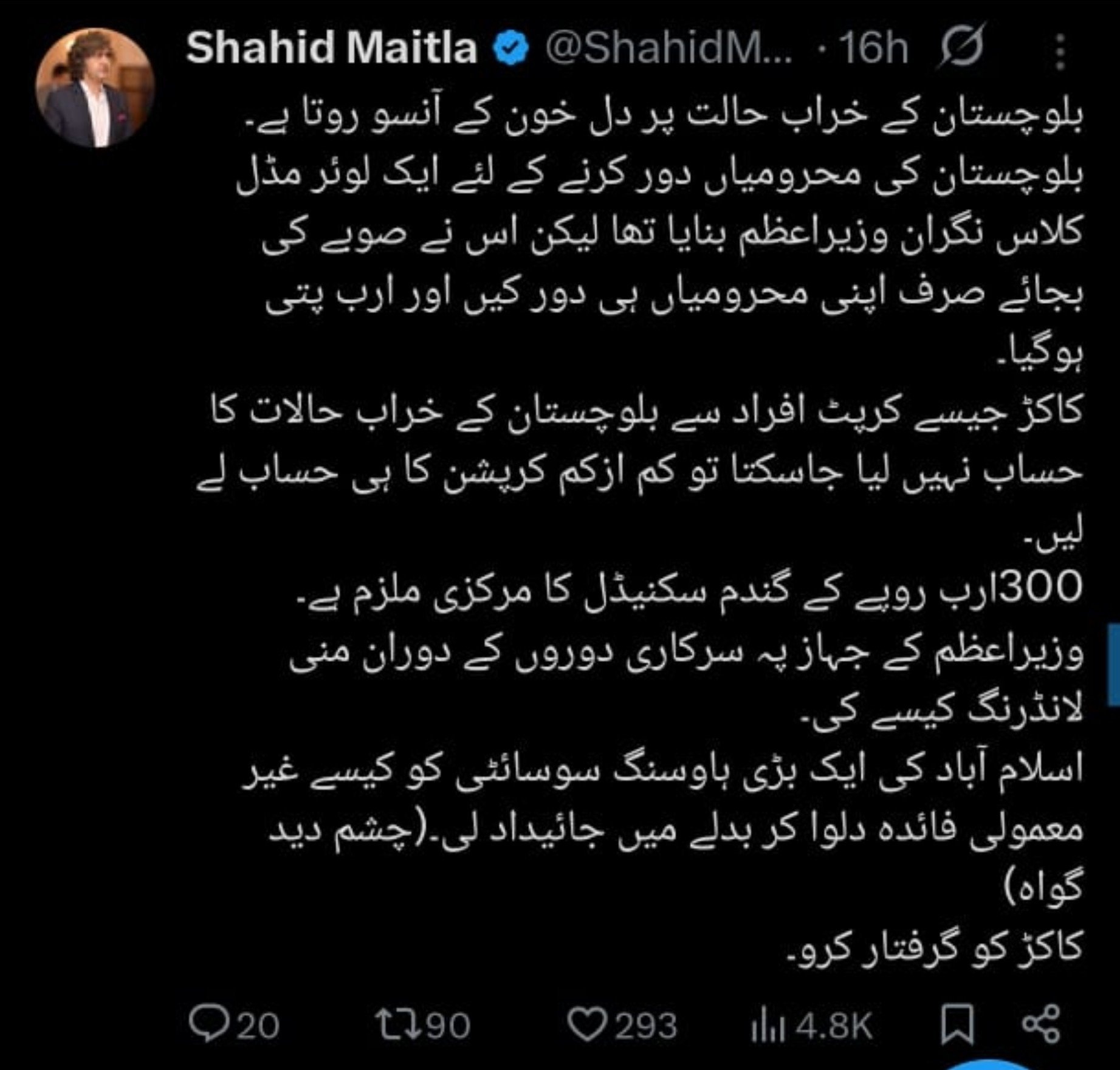

Later that night, Kakar took to X and wrote in Urdu, “زرائع مطابق شاہد میتلا خلاف ایکشن سابق وزیر اعظم انوار الحق کاکڑ کی درخواست پر لیا گیا” – literally, “Action against Shahid Maitla was taken on the request of former Prime Minister Anwar‑ul‑Haq Kakar.” This same post also carried the hashtags #بریکنگ and #نیوز, framing the story as breaking news rather than a routine legal matter.
In a follow‑up tweet, Kakar added, “The government is not behind this arrest, it’s pursued on my complaint and I will defend with ferocity any attack on my repute.” The language is unmistakably personal: the arrest is portrayed as a defence of his own reputation, not a state‑driven crackdown.
Legal mechanics – what we know
Two days after the detention, an Islamabad court allegedly granted a two‑day transit remand to move Maitla to Quetta. The detail appears only in a trending‑summary of X posts and has not been corroborated by an official court release. Nonetheless, the existence of a remand indicates that the judiciary was asked to facilitate the transfer, a step that would normally require a formal charge sheet and a clear legal basis.
Kakar’s own words provide the only concrete legal justification: he claims he sent “prior notices for evidence or an apology” and offered to drop the case if Maitla complied. No copy of those notices has been made public, and Maitla’s side of the story remains invisible. The absence of a public docket leaves a critical gap – without it, we cannot verify whether the complaint meets the threshold set by Pakistan’s Prevention of Electronic Crimes Act (PECA) or any other statute.